3 practical frameworks to strengthen marriages: School of Gatekeepers
by Poh Fang Chia // May 25, 2026, 9:00 am
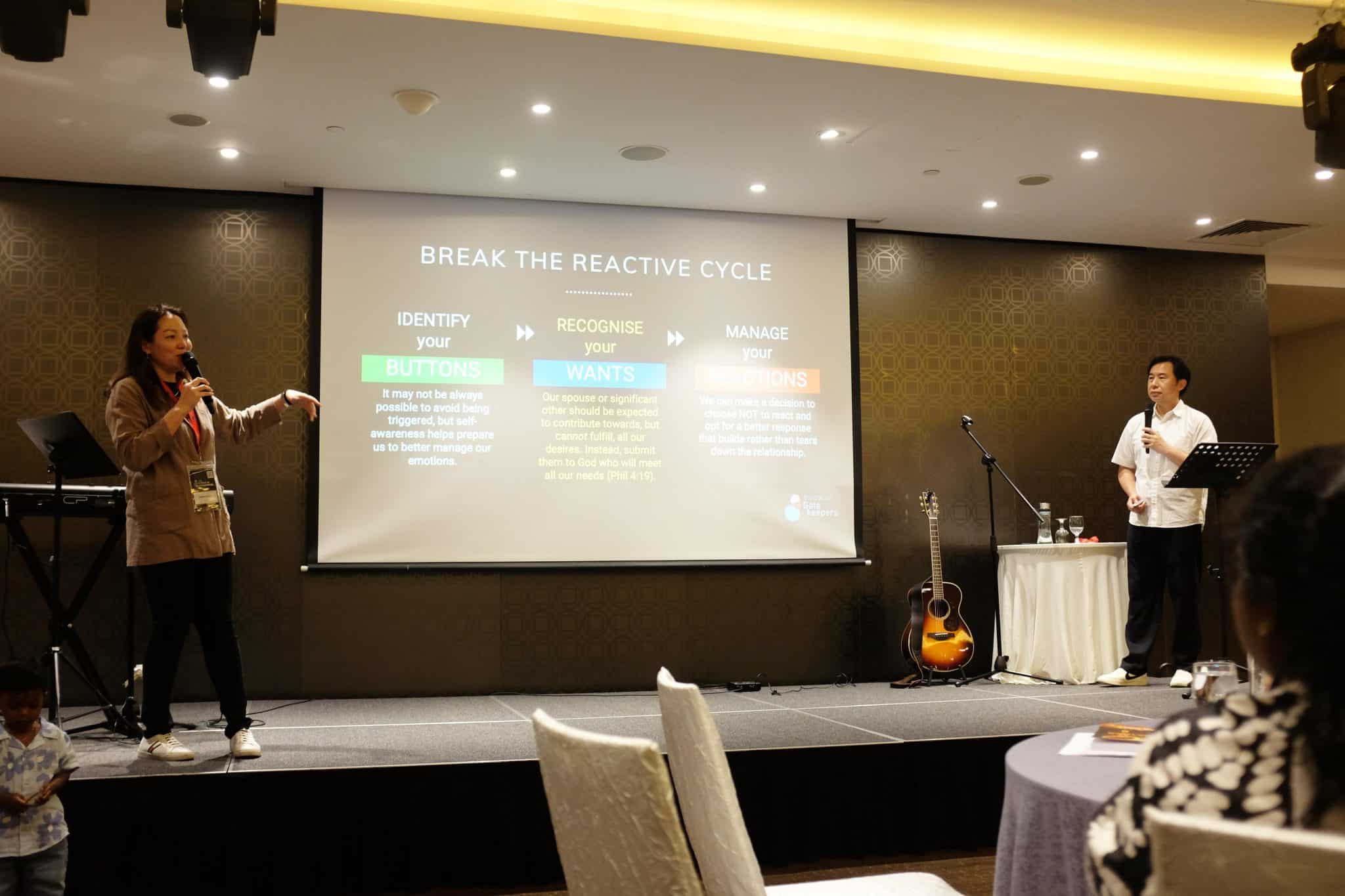
“Family is the basic building block of society. The Chinese term for "nation" (国家) links "country" (国) and "home/family" (家), symbolising interdependence. As the family goes, so goes the nation," said Pastor Gary Koh and Joanna Koh-Hoe at the School of Gatekeepers 2026. All photos courtesy of Gatekeepers Singapore.
Pastor Gary Koh grew up in a home where silence spoke louder than words.
When he was four, his mother abandoned the family and his father left him at his grandmother’s. Thereafter, his parents were both physically and emotionally unavailable to him.
His family tree was also marked by a chilling pattern: Broken marriages, fractured families. This dysfunction shaped Gary’s very soul.
“I realised that the way I viewed marriage was filtered through the lens of a broken home,” he shared. “The patterns of my ancestors were repeating in me.”
Pastor Gary was speaking at the School of Gatekeepers 2026, held from April 10 to 12, with his wife, Joanna Koh-Hoe, executive director of Gatekeepers Singapore.
School of Gatekeepers is a two-and-a-half-day intensive boot camp by Gatekeepers Singapore designed to equip Christians to integrate their faith with their professional work. They believe that strengthening families will inadvertently enable believers to better live out their faith in the marketplace.
The ripple effect of broken families
Pastor Gary and Joanna shared that the journey towards a healthy society begins within the walls of the home. If families are broken, the tremors are felt across the entire nation.
Joanna explained: “Family is the basic building block of society. The Chinese term for “nation” (国家) links “country” (国) and “home/family” (家), symbolising interdependence. As the family goes, so goes the nation.”
For instance, an alcoholic father increases the likelihood of alcoholism in his descendants through exposure and normalisation. Multiple divorces in a family tree also shape negative attitudes toward marriage, affecting expectations and commitment.
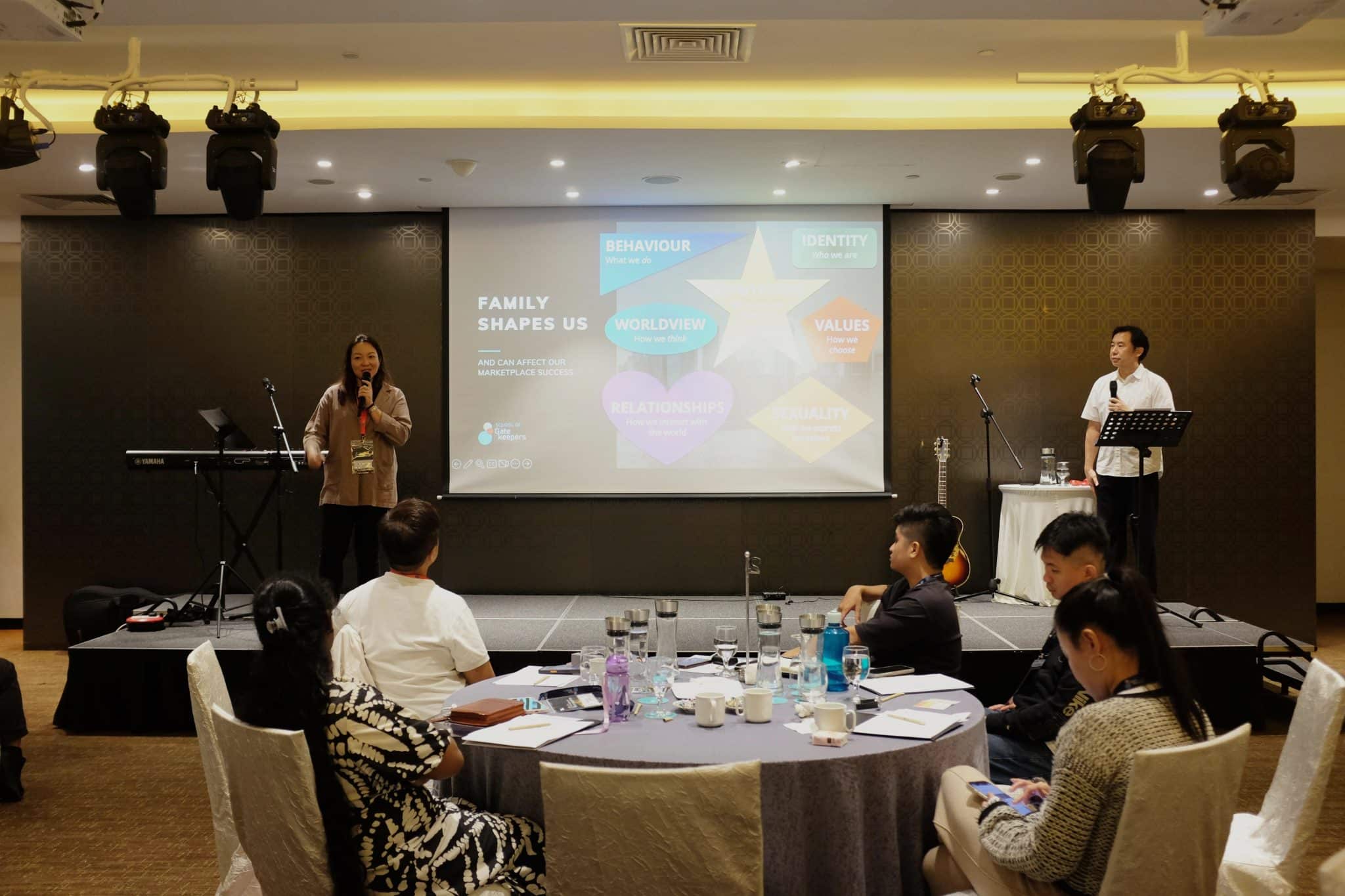
Pastor Gary and Joanna speaking at the recent School of Gatekeepers 2026.
She also observed that family breakdowns have contributed to a “new poor” in developed nations — a state characterised not by material lack, but by a poverty of time, morality and relationships. This occurs when broken families leaves individuals without the emotional support and guidance necessary to thrive.
Because the stakes are so high, Pastor Gary and Joanna urged couples to strengthen their family unit by looking inward before looking at each other. They explained that managing a marriage is less about changing your spouse, and more about managing yourself within the relationship.
To navigate these complexities, they provided three practical frameworks.
1. The waffle and the spaghetti: How men and women think
Effective conflict resolution begins with understanding how the male and female brains process information differently.
Drawing from Bill and Pam Farrel’s Men Are Like Waffles, Women Are Like Spaghetti, Pastor Gary explained that men’s cognitive processing often resembles a waffle — compartmentalised and focused on one square at a time.
Their lives are divided into boxes – work, home, hobbies – that do not touch. When a man is in the “work box”, he is fully there.
Recognising these psychological differences can help couples extend grace to each other instead of judgement.
As such, Pastor Gary shared that because men focus on one “box” at a time, they may remember complex information like soccer history but forget simple requests from their spouse because they have already moved on to a different compartment.
Women, conversely, are like spaghetti. Every noodle touches every other noodle, just like how a woman’s thoughts and emotions are entirely interconnected.
Joanna explained that for a woman, a problem at work can sometimes be connected to a feeling at home, which could be connected to a conversation from three days ago.
She shared that recognising these psychological differences can help couples extend grace to each other instead of judgement.
2. The Healthy Relationship Model
To build a resilient marriage, Pastor Gary and Joanna introduced the Healthy Relationship Model, which warns against the trap of enmeshment. This occurs when one person’s happiness depends entirely on the other, creating an unstable foundation.
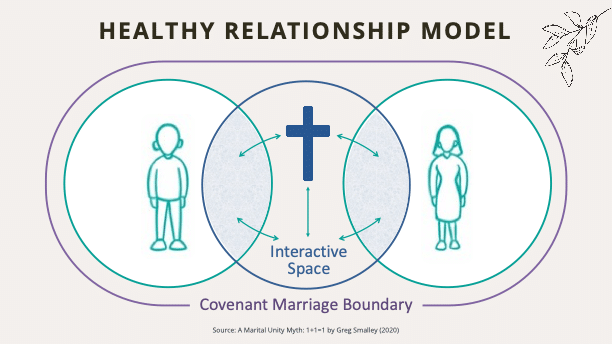
An illustration of the Healthy Relationship Model.
Pastor Gary and Joanna emphasised that even “when two become one flesh” in a marriage (Genesis 2:24), individuals must remain stewards of their own souls.
“By God’s divine design, you are your own person and the other person is his own person,” Joanna shared.
“God respects personal choice and freewill. We should do likewise. We should not encroach on another’s freedom or make decisions on their behalf. We must honour personal boundaries. Ultimately, we each bear responsibility for our own choices and behaviour.”
We should not encroach on another’s freedom or make decisions on their behalf. We must honour personal boundaries.
While the couple maintains their individuality, there is an interactive space in which spouses offer support to each other.
In a marriage, this space must be governed by Christ and protected by a covenantal marriage boundary. It’s a wall that safeguards intimacy from outside interference, while allowing each partner to maintain their unique identity in God.
3. Mapping the reactive cycle
When this interactive space becomes strained, couples often fall into a reactive cycle. Pastor Gary and Joanna explained that most arguments are not actually about the surface issue, but about “buttons” being pushed.
Joanna shared a candid example: As a tidy person, she is triggered whenever her husband leaves things on the floor. She often interprets this behaviour as a sign that he does not care about her priorities. Feeling ignored or unimportant, she might vent her frustration on him.
This, in turn, pushes Pastor Gary’s buttons. For him, the underlying pain is the feeling that “nothing I ever do is good enough”. When Joanna vents, he interprets it as a sign of his own inadequacy and chooses to withdraw.
To combat this, they introduced the Reactive Cycle Map, a tool designed by Focus on the Family to help couples pause and identify the root of the conflict:
- The Trigger: The specific word or action that caused pain.
- The Want: The underlying need, such as the desire to feel respected or safe.
- The Reaction: How we respond – whether we “withdraw like a turtle” or “attack like a shark”.
By mapping these patterns, couples can move away from knee-jerk reactions and towards redemptive communication.
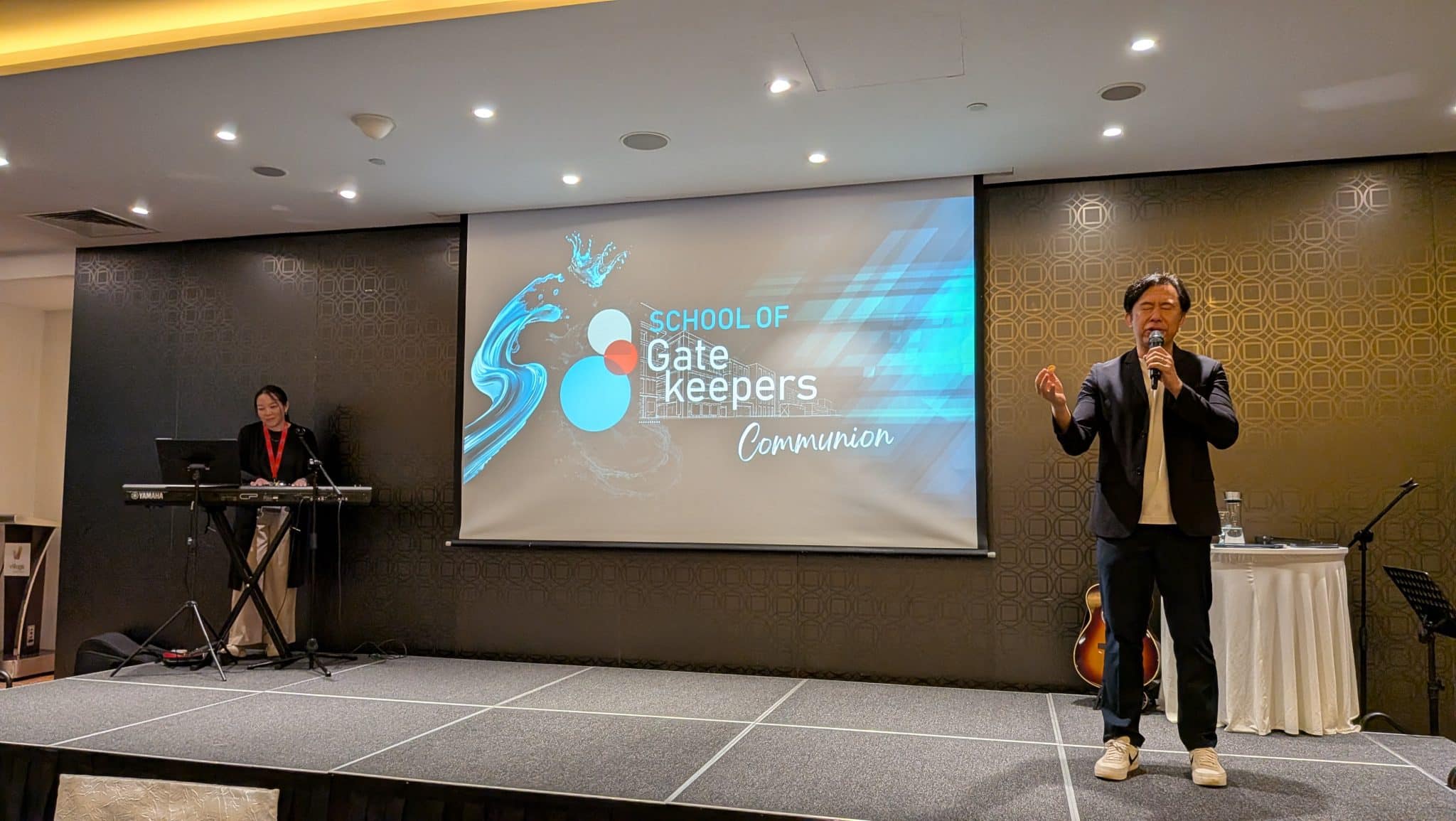
Pastor Gary led in a time of worship at the School of Gatekeepers, with Joanna supporting on the keys.
Pastor Gary shared: “If you can identify your conflict resolution style, the less frustrated you will be with your spouse.”
Joanna added: “The only way you won’t react is if you’re aware that your button has been pushed, and you choose not to react.”
Hope of redemption
Pastor Gary and Joanna concluded the talk by urging attendees to believe in the possibility of transformation for their own families.
Abandoned by his biological mother at the age of four, Pastor Gary was raised by his grandmother and spent nearly thirty years estranged from his mother. However, decades later, while pastoring a small church, Pastor Gary was miraculously reunited with her.
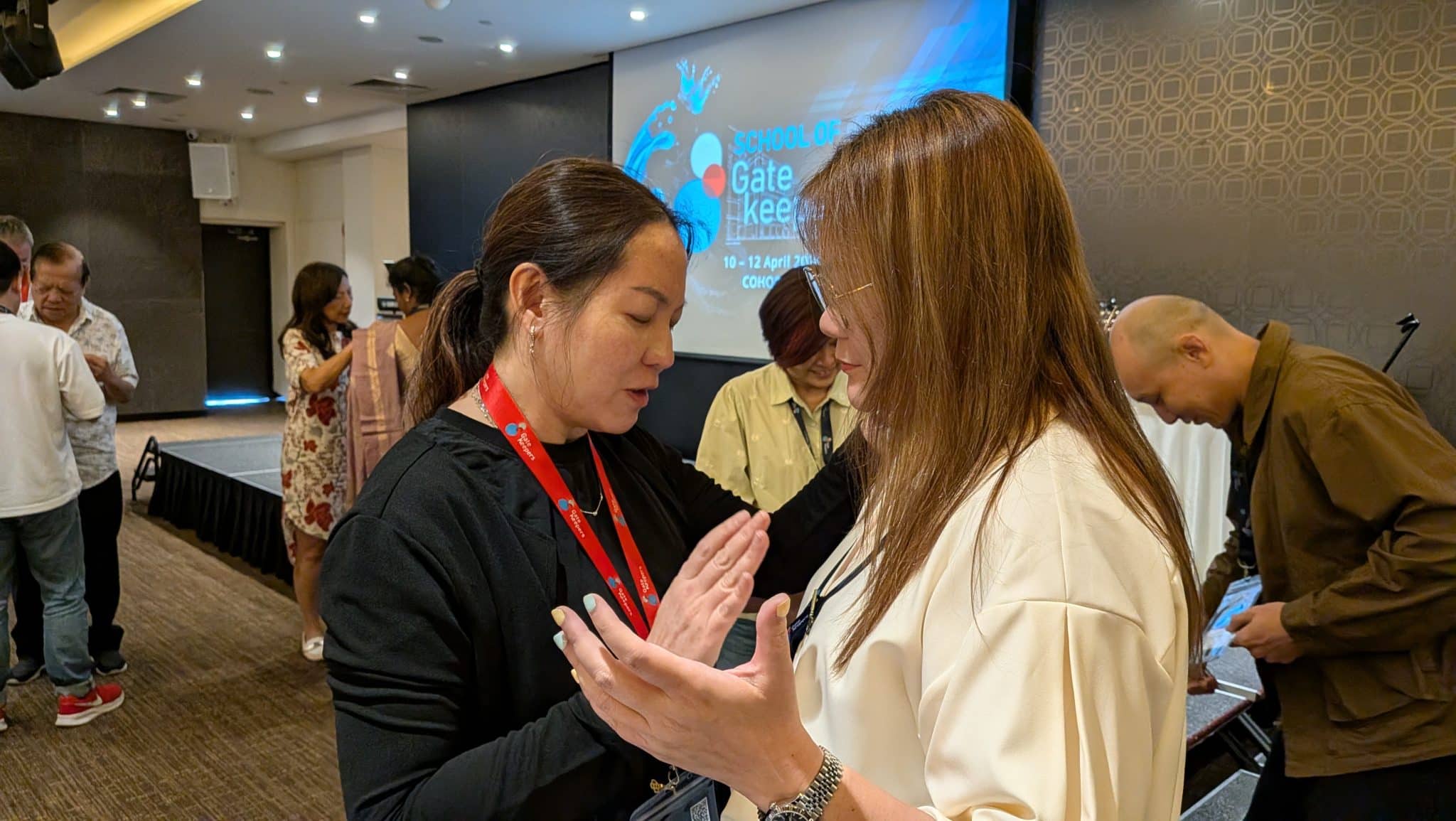
Joanna in a moment of prayer with participants at the School of Gatekeepers gathering.
This reunion led to a ripple effect of reconciliation: His mother accepted Christ, followed by his ninety-year-old grandmother. Pastor Gary eventually had the privilege of baptising both women.
When navigating deep-seated family traumas, there is hope for redemption, he encouraged.
Strengthening a family begins with leaning on God to master self-awareness and healthy boundaries. As husbands and wives choose collaboration over reaction, they pass on biblical values from one generation to the next, impacting the nation and the world.
Registration for School of Gatekeepers 2027 is now open. Check out more details here.
RELATED STORIES:
“Please show us some good marriages”: 5 tips for churches and couples from State of the Family 2026
How can we redeem family to transform communities and culture?: State of the Family 2025
I learnt how to be a dad from my father, my spiritual fathers and my heavenly Father

This year, as we celebrate 10 years, consider sowing into our Kingdom ministry! For S$10 a month, you become part of the #10for10 community and a part of every story we tell.
Partner with us
Related Articles
Revival begins at home: More than 200 fathers commit to restoring their family altars at Elijah7000 event
After losing her family and home, she gave God what was left of her life and saw how He turned things around
“Arrive at the end of your career with your testimony intact”: PropNex’s Stella Thio on purpose and integrity in the real estate industry
