“It takes a spider to repair its own web”: How this outsider is empowering insiders to love the poor
by Gracia Chiang // May 29, 2026, 1:15 pm
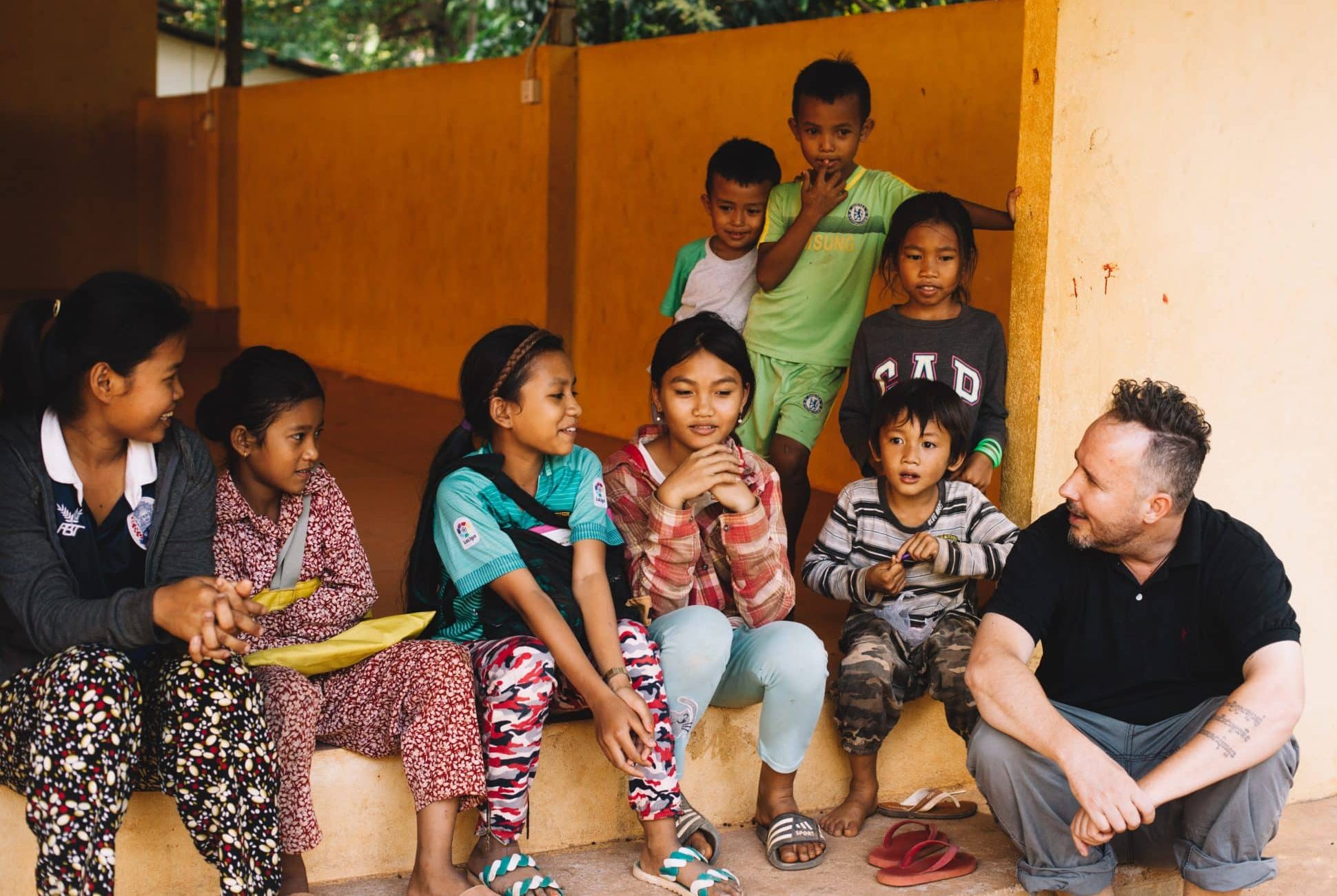
After a serious brush with cancer made him re-think what he wanted to do for the rest of his life, Craig Greenfield (right) returned to Cambodia to reach out to vulnerable children. Photo by Britney Berrner.
For the first two weeks after he moved into one of the poorest neighbourhoods in Vancouver, Craig Greenfield slept on a piece of cardboard beside a dumpster.
He had moved into Downtown Eastside, known for being one of North America’s most concentrated areas of drug activity, to experience what the homeless and addicted there were facing.
“I believe if you want to speak the Good News, you have to know what’s the bad news,” the founder of Alongsiders told Salt&Light during a recent speaking visit to Singapore.
Started in Cambodia in 2003, Alongsiders has grown into an international movement that mobilises and equips Christian youths in developing countries to walk alongside the most vulnerable children in their own communities.
It was this same burden for the downtrodden that led Craig and his family to inner-city Vancouver in 2006, where they would minister for seven years to the urban poor.
Drawing inspiration from Jesus, the 52-year-old pointed out that the Lord did not have a formula for reaching out to people.
“He identified what’s the bad news, and then He spoke the Good News into their lives.”
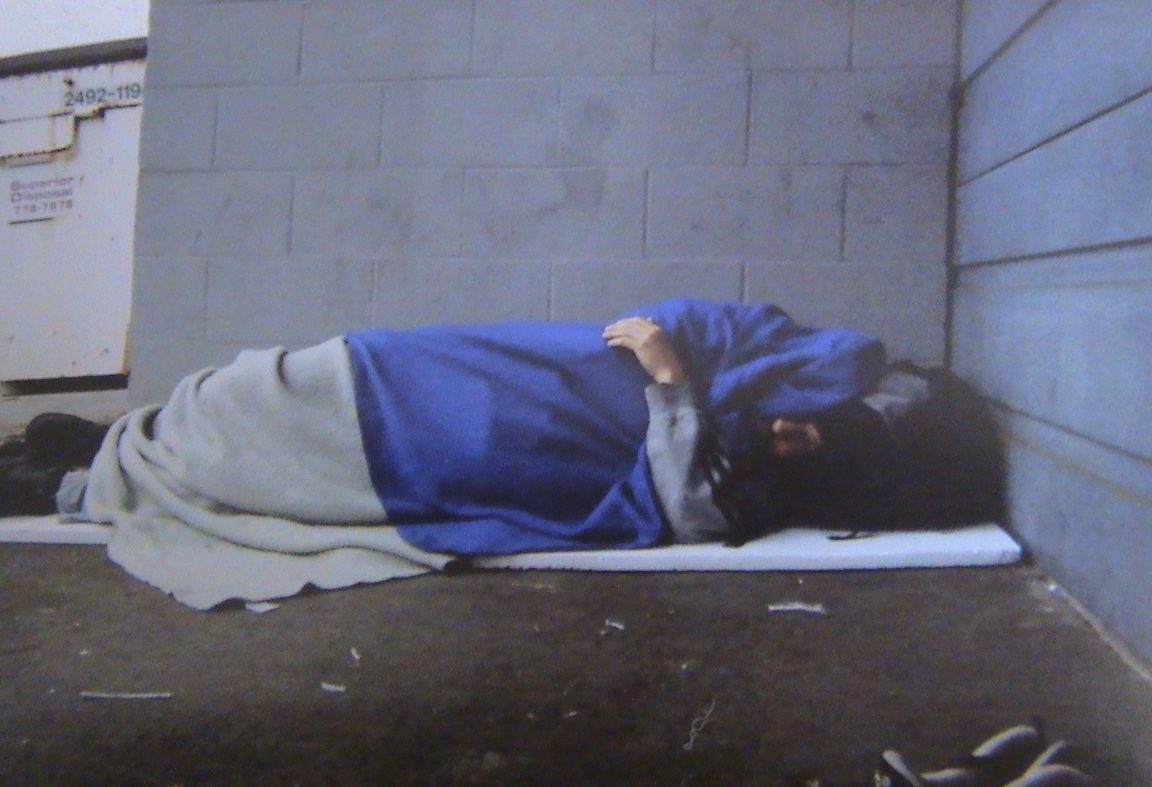
In those two weeks that Craig slept on the streets of Downtown Eastside, it certainly opened his eyes to the bad news. While inner-city Vancouver is no slum, it felt like one. All photos courtesy of Craig unless otherwise stated.
At Downtown Eastside, he was shocked to see people openly smoking crack and shooting up heroin. “There are tents all along the sidewalk. It’s a throng of people who have fallen through the cracks of society,” he said. “People were living isolated and rejected lives.”
Convicted that the Good News he could offer was the radical welcome of Jesus, Craig decided that he, his wife and his two young children would open up their home to these rough sleepers.
Together with other Christians, the Greenfields rented homes in Downtown Eastside so that they could host an open table every night, inviting those on the street to come in for not just a meal, but also friendship.
“We never knew how many people would come for dinner. Sometimes it was as many as 45 people, but God always provided the food,” he recalled.
Many also ended up staying with them, filling up their spare bedrooms, balconies and even the front lawn.

For Craig, living incarnationally also meant growing out his hair and beard, so that he would be more easily accepted.
It did not matter if they were dirty or mentally distressed – all were welcome. For many of them, this would have been their first time in a private house for years – and one with children too.
Craig shared: “We said to them, ‘If this is your first time here, you’re our guest. If this is your second time or more, that means you’re part of the family, so you have to help us with the dishes, cleaning and cooking.’ They loved that.
“Honestly, the number of times I saw tears going down people’s cheeks was incredible. It was powerful. We saw a lot of people set free from drug addiction.”
Their family’s seven years in Vancouver also reinforced something that Craig had long known: God can use community to be a powerful channel of healing to those living on the margins.
A heritage of radical hospitality
Growing up in New Zealand, Craig used to watch his parents open their home to people from all over the world, including foster children, people with intellectual disabilities, refugees and the formerly incarcerated.
“I didn’t realise that it was weird. I thought it was normal that on festivals and holidays your house would be filled with everyone who had nowhere to go.”
There must have been at least 60 people who stayed in their home, anywhere from two days to three years, Craig estimated, adding that his parents practised radical hospitality.
“It was just clearly part of our family’s core values, and it has become a huge core value for me.”
Although faith was a huge part of his family life, Craig drifted away from Jesus in his teenage years. Ironically, looking at his parents “following Jesus 100%” played a role in that.
“It was such a high calling that I didn’t feel like I could make that sacrifice to follow Jesus. So I said, ‘Okay, if I’m not all in, then I’m out.'”
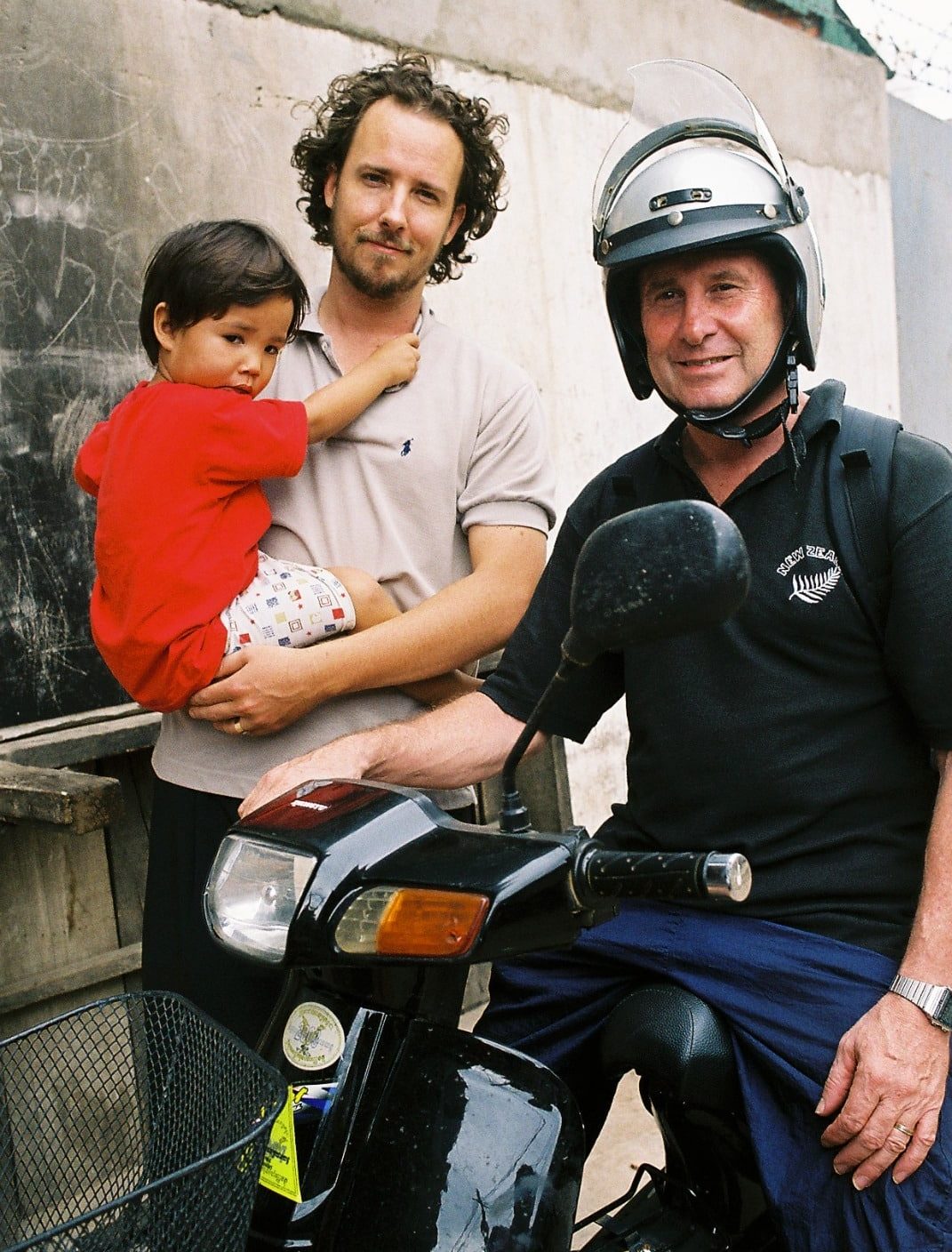
Craig with his son and father in Cambodia.
Craig had come from a line of faithful Christians. His grandparents were missionaries in India for 25 years, while his parents relocated to Singapore to serve in missions for 25 years.
“I’m a very independent person. I didn’t want to do what my parents did,” he said, adding that he studied commerce at university. “I dreamed of entrepreneurship. I dreamed of pursuing a lot of wealth and success.”
However, at the age of 21, Craig met Jesus through a lady praying for him.
“I just had a very strong sense that God was real, and God turned me around 180 degrees,” he revealed.
Deciding to take six months off school to re-assess his life, Craig headed to Cambodia.
A call to live among the poor
It was in Phnom Penh where Craig came face to face with Jesus in the “distressing disguise of the poor”.
One of these poignant encounters took place just outside the Tuol Sleng Genocide Museum. He met a one-legged beggar who was standing with a crutch and wearing a T-shirt printed with the letters “WWJD”, which stands for “What Would Jesus Do?”
“It’s such a cliché, old 1980s Christian saying, but actually it’s very true. What would Jesus do? Those experiences just made me examine the path I was on. I really sensed God saying, ‘Come back and live in the slums with the people.'”

The view from the home that Craig and his wife would move into.
He thought he would finish up his studies, tidy up his affairs and fly to Cambodia to move into the slums. But it would take much longer for the fulfilment of his calling to materialise.
In those three years after graduation, he ended up meeting and marrying his wife, as well as joining a technology start-up.
As part of his job, he got to enjoy the finer things in life, such as travelling around the world, staying in five-star hotels, eating at the best restaurants and hobnobbing with Chief Executive Officers from Fortune 500 companies.
But it all came to a head one night when the group he was with spent US$10,000 (S$12,700) on just alcohol for an event.
“It was just ridiculous,” he said. “Maybe in the past, this would have been okay with me. Now that I’d seen what I’d seen (in the slums), I could not.”
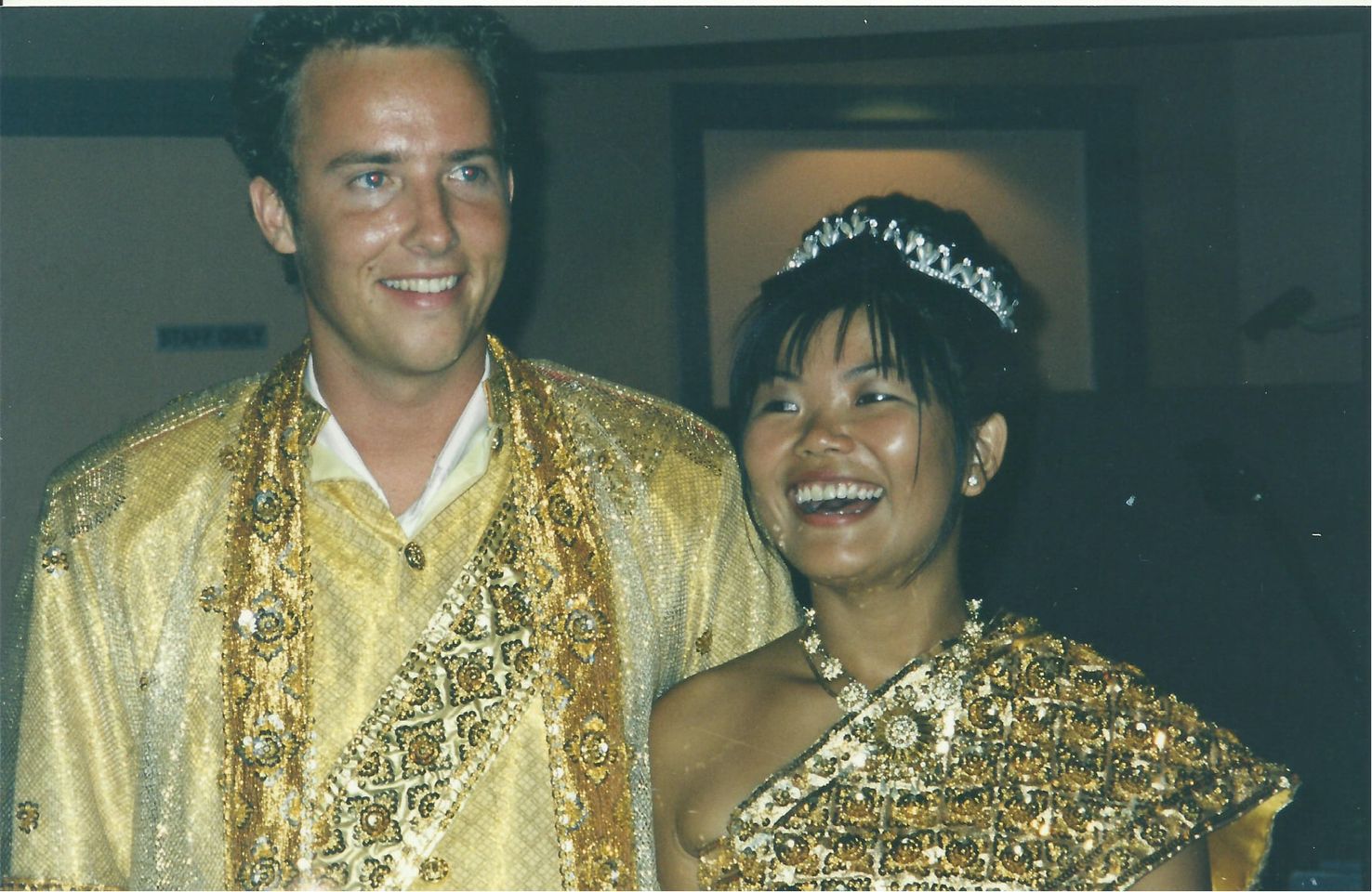
Craig’s wife, Nay, is a former refugee from the Khmer Rouge regime who has always sensed God calling her back to serve her own people.
In the end, it was the words of John 1:14 that convicted him of the need to live among the poor. “I read how Jesus left the ‘most exclusive gated community in the universe’ and came to live among us,” explained Craig.
“He could have fed the 5,000 with bread rolls from heaven. He could have healed disabled people with thunderbolts from the sky. But He chose to become incarnate and live among us.”
Following that encounter, Craig and Nay moved to the slums in Cambodia in 2000. Home became a tin-roof shack with one window, and lacked even basic necessities such as running water and a refrigerator.
They lived beside a sewage canal and had to climb up and down a ladder to access their home as they were surrounded by neighbours.
Despite his idealism and gung-ho attitude, it was his wife, Nay, who found it easier to adjusting to their new life.
She was no stranger to hardship as a Cambodian refugee fleeing the Khmer Rouge regime. She later moved to New Zealand with her mother at the age of five.
“She came from absolute poverty. I came from absolute affluence,” said Craig.
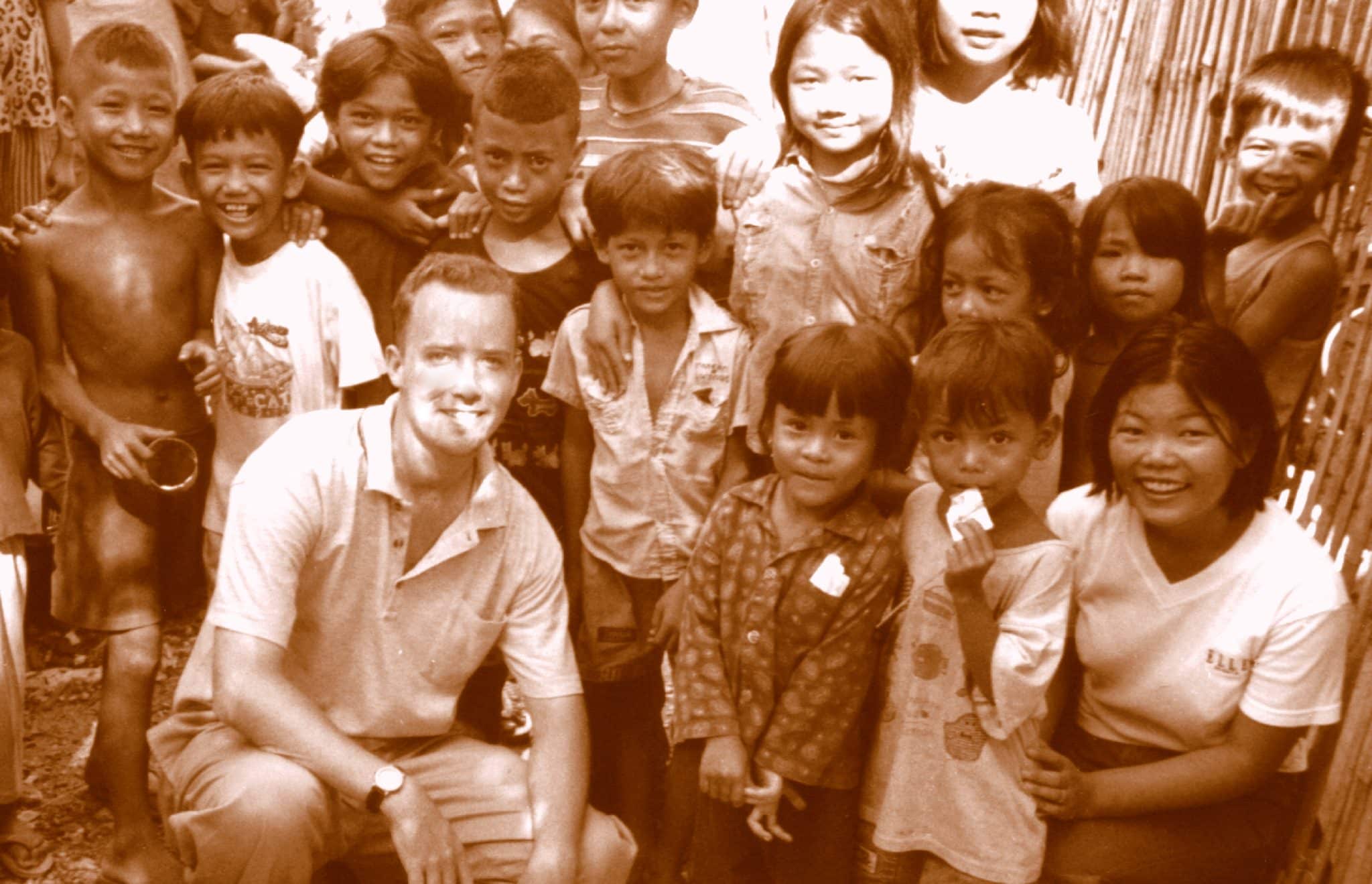
Craig and Nay during the early years of their ministry.
In time to come, God gave the Greenfields two children, a boy then a girl. It was a great way to connect with the neighbours, and his children enjoyed these daily interactions too.
“Children do not care if you live in a slum or a mansion, as long as Mummy and Daddy are there and loving them. Honestly, they lacked nothing,” said Craig.
From teaching about the importance of hygiene to modelling the benefits of breastfeeding, the Greenfields were able to influence their community simply by being there.
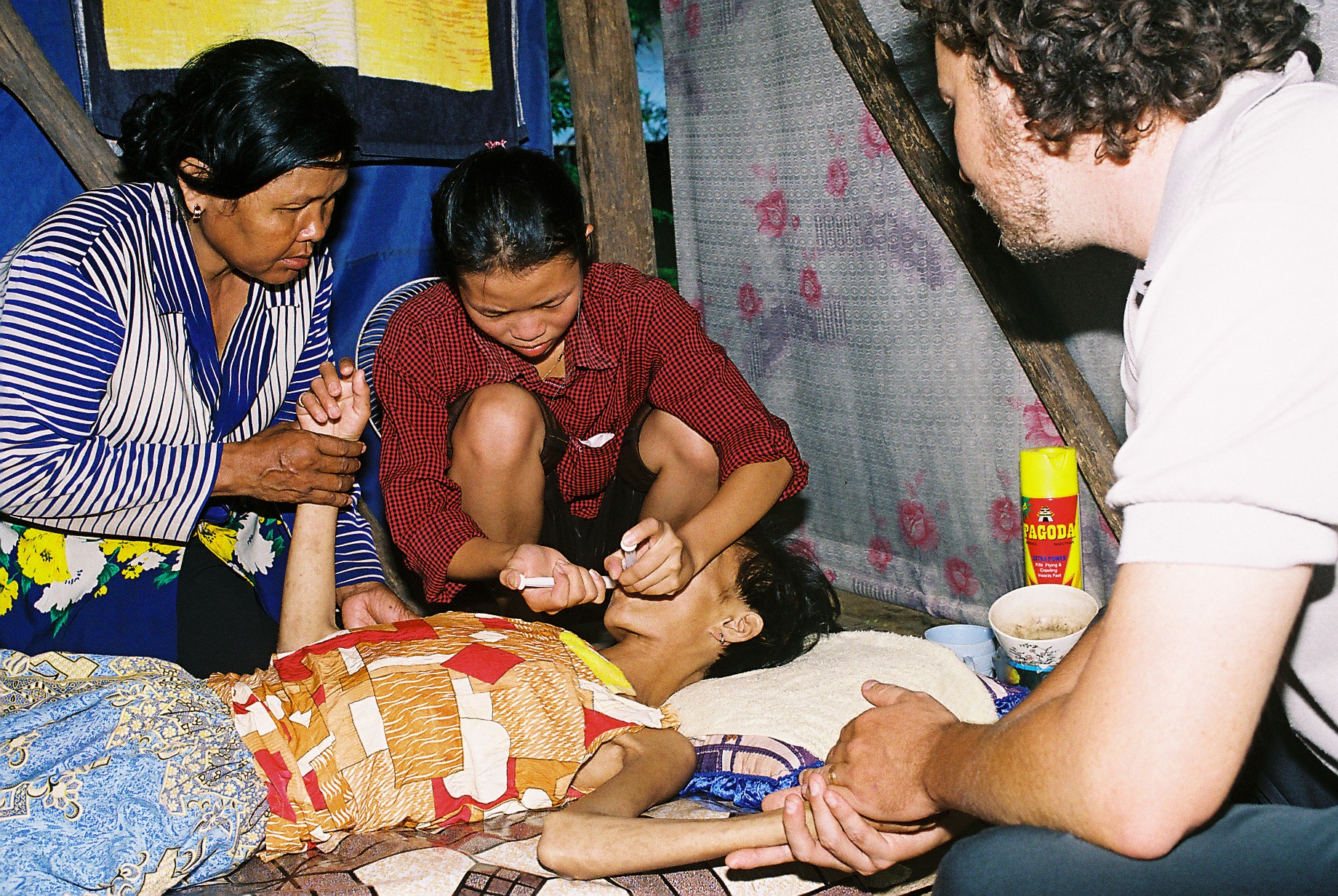
Over time, Craig and his wife also saw how children were being orphaned due HIV/AIDS deaths.
Besides healthcare challenges, living in the slum opened their eyes to systemic issues such as domestic violence and corruption.
While they considered starting an orphanage, the idea was abandoned after Craig conducted research for his Master’s thesis.
Highlighting that global statistics estimate 80 to 90 per cent of children in orphanages have at least one living parent or relative, Craig questioned: “Why are we spending our money to take children out of the community when we could be spending our money to keep them in the community?”
Thinking about how this could be practically implemented, Craig felt that the local church could be the answer.
“God uses the Church to be a blessing in the world, and we saw that the Church is really young in Cambodia,” said Craig. “What if we mobilised and trained them to come alongside one child each?”
Every youth a disciple-maker
That gave Craig the impetus to start the Alongsiders movement in 2003.
Beginning with 10 young Christians, Craig worked to empower these youths to become Alongsiders, who would disciple children in their own communities and show them what it is like to follow Jesus in their everyday life.
“We believe every youth can be a disciple-maker,” he said. “We ask them to choose someone who is their neighbour. They have to pray and ask God, ‘Who are you giving to me as my little ‘brother’ or little ‘sister’?'”
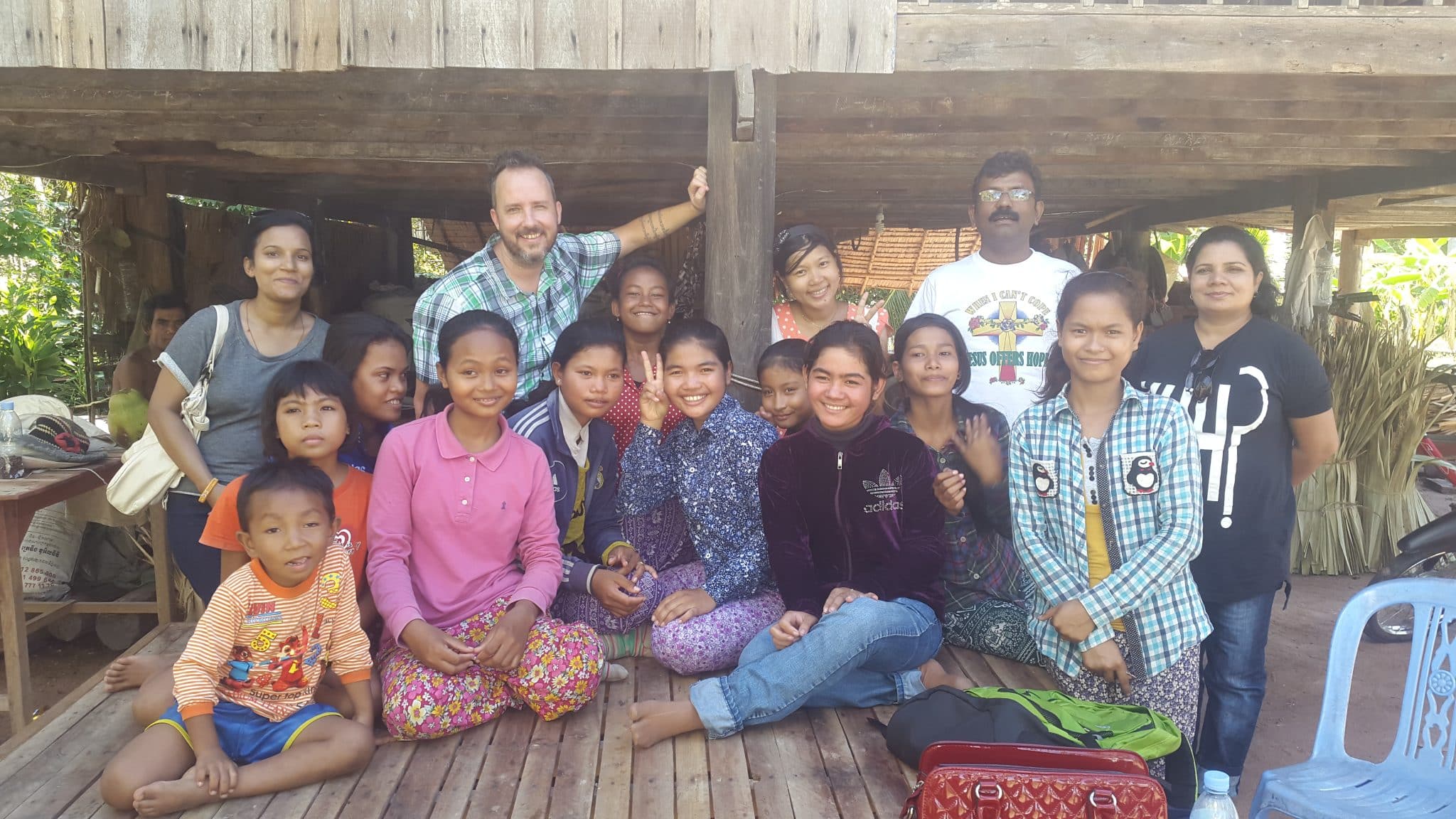
Craig with a group of Alongsiders and their little brothers and sisters.
Remarking that discipleship should not be reduced to a one-hour academic study in church, Craig emphasised the value of a life-on-life model instead.
“This is what it looks like to go to the market and buy food as a Christian. This is what it looks like to play with your friends as a follower of Jesus. That’s discipleship. Bible study is great, but only if it’s applied.”
Serving the urban poor
After living in the slums for many years, Craig and his family were forced to leave in 2006 when the land their house was on was slated to be repurposed.
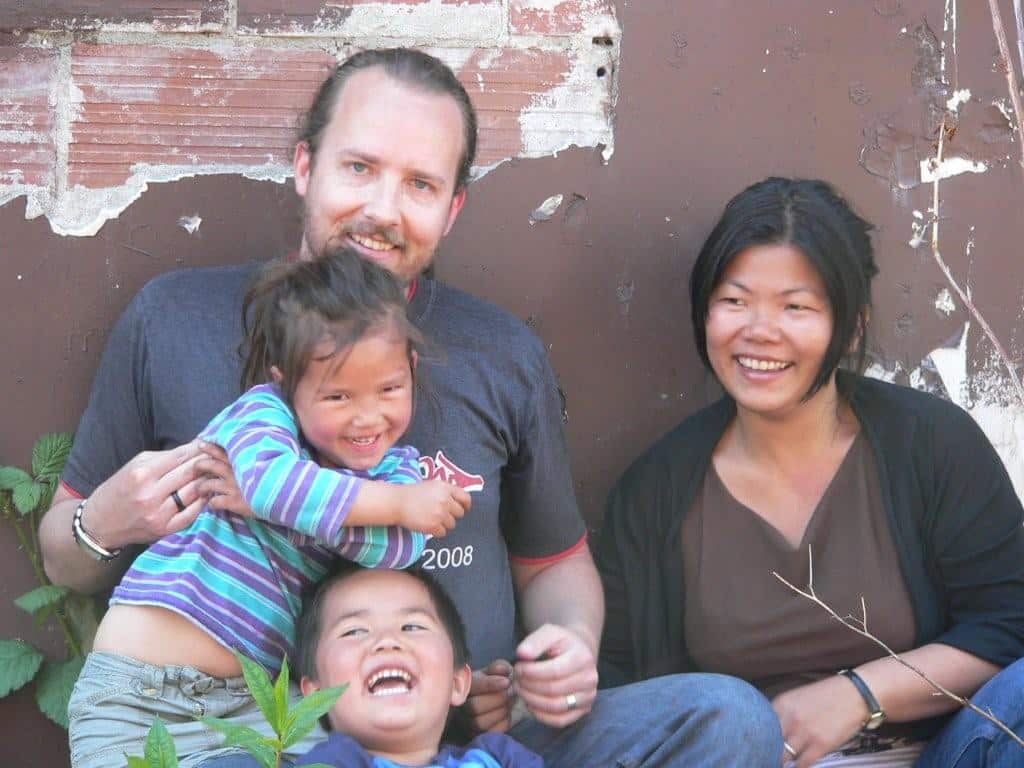
Sensing that God was calling them to Canada – which is also where Craig was born – the Greenfields uprooted to Vancouver.
They moved to Downtown Eastside in Vancouver, where they opened their rented home for almost seven years.
In 2012, however, Craig faced a health crisis that turned into a personal awakening.
“If you only have five more years, what would you do with that?”
Diagnosed with colon cancer, he spent the entire year undergoing surgery after surgery. It was not just the physical suffering, but also the psychological trauma that got to Craig.
“Basically, 2012 was just me trying to live,” he recounted. “I cried out to God. I said, ‘I’ve given my life for the fatherless. Are my own children going to be fatherless?'”
While he did not get a response from God, Craig sensed God asking him another question: “If you only have five more years to live and walk this earth, what would you do with that?”
Craig knew his answer: He wanted to do something for the vulnerable children of the world.
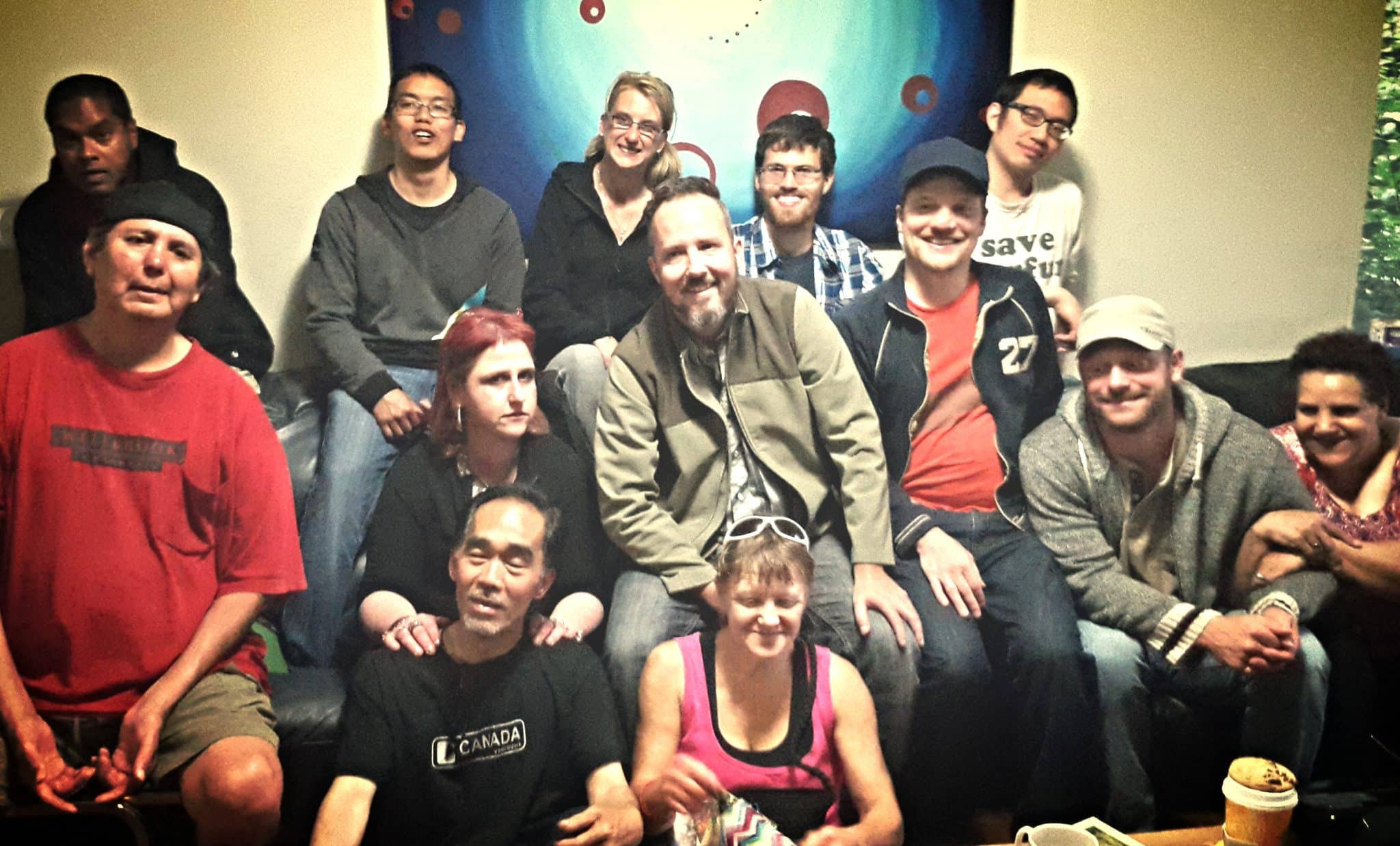
Craig with the community in Downtown Eastside.
Looking back at their work with the homeless and drug addicts in Downtown Eastside, one thing stood out: So much of the brokenness they witnessed was rooted in childhood issues.
One time, a 22-year-old who was resorting to prostitution to fund her drug use remarked to Craig tearfully that her life might have been different if she had had an Alongsider as a little girl.
Growing beyond Cambodia
So Craig and Nay decided to return to the slums, and relocated their family to Cambodia in 2013. By this time, the Alongsiders movement had already spread like wildfire across the country.
And as Craig shared about his work through conferences, books and interviews, more movements sprouted up. Today, Alongsiders has 100 movements in 33 countries, reaching Asia and Africa.
In 2013, Senior Pastor Vincent Lun of Kingdom Community Church in Singapore also helped to launch Alongsiders International from Singapore. A long-time friend of Craig’s, Ps Vincent had previously visited the Greenfields in Vancouver and Cambodia to see how they were living out the radical welcome of Jesus.
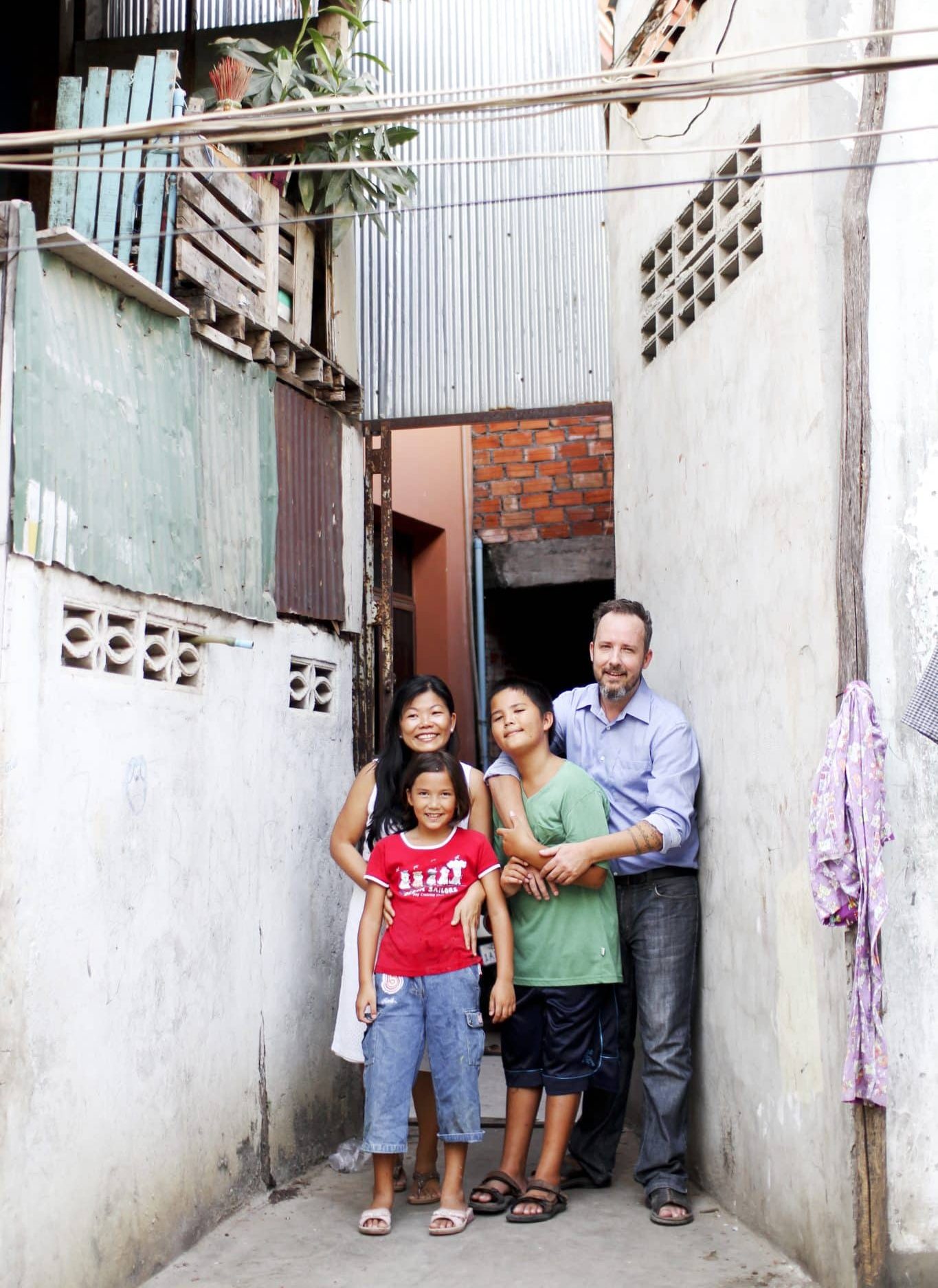
From Canada to Cambodia: Craig and his family after moving back to the slum.
Alongsiders has also developed a curriculum in 37 languages to ensure that the youths are passing on important lessons to those they journey with. These discipleship resources include comic books that are printed in the children’s heart language, with stories and pictures that are contextualised for the culture.
“We have a three-year curriculum, but many are still doing it 10 years after. It’s not a programme; it’s a relationship,” said Craig, who is based in Phnom Penh.
In fact, many of these little “brothers” and “sisters” are now Alongsiders themselves. In Cambodia, the movement is now impacting its fourth generation.
Once a month, Alongsiders (who are mostly aged 16 to 29) come for an in-depth Bible study, which prepares them to teach from the comic book, and share their challenges with one another.
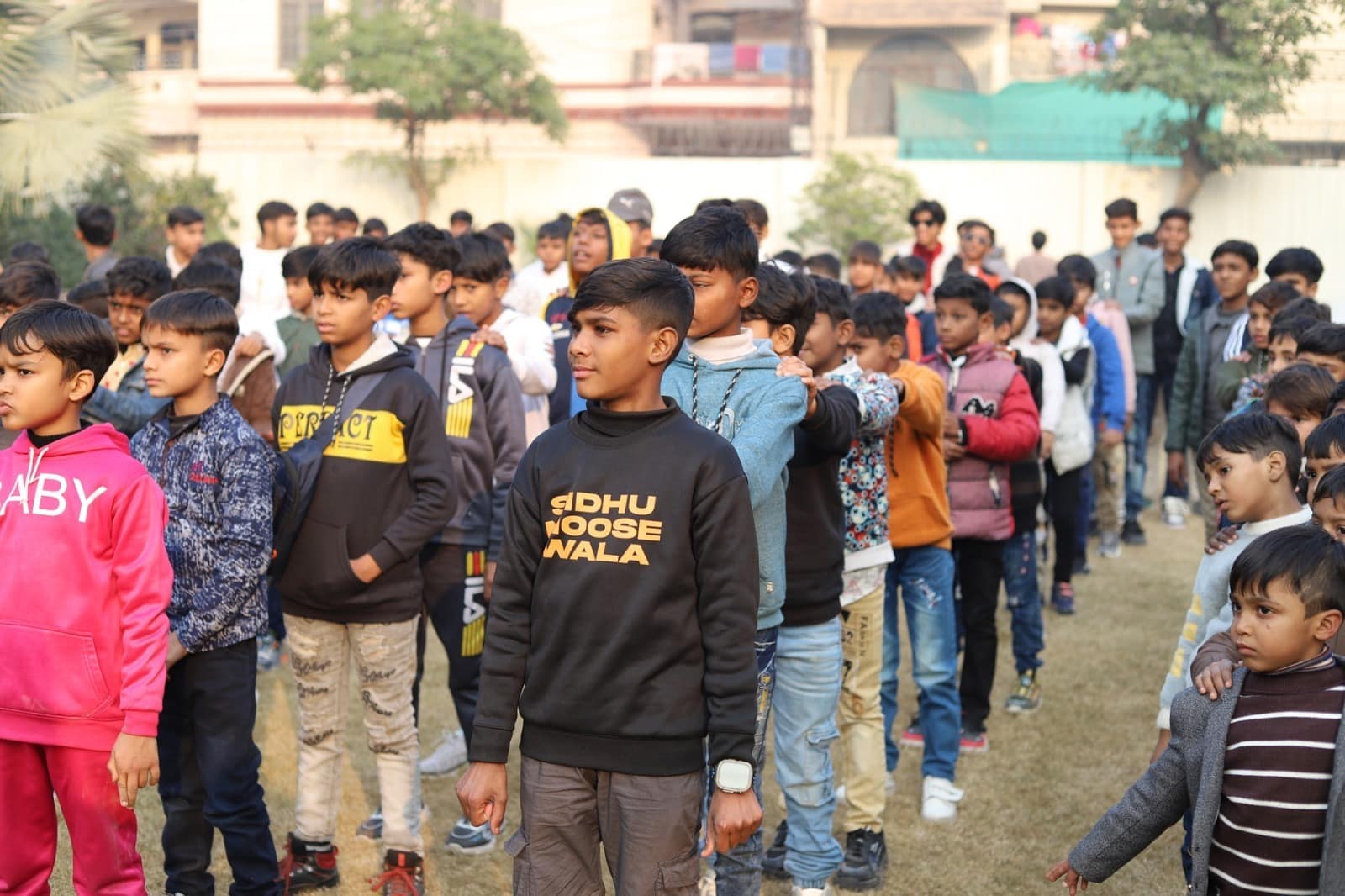
Once a year, camps are organised too, bringing together the Alongsiders and their little brothers and sisters for discipleship, equipping and bonding.
Over the years, there have been many inspiring testimonies. For instance, there was a 12-year-old boy named Joel from a South Asian country who had turned to glue-sniffing to cope with his hunger and loneliness. He had also joined a local gang and would get into fights regularly.
But that all changed after he was befriended by an older “brother” – Dawood – on the streets.
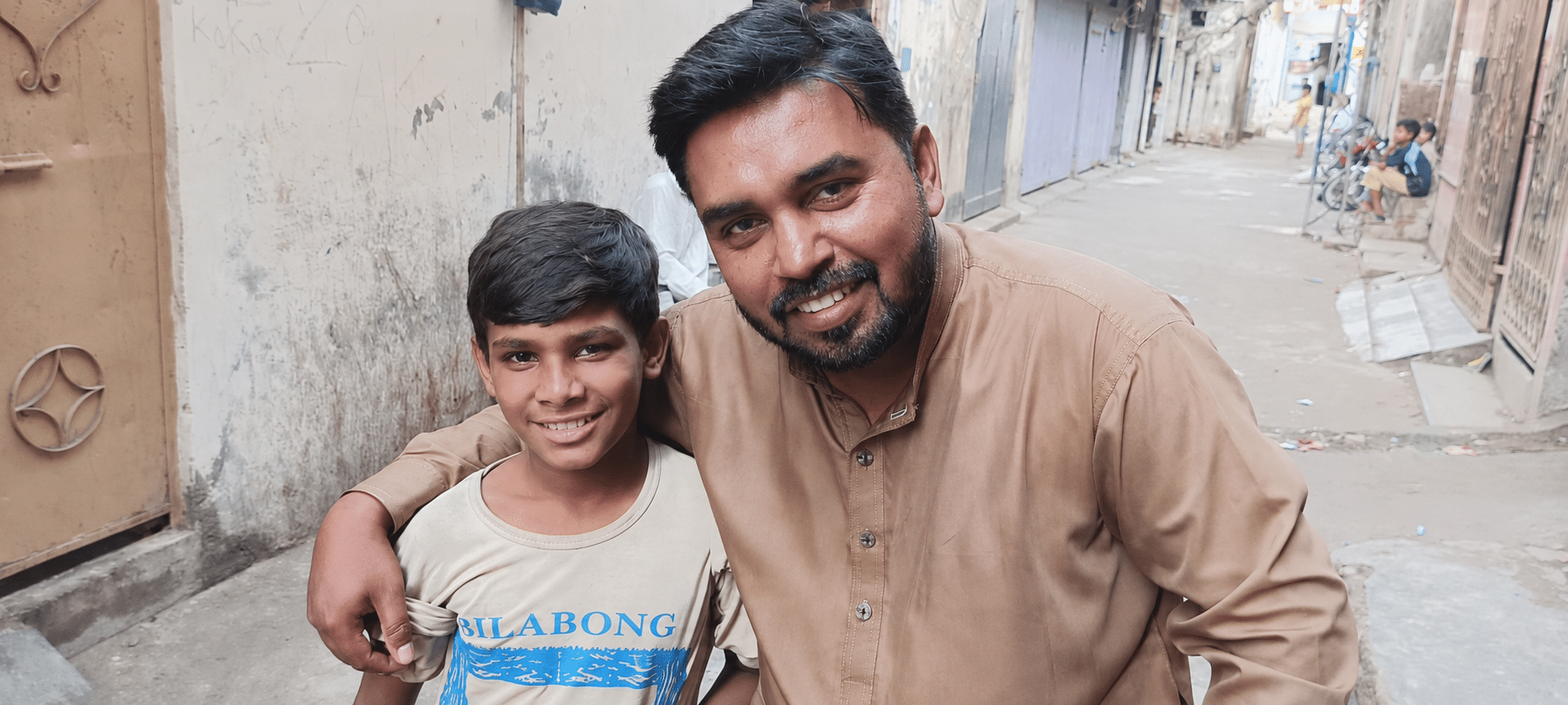
One day, Dawood (right) sees Joel on the streets and asks if he can be his Alongsider.
Seeing that there were other boys in the gang, Dawood roped in other youths from his church to become mentors to them.
“And now all the rival gangs are coming to camp together, studying the Bible together and worshipping the Lord together,” said Craig, smiling.
Dawood is also supporting Joel out of his own pocket, helping with necessities such as school fees and uniforms.
It is not just an isolated case. In spite of their poverty, many Alongsiders have tried to meet the needs of their little “brother” or “sister”, whether it is buying food or stationery for school, said Craig.
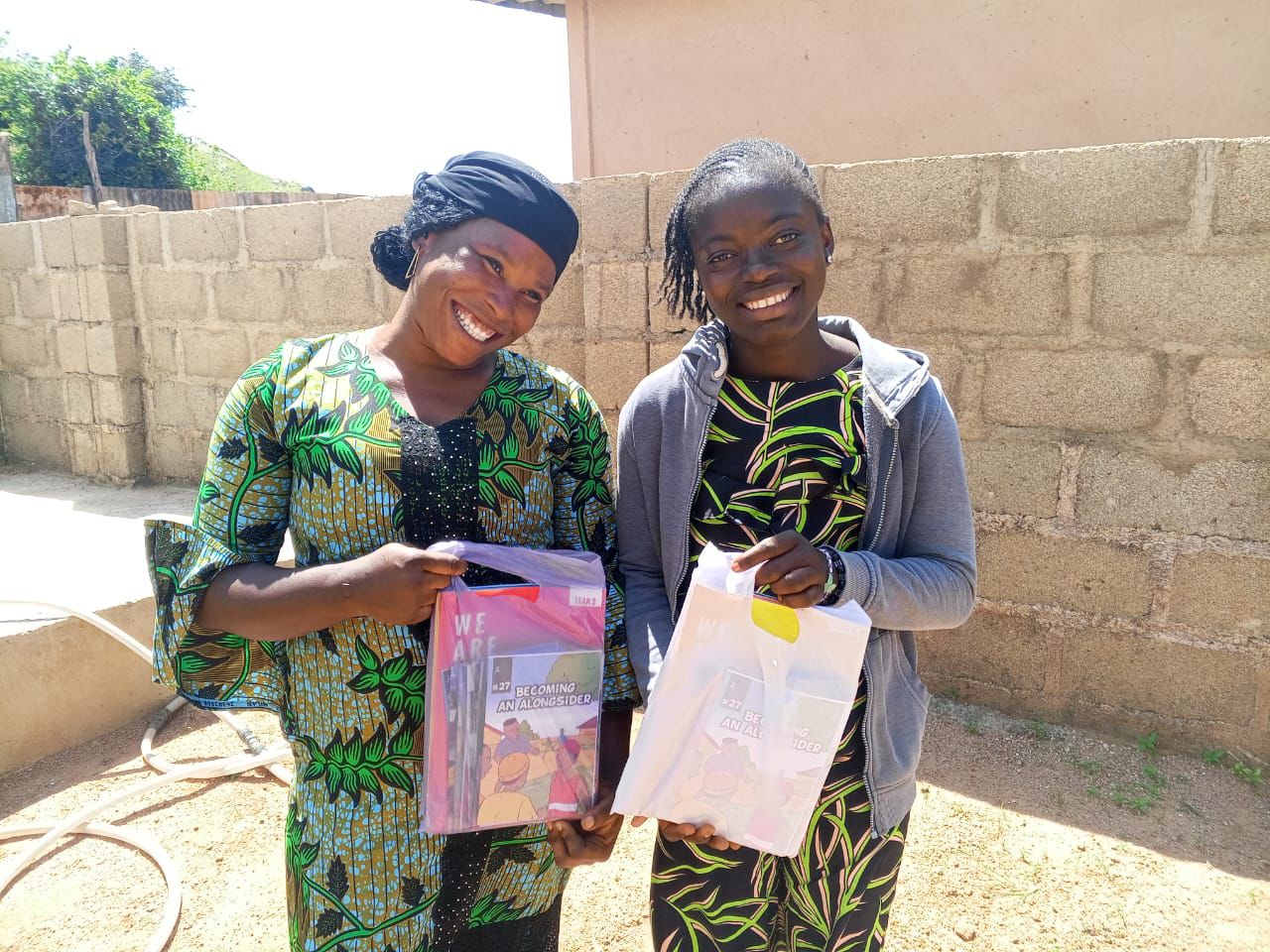
An Alongsider pair in a country in West Africa. Grace, 13 (right), lost her parents due to political violence, but has now found an older sister in Blessing, 18.
Other than Christian discipleship, another key aspect of Alongsiders’ work is child protection. Mentors are trained to know how to help vulnerable children, especially when there are complaints of abuse.
In a country in East Africa, one Alongsider named Rachel lived in a village notorious for human trafficking and prostitution. Having been prompted by God to be a mentor, she was praying in her mud hut when she looked out of her window and saw her neighbours training their 12-year-old daughter how to dance seductively.
“I knew what they were preparing her for, so I chose her to be my little ‘sister’,” Rachel told Craig. Six years later, the young girl, Esther, graduated from high school and now has dreams of becoming a nurse. Esther herself has also become an Alongsider.
Craig is a firm believer that God can do amazing things through young people, and is not short on anecdotes of teenagers who are not only Alongsiders but also leaders actively recruiting other youths to be part of the movement.
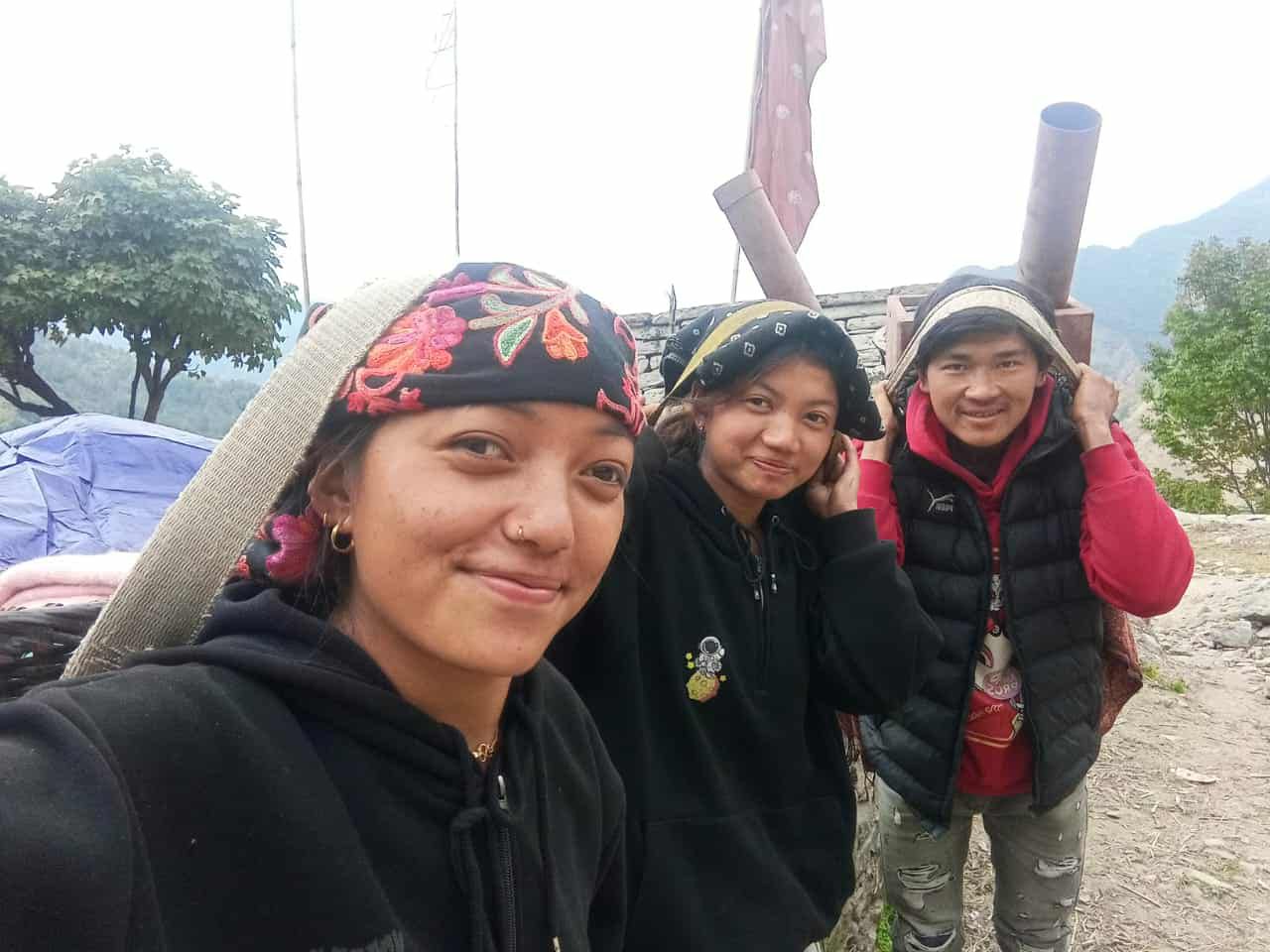
In some mountainous regions where communities are hard to reach, Alongsiders even balance resources on their heads to reach children in remote areas.
One of them is Kim, an area representative in Cambodia. Riding her motorbike through back alleys and muddy pathways to get to remote churches, she would ask permission from Pastors to allow their youths to become disciple-makers.
“They would look down on her and reject her for being a girl, for being 17 years old, but she would just faithfully be going around. One by one, she won them over.”
He continued: “I believe if you want to change the world, you start with those who are the most open to change – and that’s going to be younger people.
“Young people have been on the forefront of every movement for social change pretty much throughout history. You need the wisdom of the elders and the young people’s energy.”
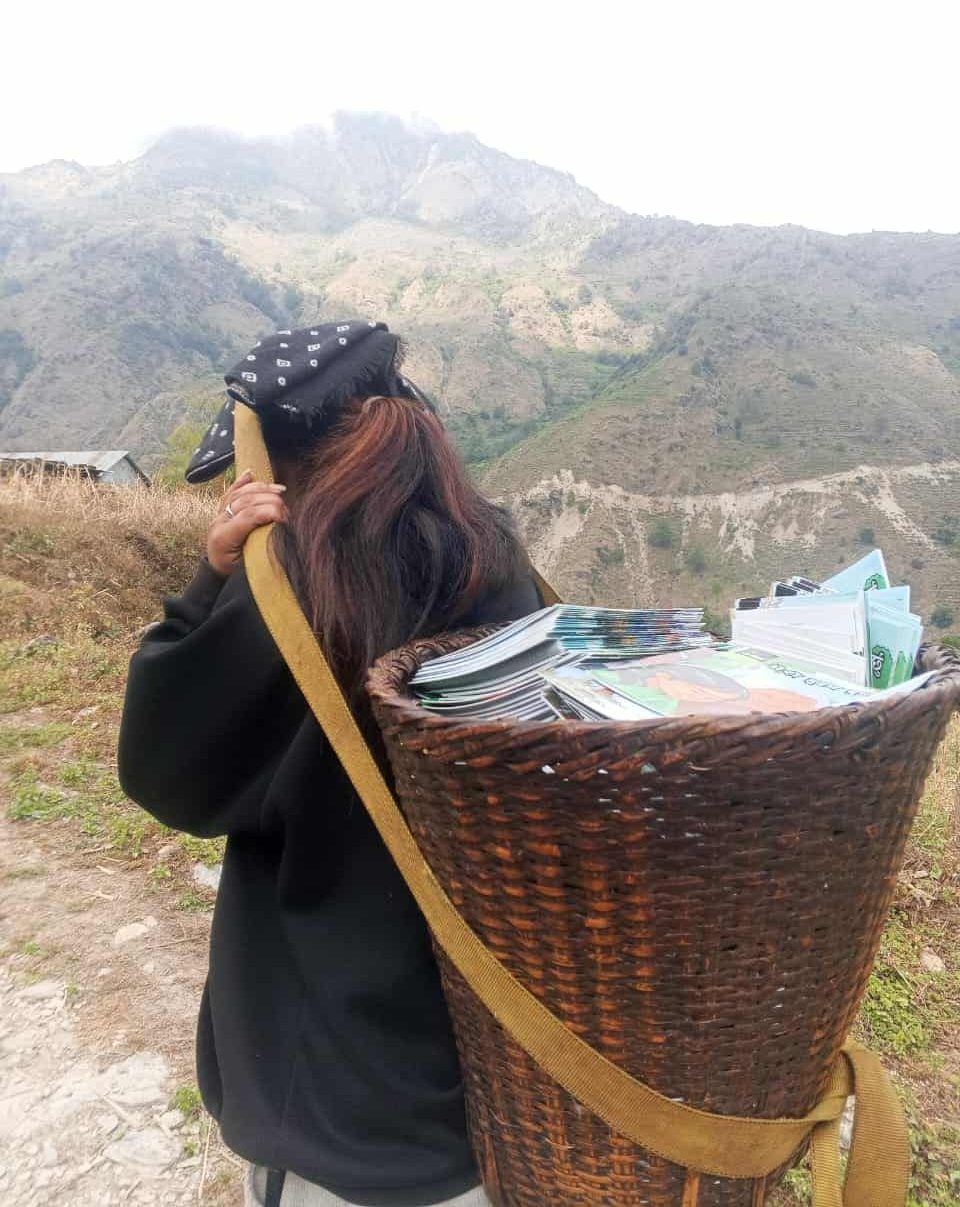
An Alongsider carrying a basket of discipleship materials.
After God’s heart
As of 2026, there are currently 85,000 people who are part of Alongsiders, and this number has doubled every year for the last five years.
“We have to put the brakes on (growth),” said Craig. “If we keep growing, we could have real financial problems. We won’t be able to print the comics.”
Another big expense is camps. For example, they were only able to sponsor US$5,000 (S$6,400) for a camp in East Africa that had 5,000 children and youths, which worked out to be US$1 (S$1.30) for every camper.
That is why raising support from donors in developed nations such as Singapore is critical.
When asked why he chose to incorporate Alongsiders International in Singapore, Craig said that the country’s robust legal infrastructure made it a suitable base for international financial activities.
Blessed with resources, churches here have also been partnering with Alongsiders in various ways, such as sponsoring camp fees or even serving at camps.
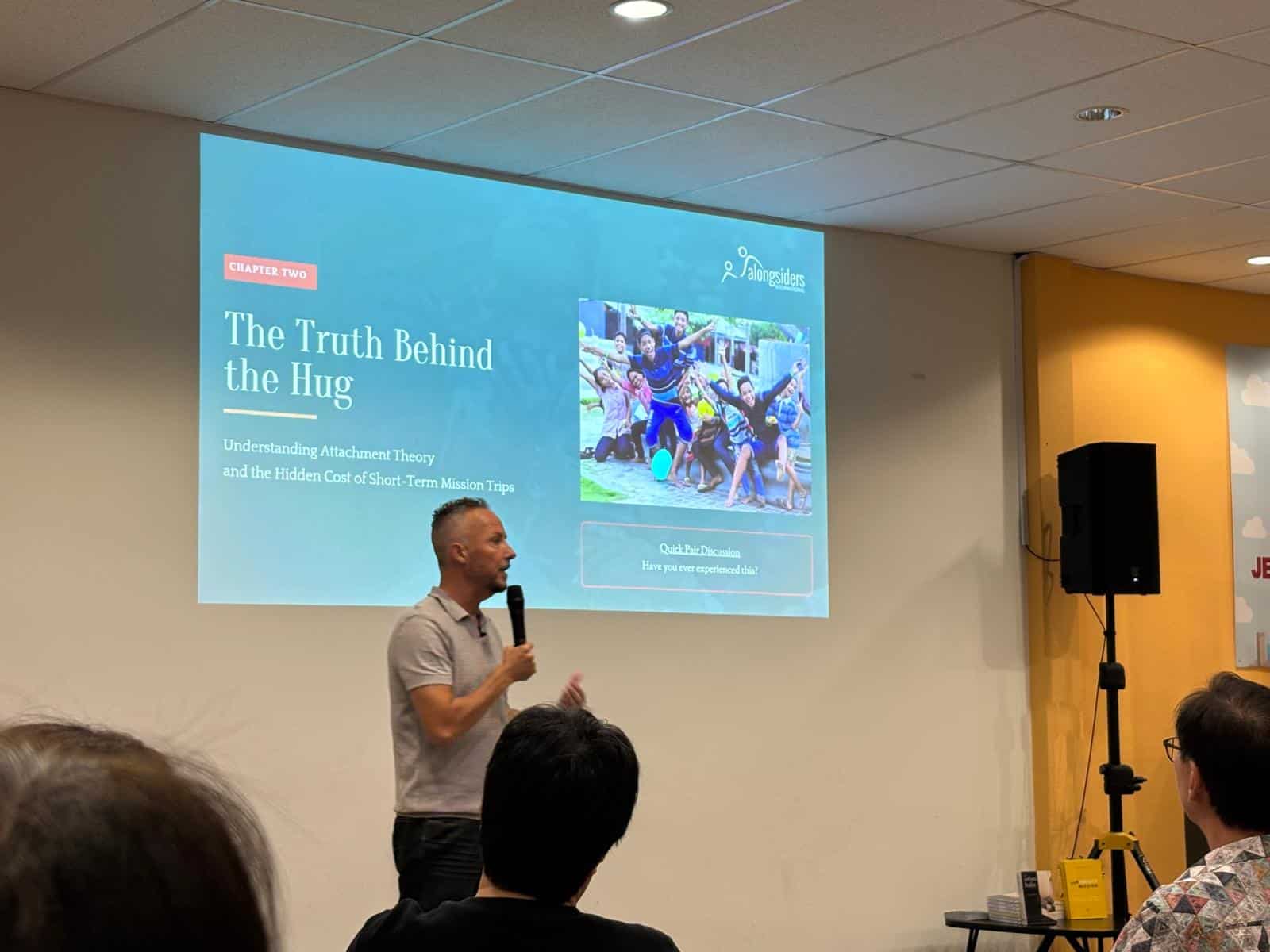
During Craig’s trip to Singapore in April, he spoke at a Learning Community event organised by World Without Orphans – Singapore (WWO-SG). Photo courtesy of WWO-SG.
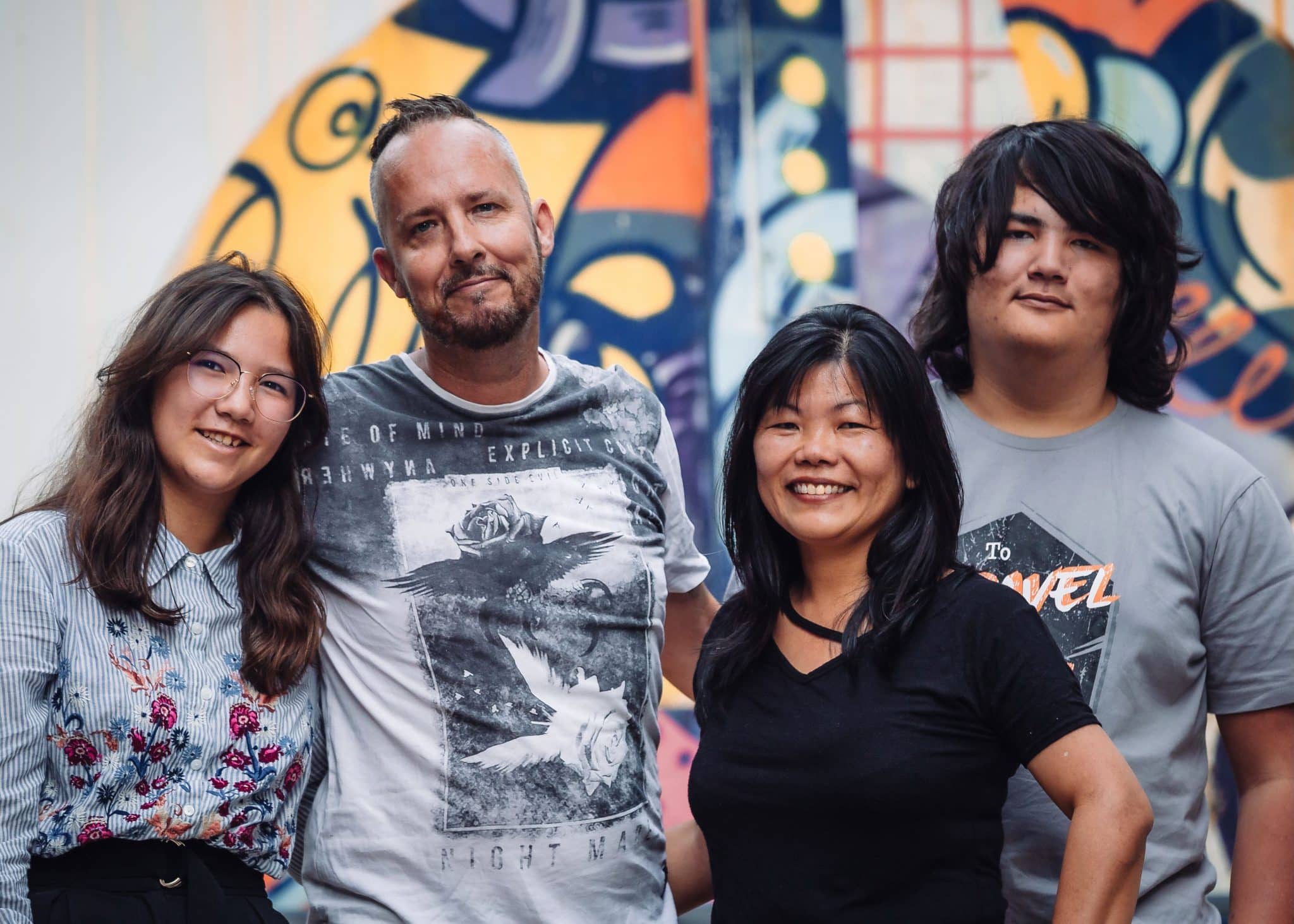
Craig’s children are now aged 21 and 23; both are studying in university.
Having spent more than 20 years in the slums, Craig is an advocate for the Cambodian proverb: “It takes a spider to repair its own web.”
“Local ownership is a key thing. I always say, ‘I’m just an outsider who helps insiders become Alongsiders.'”
Reckoning that he probably has another 20 years left to serve, Craig intends to continue proclaiming Good News to the poor, while fighting against injustices – or what he calls “bad news” – that destroys their lives.
“I have this deal with God that 90% of my energy is for the non-Western world, for the poor,” said Craig, adding that the remaining 10% of time and energy he devotes to the developed world involves activities such as speaking in churches and writing books.
“I’m happy to do it because I want everyone to be transformed. God has such a powerful heart for the poor and for the downtrodden, and I’m after that heart.”
To find out more about Alongsiders International or support their work, visit their website.
READ MORE:
“Rise up to be God’s hand of mercy”: Everyone can do something for a world without orphans
A drink packet broke the heart of Singapore couple who moved to Cambodia to serve slum dwellers
How a victim of childhood abuse found the healing to minister to others in Thailand

This year, as we celebrate 10 years, consider sowing into our Kingdom ministry! For S$10 a month, you become part of the #10for10 community and a part of every story we tell.
Partner with us