Singapore is now a super aged society. We have to rethink our ministry to seniors
by Christine Leow // May 25, 2026, 5:00 am

The seniors of today and the seniors of tomorrow are vastly different from what we understand "seniors" to be like. How they are encouraged to serve and how they are approached to share the Gospel needs to change. Photo from Depositphotos.com.
The year 2026 is a watershed year.
This is the year Singapore crosses the threshold from an ageing society to a super aged society – more than 21% of our people are now aged 65 and above.
“There are seniors of today, seniors of tomorrow, and seniors who are coming in.”
Not only has Singapore been greying, it has been greying at a rapidly increasing pace.
It took nearly two decades to go from being an ageing to an aged society. In half that time, Singapore progressed to being a super aged society.
By 2030 – four short years from now – Singapore will be firmly entrenched in the super aged category: One in four people on this island nation will be aged 65 or above.
With such a large swathe of the population under the “senior” banner, a single broad term is no longer enough to define this group of people.
“It’s actually not one generation of people when we talk about ‘senior’. It’s actually multiple generations,” said Andrew Lim, CEO of Presbyterian Community Social Services.
“There are seniors of today, seniors of tomorrow, and seniors who are coming in.”
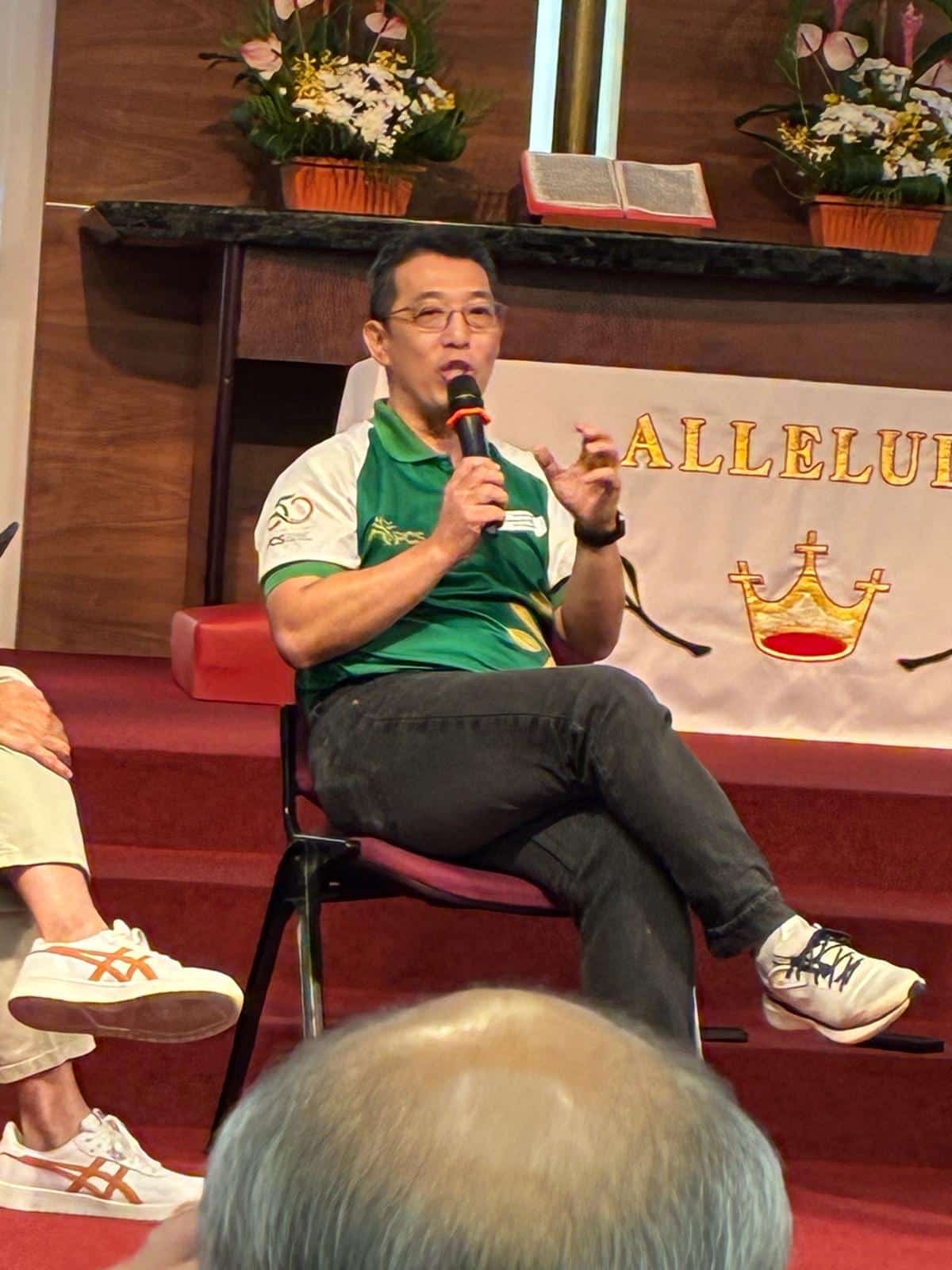
Andrew Lim was among the panellists who talked about the current landscape in the senior ministry in Singapore. All photos by Salt&Light unless otherwise indicated.
He was speaking at the inaugural Senior Ministry Leader’s Forum held on April 21. The event was organised by Caleb Generation, a movement launched in November 2025 to harness and develop the silver resources in Singapore churches.
Over 220 people attended the forum. More than half were involved in the senior ministry. Another nearly one in five were from social service agencies, while more than one in four were there to explore the senior ministry.
One of the key points of the forum was a call to rethink how ministry to seniors is done.
Rise of the new senior
The senior ministry used to look at “the very basic things, like for caring for them in their nutrition, in their medical needs, in their care needs”.
Andrew noted: “But the seniors of today and seniors of tomorrow are very different. Their educational levels are different. The expectations are different. The journeys that they have gone through to be where they are today are also different.
“If we do not change in our mindset, I think we could be displaced.”
“Their digital literacy is also different. Some are still learning, but some cannot live without it.”
Because it is not a homogeneous group, how senior services are viewed should be re-examined as well. The new seniors are more likely to seek meaning and purpose, relational connections and contribution more than merely consumption.
“We are already observing seniors joining us as volunteers, rather than being there to collect the goodie bag.
“If we do not change in our mindset, I think we could be displaced or made irrelevant in terms of how we are approaching the work for seniors in the community.”
A change in strategy
Given this different mindset, capturing the interest of these new seniors will take more than just offering exciting programmes.
“When God moves you, He will personally guide you.”
“Seniors of tomorrow are unlikely to come to church because you ask them to come, especially if they are not believers,” Andrew said. “But they will come because of the trust and relationship that you have developed with them in the community.”
Actor Zhu Houren, who has an active ministry evangelising to the elderly talked about just how he has been doing that – “living in the community” to reach out to the elderly.
This was something he learnt when he began volunteering at Care Corner Singapore.
“Living in the community was something they (Care Corner) believed in because they said it was the example of Jesus,” Houren explained in Mandarin.
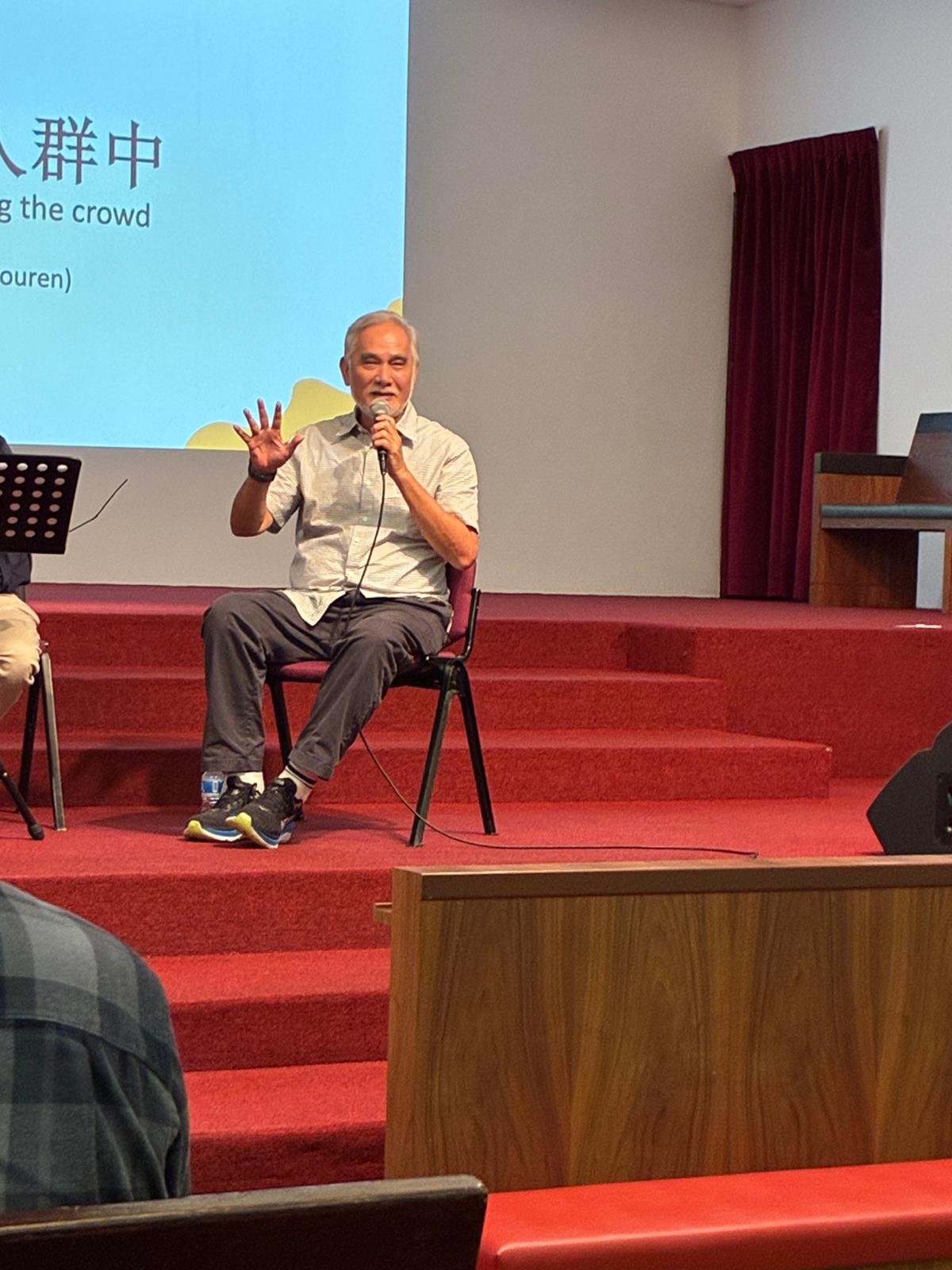
At 71, Zhu Houren hoped to slow down. But God has convicted him to continue “living in the community” to reach the elderly.
“For 30 years before Jesus started His ministry, He lived in His community. When He began His ministry, He also didn’t do it in the sanctuary; He did it within the community – in every alleyway, every street, every household.
“Last year, this phrase moved me again: ‘When God moves you, He will personally guide you.’”
In the community
The first time Houren got to share the Gospel this year was not in a church, but in the community – at a nursing home.
Since then, he has been to homes, hospitals and neighbourhoods to share God’s Word. Every Saturday, he also joins his friends to hand out food to lonely seniors in Kallang Bahru or Toa Payoh in a bid to continue being in the community.
“We are to be salt and light.”
“In the past, churches would invite me to speak at their evangelistic events. It used to be easy to say an actor is coming – that attracted people.
“Now, it is very difficult because people don’t watch much local TV.”
That is why, instead of bringing people to church, going into the community is a better way to reach the aged.
Houren concluded: “We are to be salt and light. Salt needs to be scattered in the community. Light needs to be shone into the community.”
RELATED STORIES:
How to flourish and bear fruit in your latter years: Ho Wan Leng, Co-chair of NCW

This year, as we celebrate 10 years, consider sowing into our Kingdom ministry! For S$10 a month, you become part of the #10for10 community and a part of every story we tell.
Partner with us
Related Articles

Are you a senior? Then it’s time to become a mountain-conqueror: Caleb Generation

“If I forget, do I still matter?”: New guidebook launched to help churches love and include those with dementia

Let’s not just focus on the senior ministry. Let’s go intergenerational: Senior Ministry Leader’s Forum
