Why Singapore’s Christians need a better answer than euthanasia
Timothy Anand Weerasekara // June 2, 2026, 10:00 am
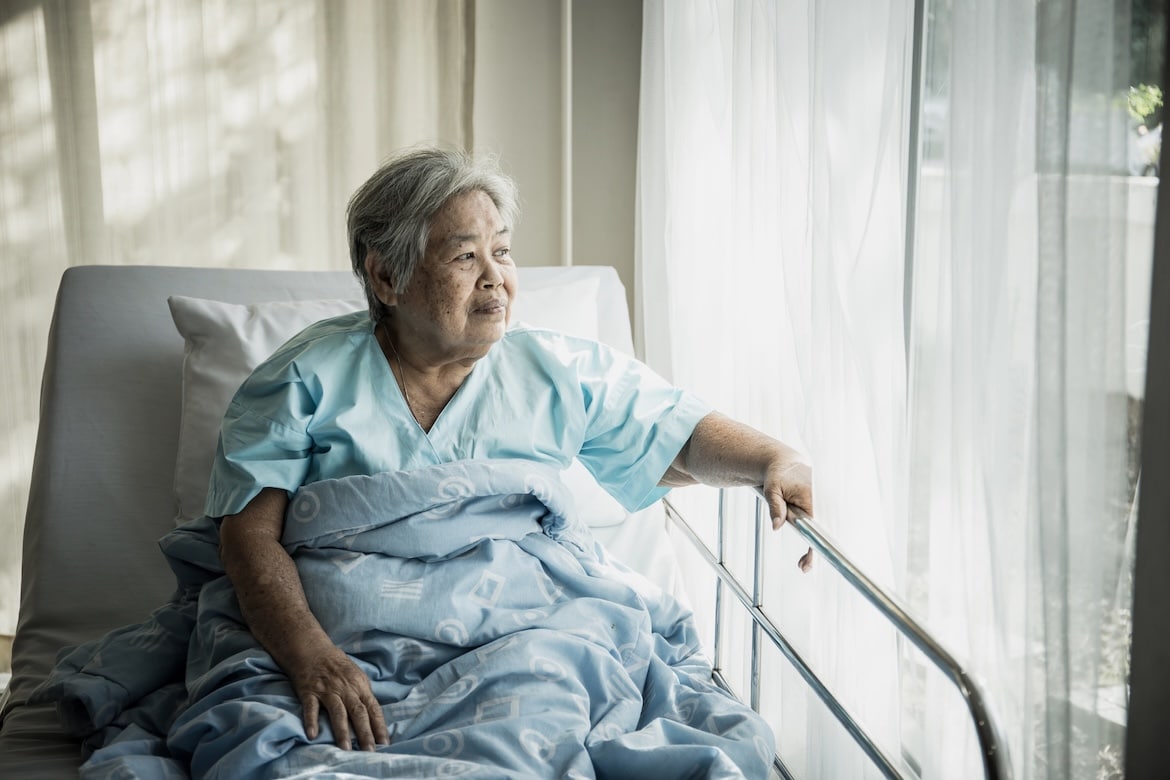
As the call for assisted dying begins to loom in Singapore, the author argues that Christians must fight for "assisted living" instead. Singapore has the heart to lead the world in hospice care that treats the whole person: Body, soul, and spirit. Photos from Depositphotos.com.
A few months ago, “test balloons” appeared in our national media, suggesting it is time for Singapore to “have a conversation” about euthanasia or assisted dying. These discussions are often framed as an organic evolution of a mature society.
The truth is that this is a misguided answer to a real cry for help, an affront to the ethic of filial piety, and a direct challenge to the biblical command not to kill. Further, by framing death as a “solution” to suffering, we risk eroding the very foundation of the family: The sacred duty to care for those who once cared for us.
Yet, in the quiet corners of our First World hospital wards and the hushed conversations within our HDB flats, a profound fear often lingers. It is not just the fear of pain, but the fear of becoming a “burden.” It is an ironic indictment that – in our highly-developed society, supposedly optimised for human flourishing – many of our elders look at their waning strength and wonder if their presence has become a liability to the children they raised.
As Christians, we must meet this fear with an immense, unconditional warmth. We believe that every grey hair is a crown of glory; and every life, no matter how frail, is a masterpiece of the Creator. Christians cannot take their cues from a secular culture that measures humans in utils (units of satisfaction or happiness). We have standards from a higher Source and we are the stewards of lives that don’t belong to us.
Establishing the boundaries
As Singapore engages in this conversation, Christians must define our terms to prevent confusion. Active euthanasia is the intentional termination of a patient’s life, a direct violation of the commandment not to murder. In the Christian worldview, no medical service can ever justify the deliberate destruction of the Imago Dei.
This is different from Singapore’s Advance Medical Directive (AMD). An AMD only applies when a patient is terminally ill and death is imminent; it is an instruction to refuse “heroic” or futile medical interventions that merely delay the inevitable process of dying, when recovery is no longer possible. It is an acceptance of our mortality, allowing a natural death to occur in its own time.
The call to discernment
Christians must be a people of profound discernment. We cannot be ignorant or naive about how moral boundaries, once crossed, tend to slide in increasingly permissive directions that complete the project of the desacralisation of human life.
1. Language and euphemism
We must first discern the manipulation of language. Euthanasia is rarely presented in honest terms; it is cloaked in euphemisms like “dignified dying”, “medical assistance in dying” (MAID), “deliverance”, “mercy killing” or “prevention of suffering”. These terms are designed to mask a sinister reality: We are essentially killing in the name of compassion.
By rebranding the intentional ending of life as a “medical service”, we introduce structural societal dynamics that send a subtle but clear signal to the vulnerable: When your “use” is up and you require significant care, you should “exit stage left”.

Euthanasia is rarely presented in honest terms; it is cloaked in euphemisms like “dignified dying”, while in truth it is the intentional termination of a patient’s life which directly defies the Sixth Commandment.
This is how a claimed “right to die”, which is itself a theological and ontological falsehood, becomes a “duty to die”. The social temperature shifts over time, even if it is not discernible at the start. When the healer also becomes the one who administers the lethal dose, the patient who feels like a burden begins to view their continued existence as a selfish act of theft from the next generation.

2. The desacralisation of life
Christians must be discerning about the historical trajectory of such “allowances”. We have seen this pattern before in Singapore. Abortion was initially presented as a highly restricted measure for extreme cases, only to be liberalised until we became one of the most liberal abortion regimes in the world.
Similarly, the decriminalisation of attempted suicide removed yet another moral marker that life is precious and not to be toyed with.
Euthanasia would be the final nail in the project to steal, kill, and destroy humanity’s foundational gift: Life!
Life is the prerequisite upon which all human dignity and communion are built. Even our communion with God. So, we must ask ourselves: Which ethic are we partnering with? Are we a people of life, or are we aligned with the spirit of death?
A theology of life
To respond faithfully, Christians must ground our thinking in the Word of God and decide to be a people of life.
- The Imago Dei (Image of God) The foundational basis for Christian ethics is the sanctity of human life. Humans are created in the image of God (Genesis 1:27). This dignity is not dependent on age, health, or “quality of life”. It is an intrinsic, underived value given by the Creator. To intentionally destroy this image is to strike at the Creator Himself (Genesis 9:6).
- Sovereignty vs autonomy The secular world prizes autonomy – the idea that “my life is my own.” But the biblical principle is stewardship. Our life is a gift from God. We are not “self-owners”; we are caretakers of a life that belongs to the Father (Psalm 24:1). God makes the ultimate prize – communion with Christ – an “eternal life.” If life is the prize of eternity, we ought to prize it here on earth, choosing communion with one another over the annihilation of one another in pain.
- Covenantal presence: From “cure or kill” to “suffer with” We must reject the “cure or kill” ideology —the belief that if a patient cannot be cured, they should be eliminated. As a Church, our responsibility is rooted in the virtue of companionship (from the Latin cum panis, meaning “with bread”). When medicine reaches the limits of its “cure”, the Christian vocation of “care” truly begins.
Historically, the Hippocratic Oath bound physicians to “do no harm”, creating a sanctuary of trust. If the state attempts to reclassify the role of medicine to include intentional killing, the Church must stand as the guardian of that original promise. Our mutual responsibility is to fulfill the law of Christ by “bearing one another’s burdens” (Galatians 6:2). In the face of incurable illness, the biblical response to pain is not a lethal dose, but a persistent, loving company.
“What about …”
There are several common justifications, often framed as “compassionate” or “pragmatic”, that are worth addressing with clarity.
People often ask, “What about the financial and emotional toll on the children?” As Christians, we understand that a person’s value is never found in their “economic utility.” To suggest that a life should end because it is costly to maintain is to adopt the spirit of the market over the spirit of the family. Our responsibility is to support the caregivers so they can continue to honour life, not to eliminate the person receiving care.
Still, some may argue that catastrophic medical bills will erase an entire lifetime’s worth of inheritance building for the next generation. In Singapore, we have the privilege of well-designed social safety nets. A tiered system absorbs shock: Subsidies reduce costs upfront; Medisave covers routine payments; MediShield Life insures large bills; optional Integrated Shield Plans extend coverage; MediFund closes the final gap.
Care is secured without forced liquidation of savings in most cases. Euthanasia cannot be justified on account of financial necessity here. And besides, if we end life to preserve wealth, the inheritance is stained. What is passed down is no longer inheritance, provision or legacy. It becomes blood money.

To end a parent’s life so that the next generation can benefit from his wealth instead of seeing it spent on his care while alive turns such inheritance into “blood money”, says the author.
Another common refrain is, “We wouldn’t let a dog suffer like this; why are we less kind to humans?” This reveals a tragic loss of the Imago Dei. Animals are under our stewardship, but humans are our equals before God. We do not “put down” our brothers and sisters because they have a dignity that transcends their biological condition. True kindness is not the needle, but the hand that stays through the night.
Finally, euthanasia advocates argue, “It’s my body, shouldn’t I have the final say?” However, the Bible reminds us that “you are not your own; you were bought at a price” (1 Cor 6:19-20). Our bodies are temples. The “right to die” is a fiction that ignores our mutual interconnectedness; our death is never a private event—it ripples through the community and changes the moral landscape for everyone else.
A pattern of expanded access
Global evidence shows that “safeguards” are almost always temporary, evolving from restricted gates to wide-open avenues of desacralisation. We recognise the logic of the slide:
- The terminal threshold: Initially for terminal illnesses and “unbearable” physical pain.
- The chronic shift: Expansion to non-terminal but “incurable” chronic illnesses or disabilities.
- The psychological turn: Criteria becomes purely subjective, offered for depression or PTSD.
- The “tired of life” phase: Medical requirement fades; offered for loneliness or poverty.
- The non-voluntary end: Extended to those who cannot consent, such as infants or those with advanced dementia, decided by others on their behalf.
The redemptive nature of presence
Our society sees suffering as an interruption to be avoided, minimised, or deleted at all costs. But the Gospel offers a different perspective: Pain is not a biological error to be eradicated, but the “vocation of the valley”. It is a place where Christ deeply meets us, and where we find solace in His company.
Compassion is not a lethal injection; it is the presence that stays through the tender, difficult moments.
We are called to “walk through the valley of the shadow of death” with one another, not to build a high-speed bypass out of it. When we seek to eliminate the sufferer to eliminate the suffering, we succumb to the “Great Abandonment” — the ultimate failure of the community to co-suffer with its members.
The answer to a brother or sister in agony is not a clinical process of elimination, but a communal presence rooted in the virtue of patient endurance (hypomonē). True dignity is not found in autonomy or functional independence; it is an inherent quality of the Imago Dei that cannot be diminished by incontinence, physical weakness or mental decline.
When advocates argue that a patient has “lost their dignity” because they require care, they weaponise a false definition based on utility. In reality, our inherent dignity is upheld when we allow ourselves to be cared for, and when we, in turn, offer the “deeper presence” of love to those in their final stages.
Compassion is not a lethal injection; it is the presence that stays through the tender, difficult moments, finding solace in the company of Christ and proving that our love for one another is real.
A call to “assisted living”
So, how must Christians respond when the “test balloons” of euthanasia float past? We respond by being the most compassionate community in the nation, proving that the answer to a “hard death” is not a “quick exit” but a more robust social fabric.
As we follow the example of Jesus, we recognise that our story does not end in a hospital ward, but opens into the eternal life He has promised.
We must champion palliative care — what we might call “assisted living”. Singapore has the heart to lead the world in hospice care that treats the whole person: Body, soul, and spirit.
We must reassure our elders: “You are not a burden. You are a blessing. Your value is not defined by what you can do for the economy, but by whose you are in the eyes of God.”
Let us reject the narrative that death is a compassionate “relief”. Instead, let us work together to ensure that every Singaporean can face the end of their journey surrounded by a community that refuses to give up on the sanctity of their life.
As we follow the example of Jesus, we recognise that our story does not end in a hospital ward, but opens into the eternal life He has promised.
This year, as we celebrate 10 years, consider sowing into our Kingdom ministry! For S$10 a month, you become part of the #10for10 community and a part of every story we tell.
Partner with us