The decline may be mercy: What the General Household Survey 2025 may be saying to the Singapore Church
Guna Raman // July 8, 2026, 12:01 pm
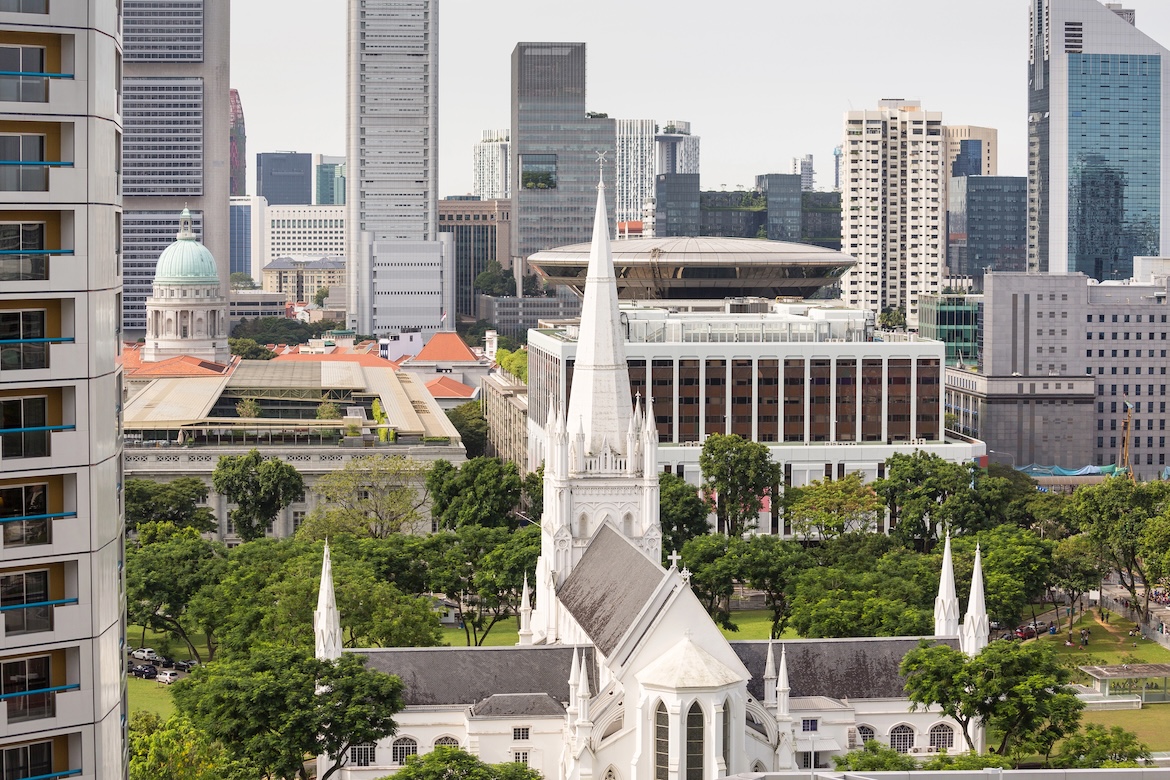
The recent General Household Survey reflected a decline in the number of Singaporeans who count themselves Christians. Perhaps this decline is a call to repentance and a return to discipleship, the author writes. Photo from Depositphotos.com.
A city can lose its need for God long before it loses its respect for religion.
That may be one of the most sobering realities about Singapore. Our danger is not usually open rebellion. It is replacement. God is not thrown out of the house; He is quietly moved into the storeroom. We keep Him for crisis, comfort, weddings, funerals, moral language, and national moments of anxiety.
But the daily architecture of life is often built on grades, property, career, health, family security, financial stability, and personal fulfilment.
That is more dangerous than hostility because it feels so normal.
Not rejected. Just marginal.
Not hated. Just unnecessary.
The GHS cannot read hearts. But it can hold up a mirror. And if we have courage, we should look.
That is why the latest General Household Survey should not merely make churches anxious. It should make us honest.
According to GHS 2025, Christianity’s share of Singapore’s resident population fell from 18.9% in 2020 to 17.1% in 2025. This is the first recorded decline after decades of growth.
But the sharper detail lies beneath the headline. Catholic numbers rose, while Protestant numbers fell from 11.9% to 9.5%, a drop of nearly 66,000 people.
So the question is not simply, “Why is Christianity declining?”

The more painful question is: What is happening to Singaporean Protestantism?
And beneath that lies an even deeper question: What kind of Christianity have we actually been forming?
The GHS cannot read hearts. It cannot tell us who truly belongs to Christ. It cannot distinguish between a wounded believer, a nominal Christian, a disillusioned churchgoer, a quiet backslider, a tired parent, a deconstructing young adult, and someone who has simply stopped ticking the Christian box.
But it can hold up a mirror.
And if we have courage, we should look.
The decline may not only be crisis. It may be mercy
That sounds strange because decline usually feels like judgement, failure, or defeat. But in Scripture, God often wounds in order to heal. He exposes in order to cleanse. He strips away false confidence so His people may rediscover true grace.
The Singapore Church has had decades of growth, respectability, institution-building, and public influence. We have built schools, ministries, networks, conferences, movements, social services and impressive church infrastructure. Much of this is good. It should not be despised.
The more precise story is that Protestant self-identification has fallen sharply.
Many Pastors have laboured faithfully. Many parents have prayed with tears. Many youth workers have stayed up late listening to confused young people. Many churches have preached Christ, served the poor, welcomed doubters, buried the dead, discipled the weak, and held the line when it was costly. We must not speak as if the whole Church has been faithless.
But faithful labour does not remove the need for honest examination.
Growth can conceal weakness. A full room can hide shallow formation. A busy calendar can hide prayerlessness. A strong brand can hide weak ecclesiology. A gifted preacher can hide a consumer church. A stable institution can hide a declining missionary imagination.
So if GHS 2025 is a rebuke, we should not waste it. If it is exposure, we should receive it as grace. God may be showing us what was thinner than we wanted to admit.
Protestant nominalism is being exposed
The headline “Christianity declined” is true, but too blunt. The more precise story is that Protestant self-identification has fallen sharply.
Have we formed attenders, volunteers, ministry workers, and conference-goers, but not always disciples?
That matters because Protestant identity in Singapore is often more voluntary and congregation-dependent. It is less tied to ethnicity, family rites, institutional memory or sacramental belonging. Many Protestants belong because they attend, serve, join a cell group, like the preaching, trust the leaders, or have friends in the church.
When those ties weaken, the label itself may weaken.
This does not mean everyone who leaves the label has rejected Christ. Some have been wounded. Some are confused. Some are weary. Some were never truly discipled. Some may still be searching. We should not flatten their stories.
But we should still ask the harder question.
Have we formed attenders, volunteers, ministry workers, and conference-goers, but not always disciples whose loves, habits, ambitions, sexuality, money, suffering, family life, and imagination have been reordered around Christ?
That is a hard question. But it must be asked.
We have often been strong on activity. We have not always been strong on formation. We can fill rooms, run programmes, produce worship nights, mobilise volunteers, and organise conferences. But the deeper question is whether people have been apprenticed into a life where Christ is more beautiful than success, more secure than money, more authoritative than desire, and more precious than family approval.
If not, the decline is not merely demographic.
It is revelatory.
The “nones” are not just young people
It is too easy to blame Gen Z.
The GHS shows that those with no religious affiliation rose from 20% in 2020 to 23.9% in 2025. Among 15- to 24-year-olds, the figure also rose. But the rise is not limited to youth. It cuts across age and educational groups.
Young people are not easily fooled … they notice when Christ is confessed as Lord but treated as secondary to achievement, comfort and family honour.
This is not merely a young people problem. It is a whole-society formation problem.
That matters because youth drift is often downstream from adult drift. Many churches are asking, “How do we keep our young people?” That is a valid question. But it is not the first question.
The first question may be: What kind of discipleship have our adults received?
Have Christian parents, leaders, professionals, and older believers become people whose lives make the gospel plausible? Or have we shown the next generation that Christianity is meaningful on Sunday, but secondary from Monday to Saturday?
Young people are not easily fooled by religious language without lived reality. They notice what adults fear. They notice what families protect. They notice when Christ is confessed as Lord but treated as secondary to achievement, comfort and family honour.
The problem is not only that young people are leaving the Church. The problem may also be that some have watched adults remain in church while Christ slowly becomes decorative rather than central.
That should humble us.
The home may be preaching another gospel
A child may hear one gospel in church and another gospel at home.
In church: Christ is Lord.
At home: Grades are urgent.
In church: Seek first the kingdom.
At home: Tuition is non-negotiable.
In church: Your identity is in Christ.
At home: Do not embarrass the family.
In church: God provides.
At home: Property, career and savings become the real refuge.
This is not to shame parents. Parenting in Singapore is hard. Many fathers and mothers are tired, anxious, trying to help their children survive in a demanding society. Many carry fears inherited from their own upbringing. Many want their children to flourish.
Some have watched adults remain in church while Christ slowly becomes decorative rather than central.
But love can become idolatrous when fear takes the wheel.
The Asian home is powerful. It catechises through panic, spending, silence, sacrifice, comparison and shame. Children learn not only from what parents say, but from what parents fear. They learn the family’s true liturgy: What must never be lost, what must always be protected, what makes us worthy.
This is where many Christian homes, including mine, need honest repentance.
We cannot outsource discipleship to Youth Pastors, camps, and cell leaders while our homes quietly preach another gospel through anxiety and ambition.
If Christ is verbally honoured but functionally beneath exams, career, romance, property and reputation, children are not confused. They understand the hierarchy.
Churches can run camps, youth services, discipleship groups and mentoring programmes. These matter.
But if the home disciples children into achievement with a thin Christian coating, the home usually wins.
Educated Singapore has become harder soil
Among university-qualified residents, Christianity declined while “no religion” rose. This does not mean intelligent people outgrow faith.
The educated Singaporean increasingly lives in a world where God feels unnecessary.
The issue is not intelligence.
The issue is plausibility.
The educated Singaporean increasingly lives in a world where God feels unnecessary. Anxiety is named through clinical language. Success is measured through career progress. Suffering is processed through therapy. The future is secured through financial planning. Identity is framed through self-expression. Meaning is assembled through lifestyle, travel, relationships and work.
In such a world, religion may still be respected, but it no longer feels necessary for making sense of life.
Religion becomes one private layer among many, useful perhaps for comfort, tradition, or moral grounding, but not necessary for public truth.
This is where weak preaching collapses.
The Gospel must show the modern Singaporean that a well-managed life is not the same as a reconciled life.
If churches offer moral advice, emotional uplift, leadership principles, therapeutic reassurance and vague “God has a plan” language, thoughtful people will eventually realise they can get cleaner versions elsewhere.
They can get productivity from LinkedIn, emotional language from therapy, inspiration from podcasts, belonging from interest communities, and answers from AI.
The pulpit must not become anti-intellectual. But neither can it become merely intellectual. It must show that the gospel is not a religious add-on to an otherwise complete life. It is the deepest account of reality: Creation, fall, redemption, renewal, restoration; guilt and grace; longing and home; justice and mercy; body and soul; death and resurrection.
The gospel must not only answer questions. It must expose the false salvation-stories beneath the questions.
It must show the successful person that achievement cannot justify them.
It must show the anxious person that control cannot save them.
It must show the sexually confused person that desire cannot name them.
It must show the wounded person that therapy can help, but only Christ can finally redeem.
It must show the modern Singaporean that a well-managed life is not the same as a reconciled life.
COVID revealed our shallow roots
COVID did not create the problem. It revealed it.
The pandemic trained many people to relate to church as content.
The State of the Church in Singapore 2022 found that many attendees had not returned to in-person worship compared with pre-pandemic patterns, and many churches reported decreased attendance.
For some, online church was a necessary mercy during crisis. We should not speak carelessly about those who were vulnerable, ill, elderly, immunocompromised, grieving or afraid.
But we must also be honest. The pandemic trained many people to relate to church as content.
Once church becomes content, it competes with better content.
Once worship becomes convenience, discipleship loses to comfort.
Once community becomes optional, accountability feels intrusive.
Once the Lord’s Day becomes one flexible item among many, the body of Christ becomes a preference, not a people.
Some churches discovered that what we had called discipleship was sometimes programme attendance. People had been present, but not rooted. Active, but not formed. Familiar with Christian language, but not bound to Christian community.
That is not mainly a technology problem. It is a heart problem.
Digital convenience did not create the consumer. It gave the consumer permission to stay home.
Transfer growth is not Kingdom growth
Another uncomfortable reality is that some churches attracting young adults may be growing mainly through already-churched believers.
Transfer growth must not be mistaken for evangelistic fruit … the Kingdom has not necessarily grown. The sheep have moved pens.
In other words, some churches may look successful locally while the wider Christian witness shrinks nationally.
This is serious.
If one church grows because Christians move from another church, the Kingdom has not necessarily grown. The seating arrangement has changed. The sheep have moved pens.
There are, of course, good reasons why people sometimes move churches. Some leave unhealthy environments. Some need a church nearer home. Some are looking for sounder teaching or healthier community. We should not judge every transfer as shallow.
But transfer growth must not be mistaken for evangelistic fruit.
A church can have full services, strong worship, young energy, polished communications, excellent preaching, and a lively social media presence, while Singapore as a whole becomes less Christian.
The question is not only, “Are our services full?”
The question is, “Are unbelievers becoming disciples, and are the children of believers becoming adult believers?”
If not, we are not reaching the city. We are rearranging the already reached.
The Church is losing credibility on both sides
Singapore’s moral landscape is changing. Attitudes on sexuality, cohabitation, marriage and family formation have become more permissive, especially among younger cohorts.
Churches often respond in two equally weak ways.
Christ is not a lifestyle enhancer. He is Lord.
Some become harsh. They speak truth without tears, doctrine without beauty, holiness without hospitality. They sound more irritated than holy, more threatened than courageous. Young adults then hear Christianity as anti-human, anti-love, and anti-joy.
Others become evasive. They avoid hard doctrines because they fear losing people. They soften biblical teaching until Christianity becomes a therapeutic community with religious vocabulary. Young adults then ask, quite reasonably, “Why give my life to this?”
Both responses fail.
The gospel is neither harshness nor cowardice. It tells the truth about the body, desire, sin, holiness, grace, judgement, beauty, and resurrection. It says our desires are real, but not sovereign. Our bodies matter, but they are not self-owned. Grace is free, but not cheap. Holiness is costly, but beautiful.
Christ is not a lifestyle enhancer.
He is Lord.
The Church must recover a moral vision that is not merely defensive, but radiant.
The Church must recover a moral vision that is not merely defensive, but radiant. We must show that Christian holiness is not the shrinking of human life, but its healing.
If the Church speaks only in prohibitions, we will sound like people protecting a past.
If the Church speaks only in accommodation, we will sound like people embarrassed by God.
But if the Church speaks with truth and tears, conviction and hospitality, holiness and beauty, we may again show a better way to be human.
Young adults want depth, not packaging
The answer is not simply cooler worship, better design, shorter sermons, trendier language, or more “authentic” sharing. These may help at the edges. But they cannot carry the weight of discipleship.
Young adults do not need a church that merely mirrors their anxieties. They already have enough anxiety.
They do not need religious branding for the same achievement culture that is exhausting them.
A church that opens the Scriptures deeply … practises repentance, welcomes doubters … and makes Christ beautiful may still speak with surprising power.
They do not need sentimental sermons that baptise their ambitions.
They do not need leaders who dodge hard questions with clichés.
They need the Bible opened with clarity, courage, tenderness and depth.
They need a church that can name their idols without despising them.
They need a gospel big enough for depression, sexuality, ambition, loneliness, wealth, family pressure, career uncertainty, intellectual doubt, and moral confusion.
They need not merely relevance.
They need transcendence.
A shallow church will lose thoughtful young adults. A merely trendy church may entertain them for a season. A harsh church will wound them. A cowardly church will bore them.
But a church that opens the Scriptures deeply, embodies costly community, practises repentance, welcomes doubters, honours holiness, and makes Christ beautiful may still speak with surprising power.
The way home is repentance, not panic
The Singapore Church does not need panic.
Panic blames the young, scolds culture, copies trends, changes branding, and demands quick wins. Panic may fill a room, but it cannot renew a church.
The Church in Singapore does not need to become louder, cooler, angrier … She needs to become more deeply converted.
We need repentance.
Not vague repentance. Specific repentance.
We must repent of preaching grace while forming people to measure their worth by achievement.
We must repent of singing “Christ is enough” while organising our homes around grades, career, comfort and face.
We must repent of defending doctrine without displaying beauty.
We must repent of pursuing relevance without costly obedience.
We must repent of counting attendance more carefully than conversions.
We must repent of producing church consumers and calling them disciples.
But repentance is not despair. It is the doorway back to grace.
Christ counted the cost we refused to count. He lost the city, the crowd, the family, the reputation, the comfort, and finally His life, so that fearful, ambitious, face-saving people could receive a Kingdom that cannot be shaken.
He was cast outside the gate so that outsiders could come home.
He was stripped of honour so that shame-bound people could receive sonship.
He was crushed under judgement so that guilty people could stop pretending.
He rose from the dead so that decline is never the final word for His Church.
If God is using this decline to purify His Church, will we resist Him?
So if GHS 2025 is a rebuke, receive it as mercy. If it is exposure, receive it as grace. If it is a warning, do not waste it.
The Church in Singapore does not need to become louder, cooler, angrier or more respectable.
She needs to become more deeply converted.
So perhaps the question is not merely, “Why is Christianity declining in Singapore?”
Perhaps the deeper question is this: If God is using this decline to purify His Church, will we resist Him — or will we let the gospel do its deeper work in us?
RELATED STORIES:
Are we still fulfilling the Great Commission? 6 key findings by the Lausanne Movement
Before revival must come repentance: Pastor Edmund Chan at PraySingapore
This year, as we celebrate 10 years, consider sowing into our Kingdom ministry! For S$10 a month, you become part of the #10for10 community and a part of every story we tell.
Partner with us
Related Articles

The wake-up call our seniors must not sleep through

On death’s door after his liver failed, he experienced a miracle that healed his body, faith and marriage

“I want to give my best years to God”: He gave up a prestigious university scholarship to serve in hard places
