Finding peace when the marketplace panics: Bishop Emeritus Robert M Solomon
Robert M Solomon // June 5, 2026, 2:20 pm

Investment guru Warren Buffett once observed: “When people are greedy (overbuying stocks), be anxious; when people are anxious (and oversell their stocks in panic), be greedy.”
Greed and anxiety are two inclinations that are commonly found in the way people behave in the marketplace. Jesus deals with both these sinful motivations in His great Sermon on the Mount.
While He addressed greed in Matthew 6:19-24 by calling us to a lifestyle of generosity, He spent the latter half of the chapter tackling the other great disruptor of the marketplace: Anxiety.
In a fast-paced, high-pressure environment like Singapore, anxiety can easily become a paralysing force, preventing people from truly following Jesus.
He deals with it in Matthew 6:25-34, which begins and ends with the reassuring words: “Do not worry” (Matthew 6:25, 34). What Jesus teaches in between these two reassurances tell us what we shouldn’t worry about. Firstly, we need not worry about our lives and bodies, and secondly about tomorrow.
Do not worry about your life
For many of us navigating our careers, families and long-term financial planning in Singapore, our anxieties naturally centre around daily necessities. We constantly ask ourselves: What will we eat? What will we drink? What will we wear? We see this playing out in real-time all around us.
Just recently, a YouGov sentiment tracker revealed that nearly four in 10 Singaporeans believe the nation will plunge into an economic recession within the next six months. Driven heavily by persistent geopolitical friction and global volatility, public optimism has dropped sharply.
Crucially, the data showed a direct link between macroeconomic worry and personal mental health, with 27% of respondents explicitly reporting that they experience direct stress or clinical anxiety exclusively tied to watching these global waves destabilise their household expenses.
Jesus does not dismiss these very real financial pressures as unimportant, but He gently asks us to look at them in proper perspective. Food, drink and clothing are merely means to an end; in our frantic pursuit of them, we often ignore the true end of our existence – life in communion with God.
Matthew 6:25 begins with a “Therefore”. Most likely, it refers to the statement that you cannot serve both God and Mammon (Matthew 6:24). If God is truly our Master, the natural implication is that we are safe in His hands and no longer need to bear the crushing weight of sustaining ourselves through our own independent strength.

Jesus invites us to look at the world around us and see His provision of grace.
To illustrate this, Jesus invites us to look at the world around us and see His provision of grace. “Look at the birds of the air,” He invites. “See how the lilies of the field grow,” He urges in Matthew 6:26, 28.
Unlike human beings, the birds do not engage in economic activity; “they do not sow or reap or store away in barns”. But they survive and thrive in the open skies.
The reason, according to Jesus, is: “Your heavenly Father feeds them.” He asks: “Are you not much more valuable than they [the birds]?”
Similarly, the lilies of the field do not labour or spin, yet they are dressed in greater splendour than King Solomon in all his glory. Jesus gently challenges: “[W]ill he not much more clothe you, O you of little faith?” (Matthew 6:30)
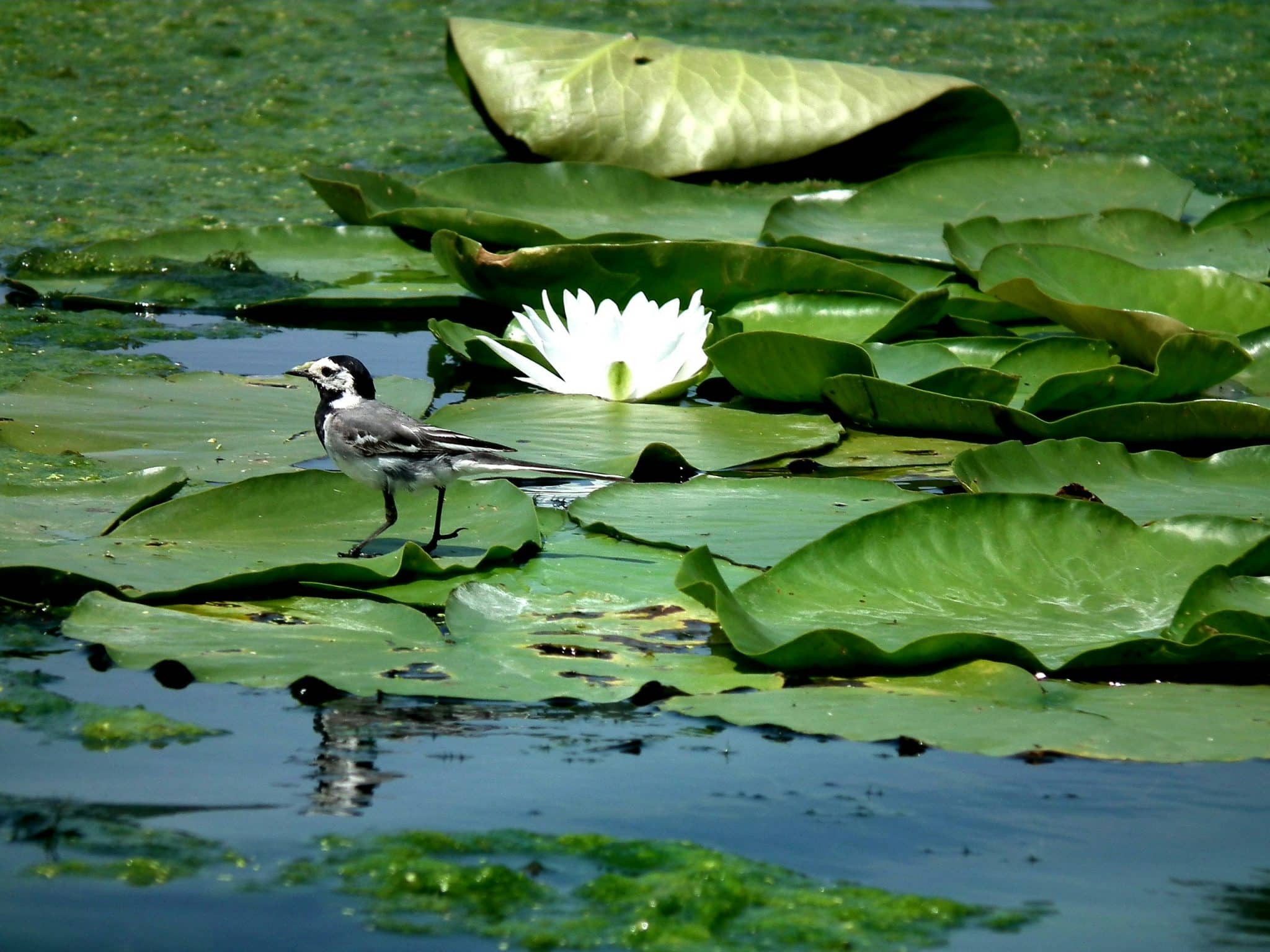
“See how the flowers of the field grow. They do not labor or spin. Yet I tell you that not even Solomon in all his splendour was dressed like one of these” (Matthew 6:28-29). Photo by Olena Zolotukhina on Unsplash
Faith and worry
When we allow economic uncertainty to consume us, Jesus diagnoses the root issue as being “little of faith”.
Those who worry unduly – so much so that they neglect the most important matters in life – are described by Jesus as those who are “little of faith” (Matthew 8:23-27; Matthew 14:23-33; Matthew 16:5-12).
All these three incidences appear in contexts set around the Sea of Galilee, a bustling hub of work, commerce and daily travel.
The lake represents our daily lives. We go about our jobs to earn our livelihood. And yet, unexpected things may happen. Danger lurks in the sea. To travel across the lake regularly, faith is needed.
In each case, Jesus was disappointed that faith was deficient. Even though Jesus was present, trust was lost when the circumstances became frightening. Even the most skilful professional fishermen can lose their cool on the lake because of the sudden squalls.
To exercise faith in God is to trust Him: That He is good, that He is able to save us and that He would keep His word. Lack of trust will lead to panic and all kinds of reactions that are more unhelpful than helpful.
God is ultimately in control. He will provide, and we need to trust Him and act on the basis of who He is.
Worrying about things over which we have no control is a useless and pointless exercise. When Jesus says: “Who of you by worrying can add a single hour to his life?” (Matthew 6:27), He is not saying that we should passively and irresponsibly lean on God. We must work and bring bread to the table. We must save responsibly. We must take care of our families.
But we must remember that it is not we, but God who is ultimately in control. He will provide, and we need to trust Him and act on the basis of who He is.
Faith is to be exercised in daily life. Yes, we do have daily necessities, but we must learn to trust the One who faithfully feeds ravens and clothes lilies.
A word for the Jacobs of this world
Our temptation to worry often mirrors the Old Testament figure of Jacob. Jacob was a deeply anxious man whose insecurity turned him into an expert “grasper”. Even after experiencing an awesome, supernatural revelation of God at Bethel, Jacob’s immediate response was strictly transactional, centring heavily on his basic needs for food, clothes, and shelter (Genesis 28:20-21).
It is amazing how 2,000 years later, Jesus, the Messianic descendant of Jacob (also known as Israel), preached a sermon directed at Jacob and all who were like him. “So do not worry, saying, ‘What shall we eat?’ or ‘What shall we drink?’ or ‘What shall we wear?’ For the pagans run after all these things, and your heavenly Father knows that you need them. But seek first his kingdom and his righteousness, and all these things will be given to you as well.” (Matthew 6:31-33).
Jacob got his priorities wrong. Anxiety arose because he did not trust God but trusted in his own cleverness and resources. He thought he was in control – until God met him again to show who really was in control (Genesis 32:31-32).
The apex of the triangle must be our need for God, not self-actualisation.
To correct this “Jacob-like” mindset, we have to re-evaluate how we prioritise our lives. Abraham Maslow’s famous hierarchy of needs places physical survival and safety at the very base, suggesting we must satisfy those before we can focus on higher spiritual or personal growth.
But Kingdom living requires two major adjustments to this framework.
First, at the apex of the triangle must be our need for God, not self-actualisation. Second, the triangle must be inverted so that our need for God becomes our most basic need. This is what Jesus means when He insists that we must learn to seek first the kingdom of God and His righteousness.
Unfortunately Abraham Maslow’s triangle is still the operating principle for many people, including Christians.
Rest for tomorrow
In the marketplace, greed locks our eyes to the earth, tying us to treasures that will soon decay and disappear. Anxiety, on the other hand, turns us into perpetual food-gatherers with shrunken souls, blind to the Provider standing right beside us.
Jesus ends this part of His Sermon with a highly practical command for our daily peace: “Do not worry about tomorrow, for tomorrow will worry about itself.” He adds that each day “has enough trouble of its own” (Matthew 6:34).
Jesus is not asking us to live irresponsibly or with naïve nonchalance and confidence. Instead, He encourages us to let go of the kind of unnecessary worry about tomorrow that comes through the lack of trust in God.
The antidote to our deep anxiety is a deep knowledge of God.
All our tomorrows are in God’s loving and sovereign hand (Psalm 31:15). The antidote to our deep anxiety is a deep knowledge of God. We see God at work in nature. We read about Him in Scripture. We experience His daily provision.
If we reflect deeply on these things and seek to know God more deeply and intimately, we will find it easier, with the Spirit’s help, to trust Him. Then, after we have left a matter that is troubling us in the capable and trustworthy hands of God, we can say with the Psalmist: “I will lie down and sleep in peace, for you alone make me dwell in safety” (Psalm 4:8).
This article was adapted from Bishop Emeritus Robert M Solomon’s new devotional Hear Him and Live, now available at currentscript.com. Through 90 days of seven-minute reflections, this devotional takes you through Jesus’ most profound teachings, the Sermon on the Mount, in an easy-to-digest format, with deep insights and practical applications.
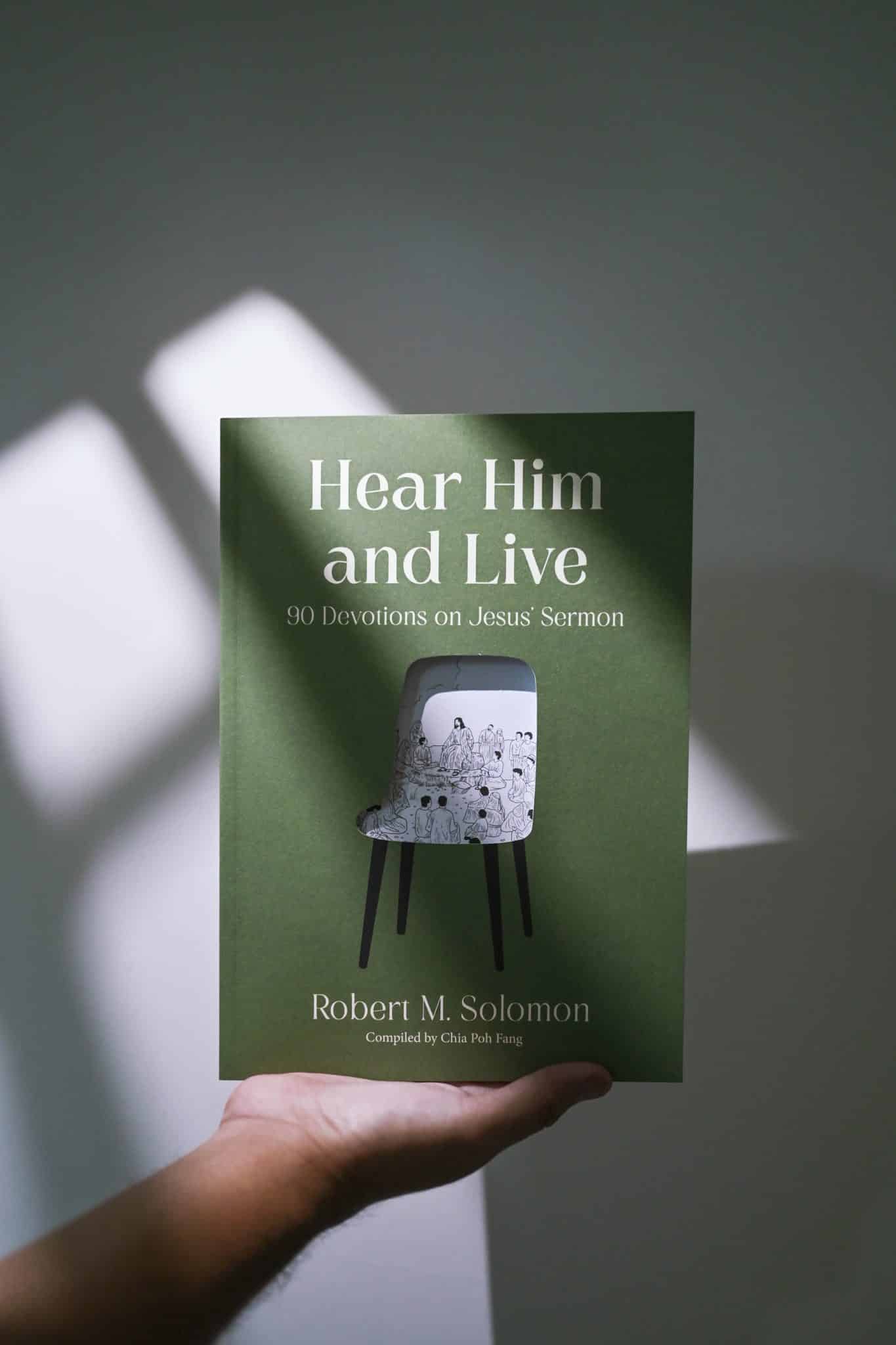
The book launch will be held at Faith Methodist Church, 4 July 2026, 10am to 12noon. All are welcome.
RELATED ARTICLES
“Help, I’m overwhelmed!”: 5 tips for the stressed and anxious
“My pain is deeply known by God”: 4 lessons I learnt through my struggle with anxiety
“I hadn’t felt this kind of fear before”: One young mum’s journey through postpartum anxiety
This year, as we celebrate 10 years, consider sowing into our Kingdom ministry! For S$10 a month, you become part of the #10for10 community and a part of every story we tell.
Partner with us