“Please show us some good marriages”: 5 tips for churches and couples from State of the Family 2026
by Gracia Chiang // March 4, 2026, 9:47 am
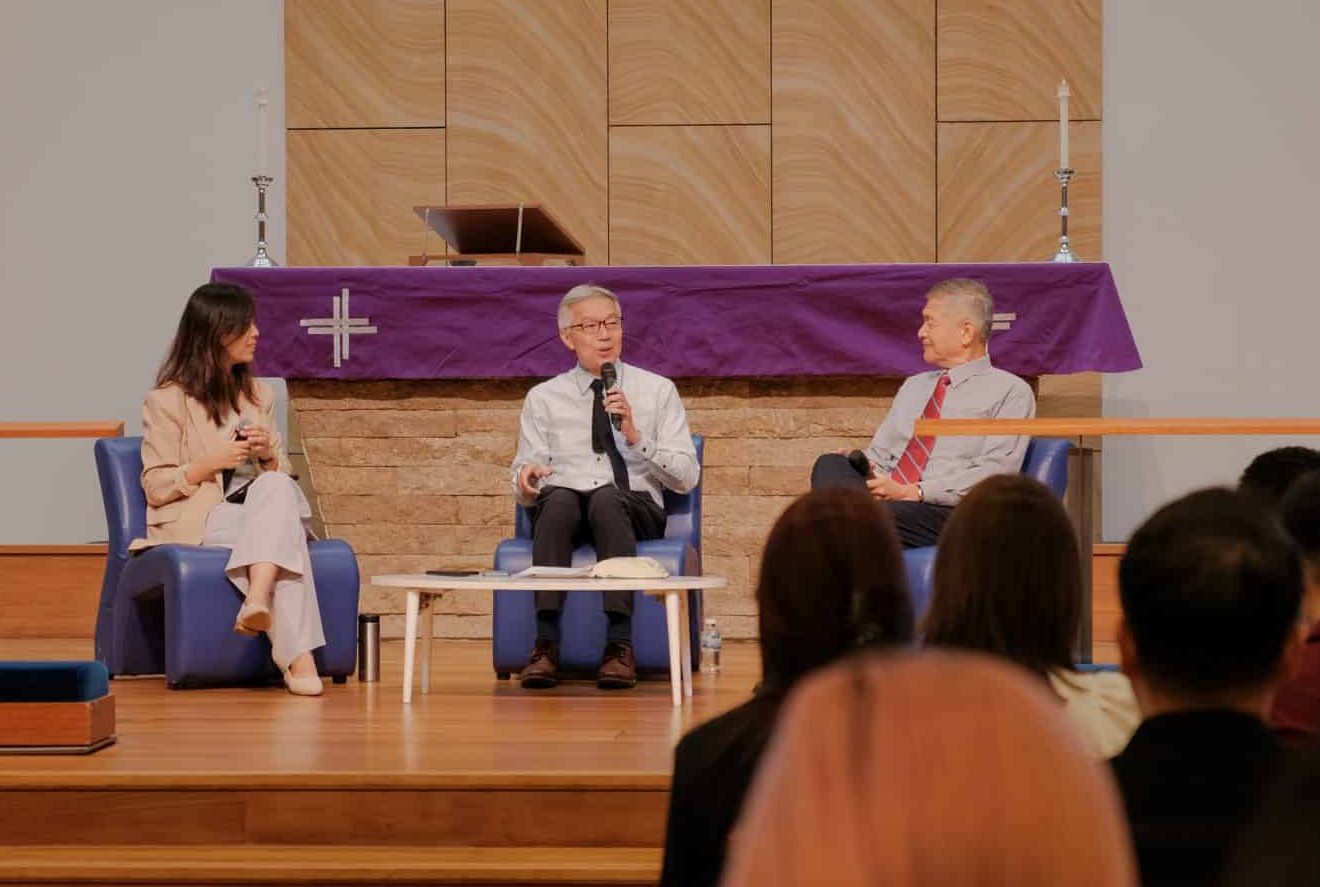
"The fiercest spiritual battle is not when you see someone demon-possessed. It is in our marriages, in our families," says Pastor Christopher Chia (centre). All photos courtesy of Focus on the Family Singapore.
After addressing God’s design for marriages in a question-and-answer segment at a church camp, a youth leader suddenly stood up and shared something that Rev Dr Christopher Chia will never forget.
“We understand all that the older generation is telling us. But can you please show us some good marriages?”
Although the Senior Pastor of Adam Road Presbyterian Church was only a guest speaker at that camp, the incident was so memorable that he recounted this at the State of the Family 2026 last week.
If we want our children and youth to have a biblical perspective towards dating and marriage, those who are married must walk the talk, underscored Ps Chris.
“We have to show and tell the Gospel,” he emphasised. “Not just tell them about the rightness of this – that God created this binary of marriage between a man and woman – but show the goodness of this.”
Organised by Focus on the Family Singapore, the annual State of the Family saw 354 church leaders, marriage mentors and family champions gathered at St Andrew’s Cathedral on February 26, 2026.
Exploring the question of how the Church can become a beacon of hope and healing for families, here are some key takeaways shared by the panellists.
1. Be intentional about marriage discipleship
Given the cultural forces that are reshaping marital expectations today, the Church has a “unique and powerful role in championing for strong marriages”, said Lee Wee Min, Asia Regional Director, Focus on the Family Global.
For instance, one of the challenges to marriage are global narratives that prioritise personal happiness and self-fulfilment.
“The unspoken question therefore becomes: Is this marriage meeting my needs?” he observed.

“While emotional health does matter, marriage cannot survive on feelings alone. Biblical love is covenantal, not conditional.”
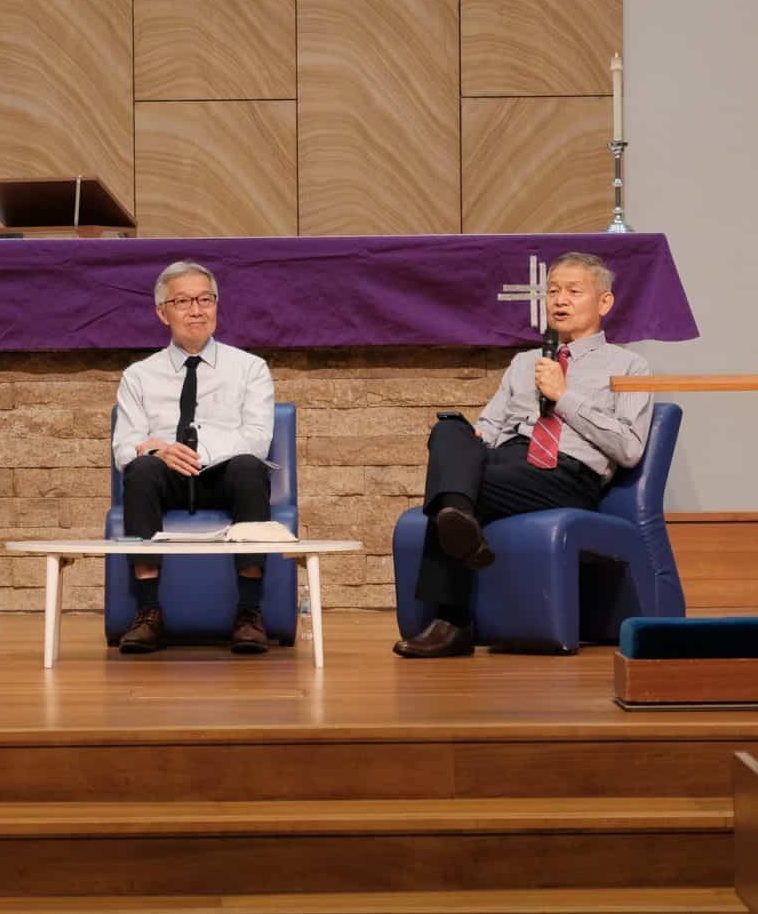
To nurture healthy families, churches should “make marriage discipleship as normal and not exceptional”, proposed Wee Min (right), who is also Founder and Chairman of Focus on the Family Malaysia.
Instead of offering marriage support only when there is a crisis, churches can teach regularly on marriage and family life issues, as well as encourage members to attend pre- and post-marital enrichment events.
“Strong families don’t happen by accident; they are built intentionally,” he noted.
Recalling a church that organises two marriage enrichment weekends every year, Wee Min said that any couple who does not sign up for one weekend over a three-year period would be visited and asked: “How’s your marriage doing?”
“I think the point here is the church is very subtly emphasising the importance of strengthening and refuelling your marriage because we can’t just take it for granted.”
“Affirm marriage and singleness as gifts in life.”
Practically speaking, churches should also make every effort to connect what is taught on Sunday to everyday life, suggested Ps Chris.
For instance, when teaching from the Bible, Pastors and preachers can illustrate with examples that relate to their marriage, raising of children or caring for aged parents.
However, he also cautioned against making singles feel excluded in the ministries of the church, sharing that it is important to strike a balance in promoting both singleness and marriage.
Referencing the example of Christ, Ps Chris explained: “No one is as godly and contented as a single as the Lord Jesus. At the same time, He is the paragon and paradigm of marriage as the perfect Bridegroom.
“Whenever we have things (in church), we have to at the same time, affirm singleness as a gift in life, and at the same time, affirm marriage as a gift in life. Both are gifts.”
2. Create safe spaces for struggling couples
Another challenge in our Asian culture is the tendency to remain silent even if there is displeasure or disharmony, said Wee Min.
“Conflict is avoided, struggles are hidden, seeking help seems shameful. As a result, couples suffer quietly, even within the church community,” he said.
“The Church therefore must become a safe place where struggles can be named and hope can be found, especially in and through the person of our Lord Jesus.”
“Seeking help is an act of wisdom and not a failure.”
Amy Ang who, with her husband David, runs a ministry called Back to the Garden, shared that they, too, meet a lot of couples who struggle “without their church knowing”.
Many of them have practical considerations, she highlighted. For instance, they may be part of a family that has two or three generations attending the same church.
If they open up to a church leader about their marital woes, will he or she be obligated to alert the youth Pastor who will then pay special attention to their teenage children?
This fear of not wanting “to alarm our children” causes them to hold back from sharing within their church, said Amy.
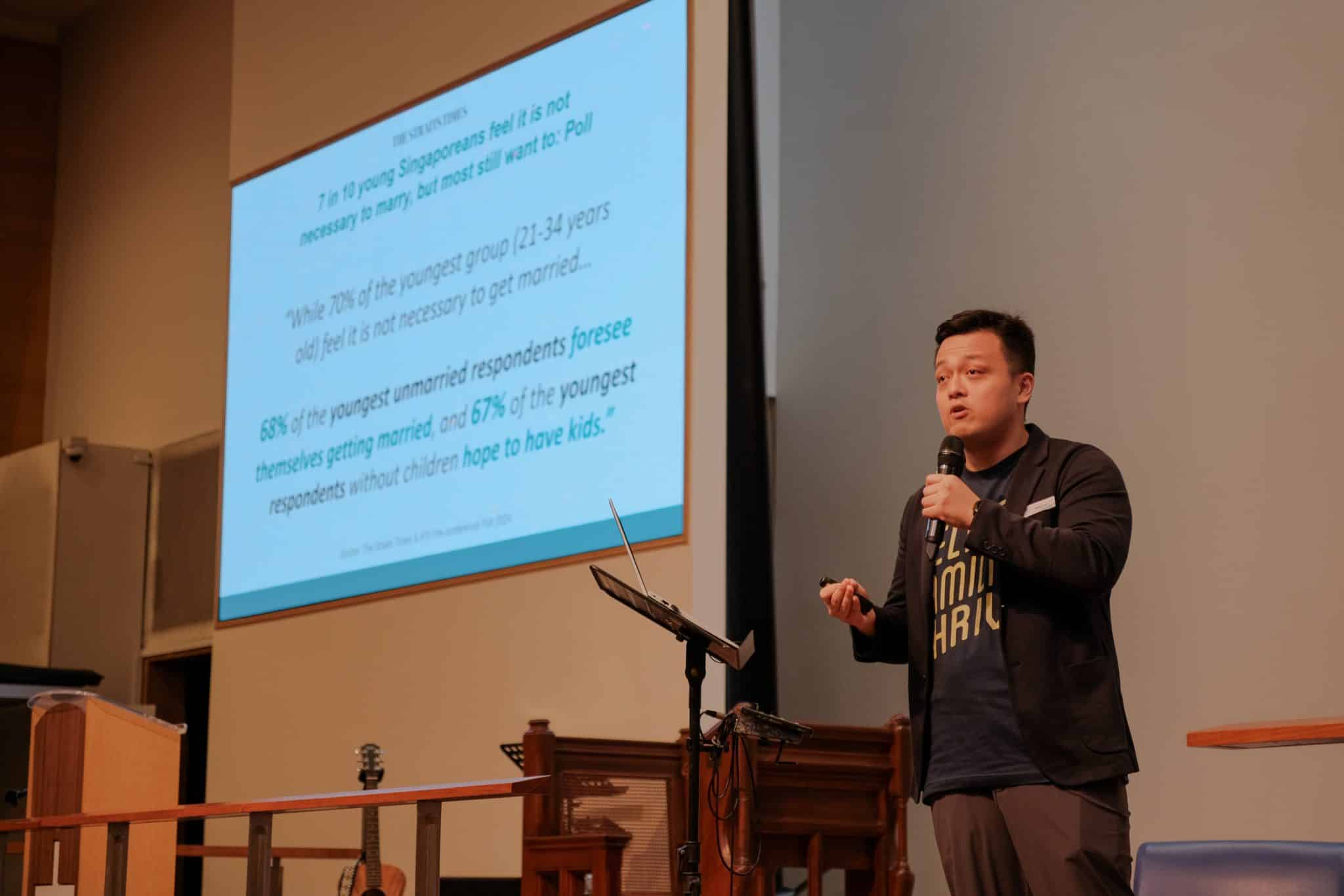
At the event, Focus of the Family Singapore’s Research Strategist, Benedict Ng, also shared how the Connect2 Marriage Assessment tool can give churches insight into the health of marriages within their community.
This is where the Christian community can also offer alternative spaces where couples can be completely vulnerable, she added.
Reiterating this need to create safe pathways for support, Wee Min continued: “Churches have got to understand that they don’t need to be Jesus. They don’t need to do everything.”
Instead, churches can open their doors to partner with other Christian ministries or family-focused organisations that provide marriage workshops or mentoring, and refer couples early before crises escalate.
The bottom line is that the Church should send a message that “seeking help is an act of wisdom and not a failure”.
3. Encourage leaders to model healthy marriages
Since leaders are deeply respected, their examples will shape church culture, said Wee Min.
“So when leaders prioritise their marriage, when they speak honestly about challenges, when they model forgiveness and growth, I think they give permission for others to do the same.”
Leadership begins at home, he remarked, citing 1 Timothy 3:5.
“Marriage is often the first ministry God has entrusted to us before our leadership roles, before our positions, before our titles, before our service. The first call is actually to love one person faithfully.”
Echoing this point, Ps Chris reminded church leaders that their most important ministry is to their spouse.
“My first accountability to God is: Did I love her sacrificially? Did I lead her to become more godly or to become more ungodly?”
“Marriage is often the first ministry God has entrusted to us.”
Once leaders are clear in their vision and values, their priorities must then be seen in their calendar.
“Nothing is going to be more important than my quiet time with God, my quiet time with my wife, my quiet time with my children,” said Ps Chris.
Couples have to allow God to work in their hearts and homes before witnessing to the world, he encouraged.
“If you don’t begin there – with your heart discipleship, marriage discipleship, family discipleship – then coming to church is hypocrisy.
“Because you’re one kind of person on your bed, one kind of person in the kitchen, one kind of person in the lounge room and another kind of person on Sunday. That’s the kind of worship God hates.”
Get your heart and home right first – ministry will flow from that, says Ps Chris.
Pointing out the value of life-on-life discipleship, Mavis Huang, Youth Pastor at 3:16 Church, said that the work of building healthy marriages can also move upstream, starting with the young.
She and her husband, Joel, often invite youths to their home because this is how they themselves were inspired. “We learn from godly couples around us who also struggle, but they show us how to struggle well.”
Acknowledging that this can be very vulnerable because those whom you are discipling will get to see your imperfect side, she said: “But I think that’s where the beauty lies, right?
“That in our weaknesses, in our flaws, God can come through. There can be a measure of healing that they may not have witnessed in their own family.”
“The Church can be the answer by truly being intergenerational again.”
Mavis illustrated this with an example: When parents fight publicly but reconcile behind closed doors, what their children miss out on is learning how quarrels are resolved.
Rather than using a top-down approach, leaders can find ways to engage the next generation, such as having conversations at the table rather than instructing people on what to do from the stage.
“Life is not a textbook; life happens in our day to day. We as a Church can be the answer by truly being intergenerational again,” she concluded.
4. Address deeper heart issues, unhealed wounds
While faith communities might prescribe spiritual practices to struggling couples such as doing Bible study or memorising more verses, what if these are not targeting the root issue?
Sharing from their 30 years of marriage and experience of journeying with other couples, David and Amy Ang said that creating opportunities for self-reflection and healing are sometimes more helpful in resolving marital conflicts.
“The problems in the marriage are sometimes not the problem. They are symptomatic of a deeper problem,” elaborated David.
“Intimacy can happen in a place where there is safety, where you feel that you can be vulnerable, where you can be who you are and yet you are completely accepted … But how does one come to that place of safety? Sometimes we don’t even feel safe about ourselves.”
Opening up about his own struggle, David revealed that when he traced back to why he was so affected by innocuous comments that came from Amy, he realised that he had “an unaddressed and unhealed wound” due to the environment he grew up in.
“It was not a communication problem about her being disrespectful, naggy, rude or critical … it was a reminder of how bad I was, how lousy I was, or how non-performing I was.”
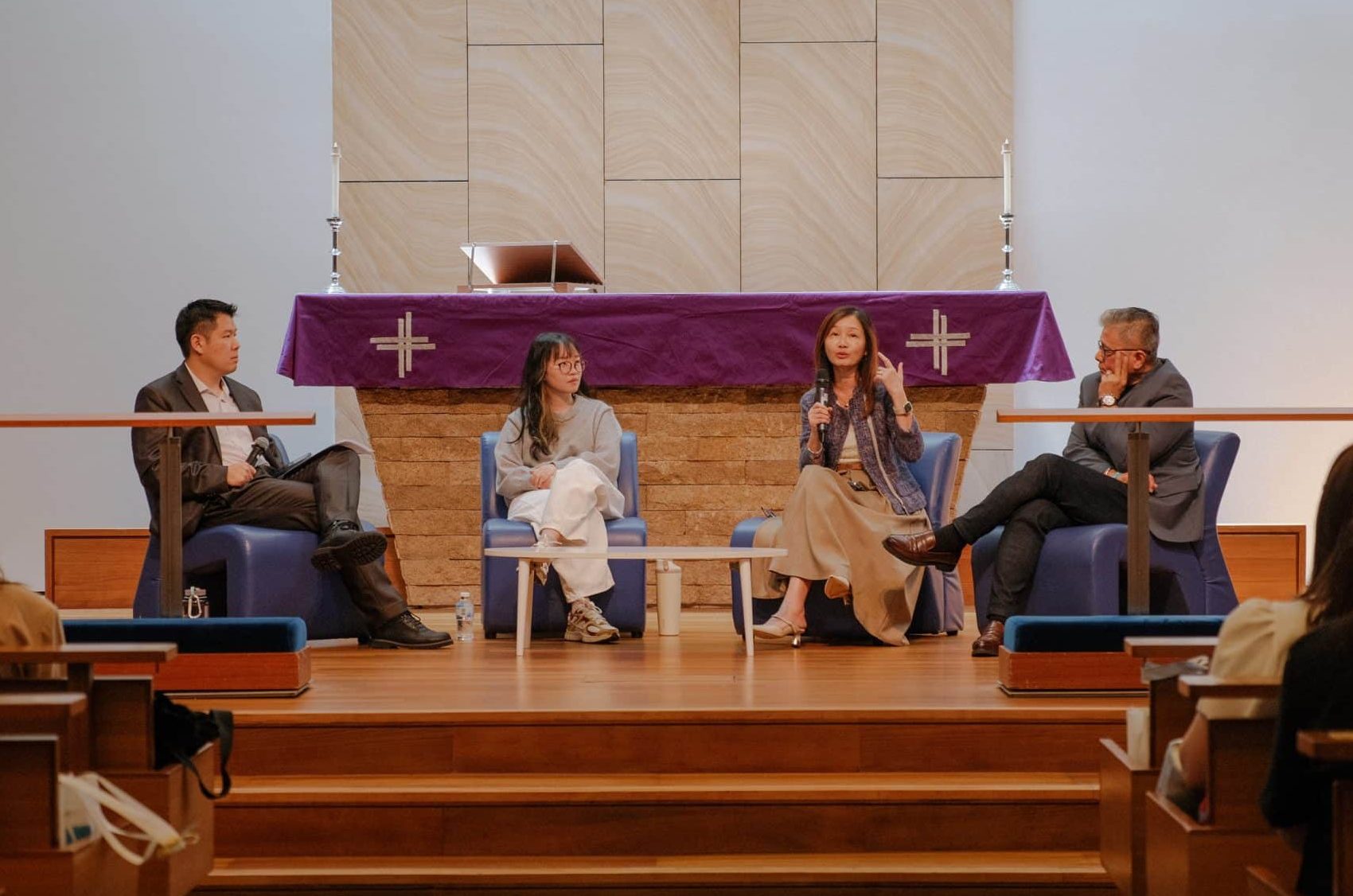
During times of conflict, reflecting on the condition of your heart may reveal inner wounds, says Amy (second from right). Also speaking at the second plenary were her husband David (far right) and Mavis (second from left).
Adding that she, too, tends to look inward whenever problems with her husband arise, Amy said: “Sometimes the conflict could be due to my own insecurity, then it just acts out in this way.
“One of the key things that I like to ask myself is, ‘Where did this negative emotion come from?'”
Instead of focusing only on what is expressed, couples can be encouraged to examine what lies beneath, including any unresolved hurts from childhood.
“We don’t get our marriage better by having more knowledge. It’s not a cognitive nor intellectual resolution, but it’s the condition of our hearts,” summarised David.
“The issues lie within the heart – not within the mind.”
5. Return to the Source of love
Using the metaphor of a wedding, Ps Chris reminded everyone that “the Bible is a tale of two weddings”. It begins with the marriage of Adam and Eve, and ends with the marriage of Christ and the Church.
It is also “a tale of two families” – you either belong to Cain’s family, which is godless, or Christ’s family, which is full of love.
When asked about the distinct quality of a healthy Christian marriage, Ps Chris shared that it should be “totally Christ-centred and God-centred”.
“In Christ and through Christ, we learn what love is,” he explained. This means that a Christian marriage would have the characteristics of forgiveness, reconciliation and sanctification.
“So personally, I’ve grown the most in marriage and parenting because you learn the most painful lessons about sinfulness, and the most glorious, hopeful lessons about sanctification, about becoming like Christ.”
“The love of the Father is the answer.“
Also referencing how the Bible began, David emphasised the importance of going back to the Garden of Eden (Genesis 2), where God poured out His love onto His first children.
“Come back to the Garden and receive the Father’s love, like how Adam and Eve were receiving the Father’s love (before the Fall). Even when they were completely naked, they were not ashamed.”
Describing how encountering the Father’s love completely changed his marriage, David recounted: “When that love of God came and filled my heart, something shifted in my heart. Fear was dissipated, and I became a child again.
“I became a child who did not need to prove myself in front of my wife, who did not need to prove myself in front of my children, who did not need to prove myself in front of whoever that I was working with.”
This is because perfect love casts out fear (1 John 4:18), including fears of not being good enough, useful, rejected, disrespected, significant or abandoned, all of which can lead to many problems in marriage.
“When you know your fullness of your identity, you’re so secure in it because you know your Father is backing you up in the fullness of His love … So the love of the Father is the answer.”
RELATED STORIES:
I learnt how to be a dad from my father, my spiritual fathers and my heavenly Father
Flourishing or floundering? A snapshot of the state of marriages in the Church
Don’t wait until it hurts. Here’s where to get help for your marriage
This year, as we celebrate 10 years, consider sowing into our Kingdom ministry! For S$10 a month, you become part of the #10for10 community and a part of every story we tell.
Partner with us
Related Articles
“Faith is not your handicap at work, it is your competitive advantage”: Grab CEO Anthony Tan
“We almost lost him”: This dad pressed on in prayer when his micro-preemie was born at 26 weeks
Revival begins at home: More than 200 fathers commit to restoring their family altars at Elijah7000 event
