She “died for a minute” and watched from outside her own body as doctors rushed to resuscitate her
by Janice Tai // July 17, 2026, 3:43 pm
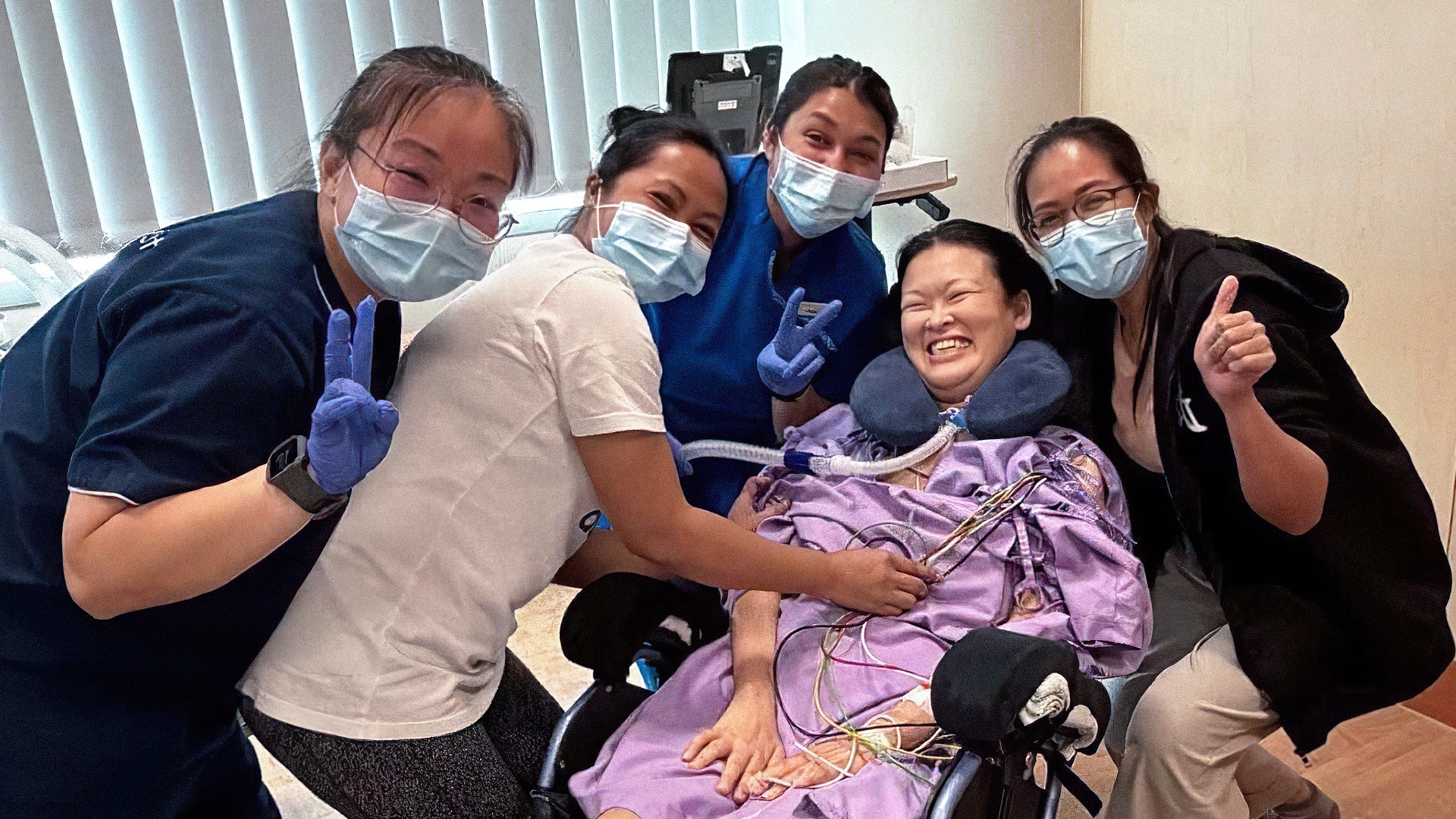
Dr Pang sharing a joyful moment with the nurses in the ICU. It is her first time sitting out of bed after almost two weeks. All photos courtesy of Dr Pang Jing Yin.
For a decade, Dr Pang Jing Yin was an Ear, Nose, Throat (ENT) specialist, treating and operating on patients, helping them regain their voice.
But in 2019, the then-consultant at Khoo Teck Phuat Hospital (KTPH) was diagnosed with Motor Neurone Disease (MND), an incurable condition that affects the brain and nerves. It causes muscle weakness that worsens over time.
Today, the doctor who once specialised in voice disorders can muster just enough strength to speak monosyllabically. She has also become a tetraplegic (paralysed in all four limbs) and is tube-fed.
Nevertheless, Dr Pang, 44, chooses to live life fully.
Earlier this year, a typical day would have her waking up to be fed and showered. Then, she would be transferred to her wheelchair where she logs in to her assistive technology device to work for a few hours.
The software tracks her eye movements and enables her to type and communicate. Dr Pang is employed part-time to handle patient complaints as a deputy director of patient relations services at KTPH.
When her two children – Megan, 10 and Matthew, 8 – return home from school in the afternoon, she would sit enjoy their company before winding down for the day.
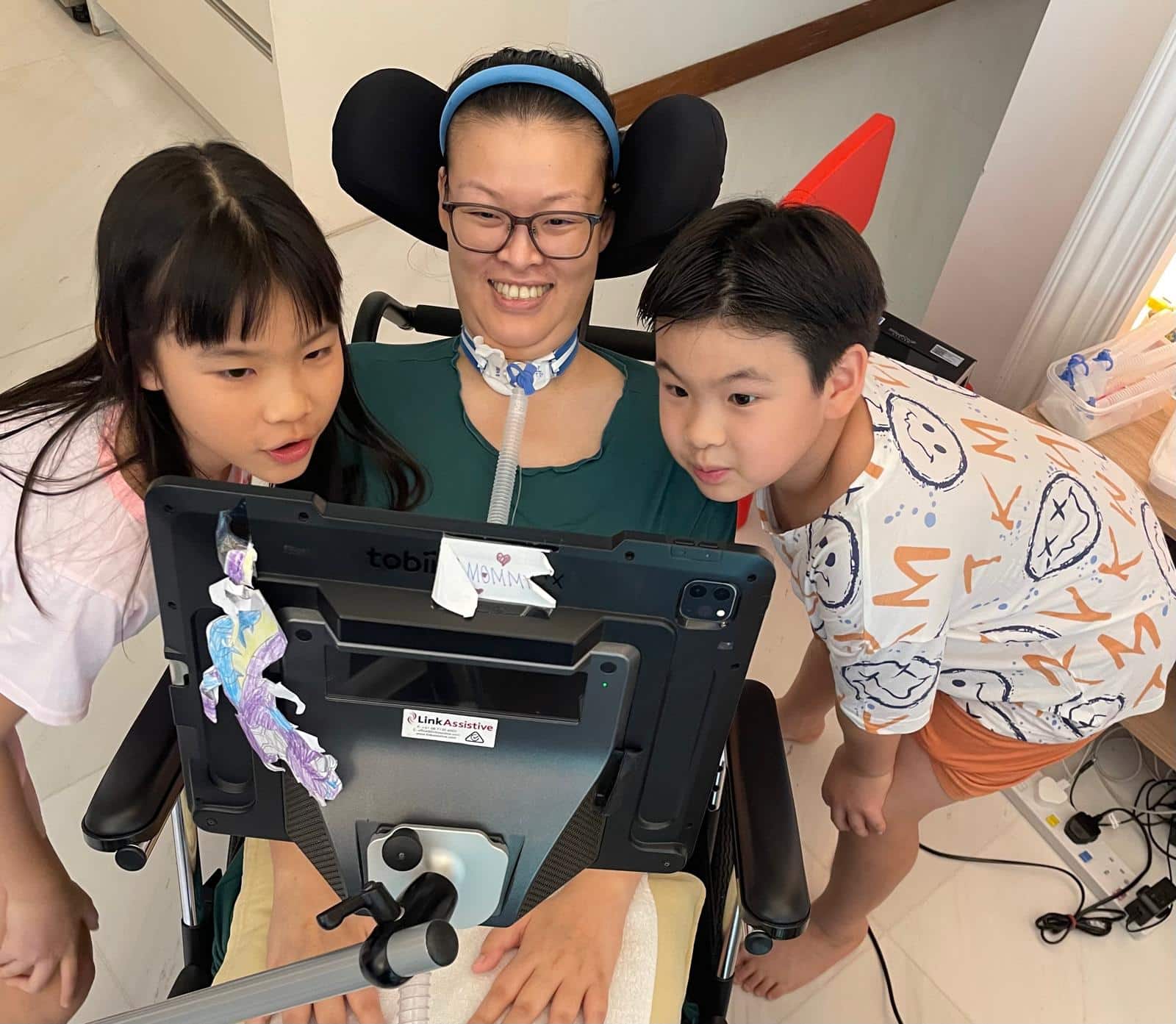
Dr Pang enjoying some moments of online shopping with her two children.
A sudden heaviness in the chest
The morning of April 1 began just like any other day, but as the day wore on, Dr Pang noticed that her heart was racing and she had a lump of phlegm in her chest that was troubling her.
When her chest physiotherapist arrived for their scheduled session, Dr Pang was transferred from her wheelchair to the bed to start the session. Suddenly, she felt a heaviness in her chest.
“I quickly signalled her to listen to and examine my chest. She did so and I could see the panic in her face,” Dr Pang told Salt&Light in a written interview. She is unable to speak.

“Dr Pang, no breath sounds!” the physiotherapist said in alarm. Immediately, she turned Dr Pang towards herself and examined her closely.
Now she could hear breathing sounds, she told Dr Pang.
“Call an ambulance now,” Dr Pang instructed her.
The physiotherapist suggested resuming their session, given that Dr Pang’s breath was back and her oxygen levels were normal. But Dr Pang insisted on heading to the hospital.
Her husband acceded and drove her to Mount Elizabeth Novena Hospital.
At the emergency department, the standard battery of tests was done on Dr Pang. Being a doctor herself, she was certain that the tests would reveal something major, like a collapsed lung.
To ward or not to ward?
However, the doctor surprised her by coming back to report that all the results of the blood tests and X-rays were normal.
“Why am I so breathless then? Can further tests be done?” she asked.
After further consideration, he ordered the next line of investigation – a CT (computed tomography) scan – to study her lungs in closer detail.
An hour later, he returned: Her scan results were normal.
However, her nasal swab showed that she had come down with COVID. It could be treated as an outpatient case and she would be given oral medication.
Dr Pang protested worriedly. “But I cannot breathe. I can’t feel the air going into my lungs. How am I to go home like this?”
They had a discussion. Both her doctor and husband felt that she would probably recover better at home with the anti-viral medication. Home was where she had all her equipment and her familiar team of caregivers.
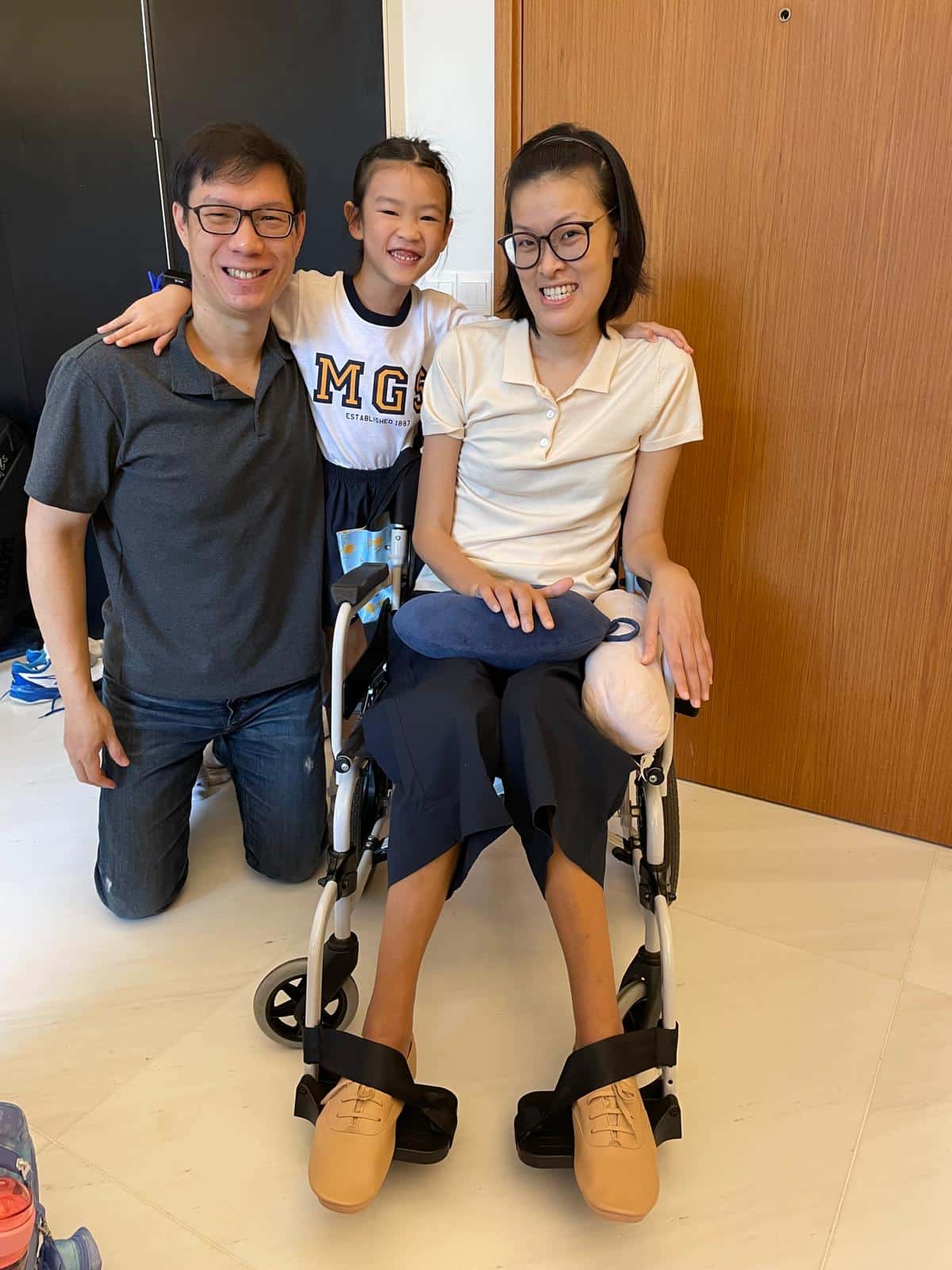
Dr Pang with her husband and daughter in 2023.
But Dr Pang felt a strong prompting that she should not go home even though all the tests’ results were normal, because she was unable to breathe normally.
Eventually, the decision was made to ward her in hospital.
The next morning, Dr Pang woke up and went about her routine of using the bathroom and sitting on her wheelchair to use her device.
However, she grew tired after a while and asked to be transferred to the bed.
Her last three words before losing consciousness: “I cannot breathe”
As soon as she laid down, she murmured three words before she slipped into unconsciousness: “I cannot breathe.”
The next moment that Dr Pang found herself in a “weird space”.
“Why am I looking at my own body and hearing voices?” Dr Pang wondered to herself as she stared at herself lying on the hospital bed, surrounded by the medical team.
Wherever she was, she felt like she had a blindfold over her eyes but she could see through it.
She also could hear the voices of the doctor and nurses emanating from around her bedside: “Adrenaline. PEA (Pulseless Electrical Activity) now, start CPR.”
She thought to herself: “This is so weird. These guys are thumping away on my chest. Wait, they are even delivering an electrical shock to my body.”
“I saw that the electrical shock was so strong that it made my torso jump off the bed like a ragdoll, though I did not feel any pain – perhaps because I was outside my body, looking on,” Dr Pang told Salt&Light.
She also somehow saw her mother-in law and her two children looking at her solemnly.
The last thing that she heard before her memory faded away was a voice saying: “She’s awake. Downtime one minute.”
“Only died for a minute”
When Dr Pang woke up, she found herself in the Intensive Care Unit (ICU). As she flitted in and out of consciousness from the sedatives, she started piecing together what had happened to her from the accounts of her husband and the medical team.
When she could not breathe and lost consciousness, she had turned completely blue and her oxygen saturation level had fallen drastically to 45%, she was told.
“As my vital statistics kept dropping, my husband said he rushed everywhere to activate the nurses and doctors,” said Dr Pang.
A nurse punched the Code Blue button, an emergency button that is triggered when the patient collapses. Immediately, the call team, joined by her doctor-in-charge, rushed into her room and resuscitated Dr Pang.
A few days later, she had to undergo surgery to create an opening in her wind pipe (tracheostomy) and was put on a ventilator thereafter as she was too weak to breathe on her own.
Dr Pang told Salt&Light: “My doctor later told me I was very lucky that the nurse had hit the Code Blue button early.
“But I know this wasn’t a stroke of luck. It was God’s covering over my life.”
She knew that had the resuscitation team arrive any later, things would likely have turned out for the worse.
Dr Pang had only “died for a minute”. (“Downtime” is the amount of time that oxygen is cut off from vital organs.) If it had been four minutes or more, it could have resulted in brain damage and other ramifications, she explained.
“To have a downtime of one minute is rather rare and to have the patient wake up immediately and smile at everyone, even more rare. I am well because they resuscitated me so fast,” Dr Pang said.
Her husband and the medical team told her that when she first woke up after resuscitation, she had smiled brilliantly at them, almost as if she was happy to get her body back.
“I also later learnt that my mother-in-law and my children were at home interceding for me during the moments when I almost lost my life. Perhaps they were praying for me in the Spirit and so I saw them in the spiritual realm during their intercession,” said Dr Pang.
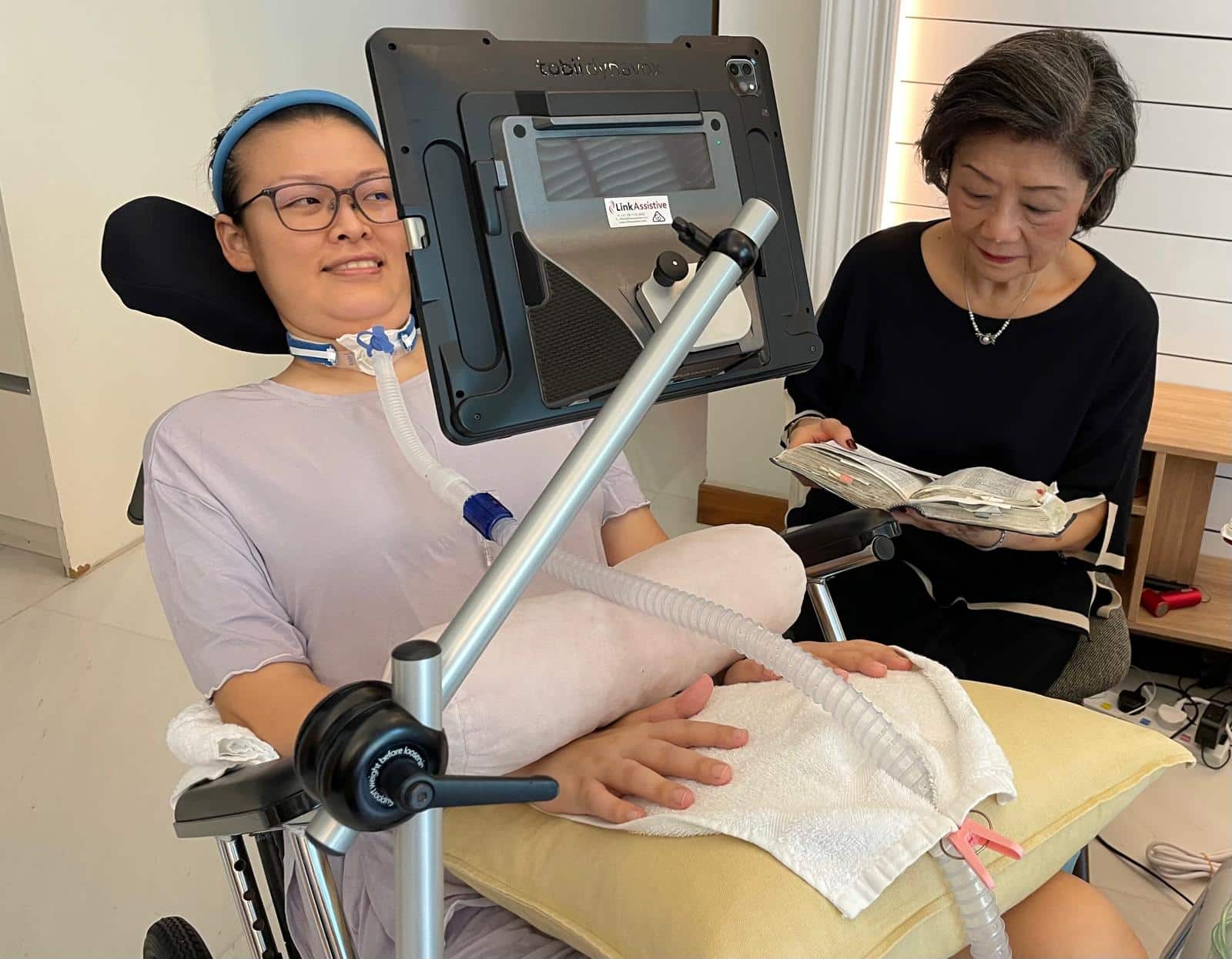
Despite being busy in her role as the Director of the Association of Banks in Singapore (ABS), Dr Pang’s mother-in-law – Ong Ai Boon – still carves out small pockets of time to read God’s word with her daughter-in-law.
“Without the prompting from God that led me to be firm about wanting to be warded in hospital, I would have collapsed at home and the outcome would have been disastrous,” she added.
Her heart had been under so much stress from the COVID infection and not being able to breathe that it gave up, resulting in heart failure.
Further investigations revealed a diagnosis of Takotsubo Cardiomyopathy, where the heart comes under such an immense amount of stress that it loses its ability to pump properly.
Dr Pang spent the next two weeks in the ICU and was cared for by a team of nurses and allied staff that she calls “exemplary”.
“I know I am not the easiest patient to be cared for. I have strong opinions and I worry much,” she admitted. “The medical team comprising doctors from Respiratory Medicine, Cardiology, ENT and Anaesthesia, were kind, patient and compassionate, going above and beyond their call of duty to care for me. They did not give up on me just because I am a ‘late stage’ MND patient.”
During that time, Dr Pang played worship songs in her room to help her focus on God. The physiotherapist who worked with her on her limbs worships at the same church – New Creation Church –and would sing the songs along with her.
After two weeks in the ICU, Dr Pang was transferred to the general ward. The plan was to be cared for there for two days and be discharged thereafter.
However, things did not go to plan. Two days stretched to two weeks.
A few unexpected events delayed her discharge home. Her body’s self-regulatory mechanism stopped working, caused either by the COVID infection or her underlying condition. Her blood pressure, heart rate and temperature fluctuated continually.
During this period, Dr Pang clung on to God’s promises in Isaiah 41:10 that says: “surely I will help you, surely I will uphold you with my righteous right hand.”
Divine encounters during recovery
God sent people to help Dr Pang each step of the way.
“Some came to encourage me and boost my morale while others helped to take my mind off my current situation,” she told Salt&Light.
For instance, there was once when a cardiologist friend came by to visit her in the general ward after she was out of the ICU.
Cognisant of her concerns and fear of another potentially fatal episode of irregular heartbeat (arrhythmia), he tried to encourage her, saying: “Jing Yin, Takotsubo comes and it goes! It’s over! Look at you now! You… “
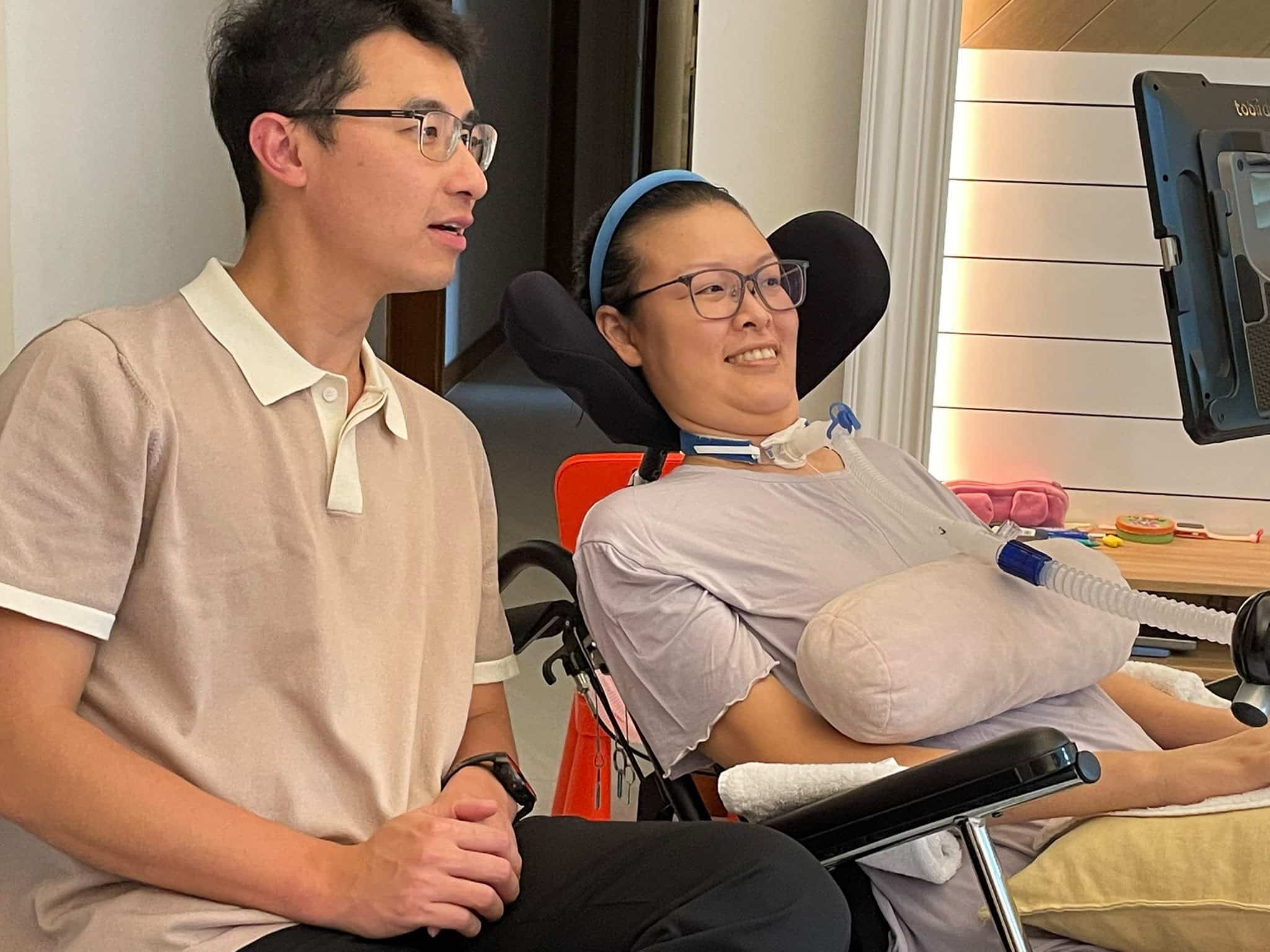
Dr Lim Choon Pin, Dr Pang’s cardiologist friend, whose offhand remarks that made her see a familiar passage of the Bible (Psalms 23:4) in a new light.
He did not need to finish his sentence.
“I knew exactly what he was trying to say. Yes, I now have a tracheostomy and require ventilatory support. But the cardiovascular collapse itself left almost no mark on me. My heart function has returned to normal. My other organs were spared. In that sense, I am none the worse for wear,’” Dr Pang explained.
At that very instance, Psalm 23:4 came alive to her in a way that she had never experienced before: “Yea, though I walk through the valley of the shadow of death, I will fear no evil: for You are with me; Your rod and Your staff they comfort me.”
“I had – in the most literal sense – walked through the valley of the shadow of death. Yet God did not leave me stranded there. He brought me safely through it. Death had come frighteningly close but it did not have the final word. The triumphant and bold words of 1 Corinthians 15:55 also took on a new depth of meaning for me: ‘Death, where is your sting?’” she added.
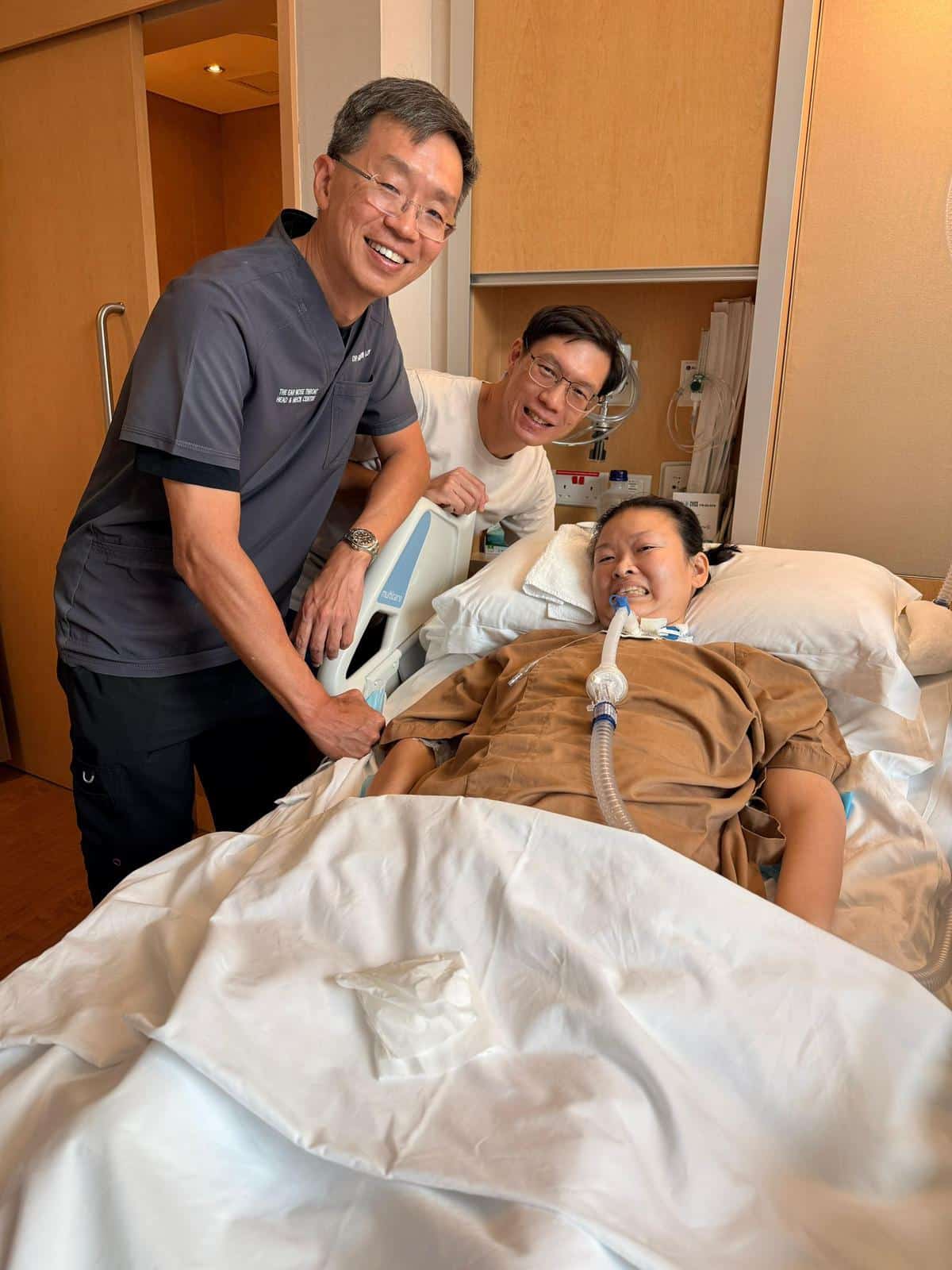
Dr Pang with Dr Andrew Loy whom she asked to visit her while she was in hospital. He was one of the key figures who inspired her to do Otolaryngology. Having faced death and come back from it, he was someone she wanted to meet.
Another time, Dr Pang was not sure if her helpers had set up her ventilator circuit correctly. It was 7.10pm, and the respiratory therapist in the hospital ended work at 7pm.
She asked the nurse to call him and see if he could help check her setup. But the nurse apologised and said he had already left the hospital.
“How can you not fight when I keep sending people to love you and to care for you?”
At 7.50pm, a familiar voice came through the door.
“Dr Pang, what happened? I was almost at Jollibee already but the nurse called me so I came back.”
There stood her respiratory therapist before her. Tears began streaming down her face. He not only checked her setup but also conducted a session of chest physiotherapy with her.
That night, Dr Pang heard God saying to her: “How can you not fight when I keep sending people to love you and to care for you?”
She said: “He knew what I was going through. It was a huge trial and battle for me. I would have to fight and not just tread water.”
On a third occasion, Dr Pang’s oxygen levels suddenly dropped inexplicably one afternoon. Her heart rate soared to over 130, and she felt extremely uncomfortable. The fear of arrhythmia returned.
At the sound of the alarms, the nurses came in to check on her, taking her blood pressure and heart rate manually, and measuring her oxygen levels again.
To Dr Pang, precious minutes were ticking away.
“Lord, please let the nurses know there’s no need to check and recheck…. heart rate is really 138 and my saturation 85 per cent. I need medical attention. I need a doctor,” she prayed silently.
Just then, she heard a voice at the door. “Hello, Jing Yin! How are you today?”
It was her cardiologist.
Dr Pang mouthed her reply as widely as she could: “No good!”
Her eyes darted towards the screen monitor to bring her doctor’s attention to the blinking parameters. Her doctor caught on immediately and gave her something to stabilise her heart rate.
She reassured Dr Pang that her heart was not having an abnormal rhythm, which calmed her down.
“But He has made Himself so real and tactile to me that I have to believe there is a God.”
“I told her she was a godsend, walking in right in the middle of my prayer. This is not a coincidence. This is God at work,” Dr Pang declared.
After her discharge from the hospital, she was readmitted to the ICU again as she was unable to cope with copious amounts of saliva and phlegm – something commonly experienced by patients with this form of MND.
She also struggles with the side effects of the medications used to control the volume of secretions, as well as having to live with a permanent foreign plastic tube in her neck (tracheostomy tube) and being hooked up to a ventilator.
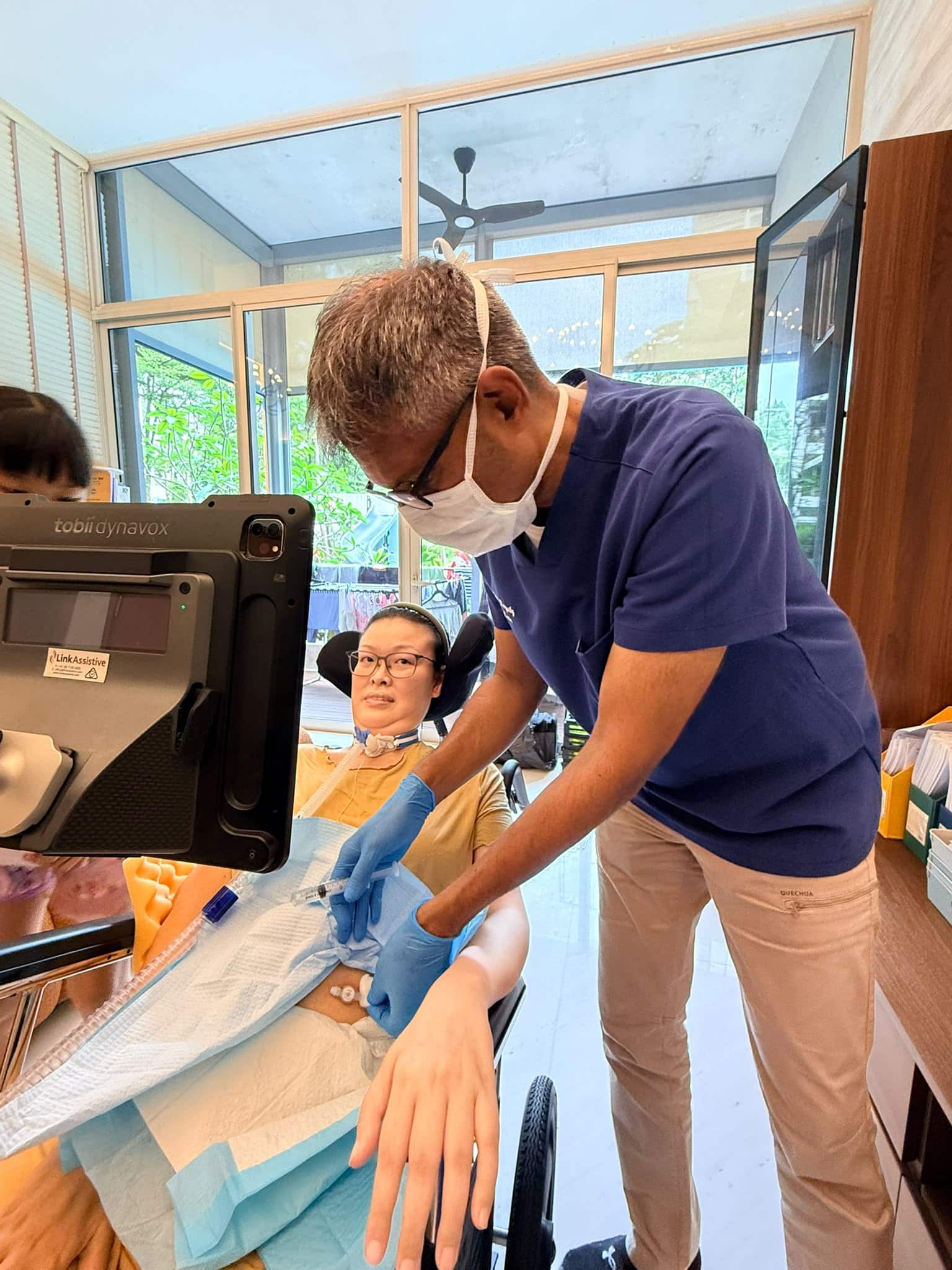
Dr Pang with Dr Shanker, the surgeon who inserted her gastrostomy tube in 2022. Here, he tends to her gastrostomy tube which has become partially blocked, making milk feeds difficult to pass through.
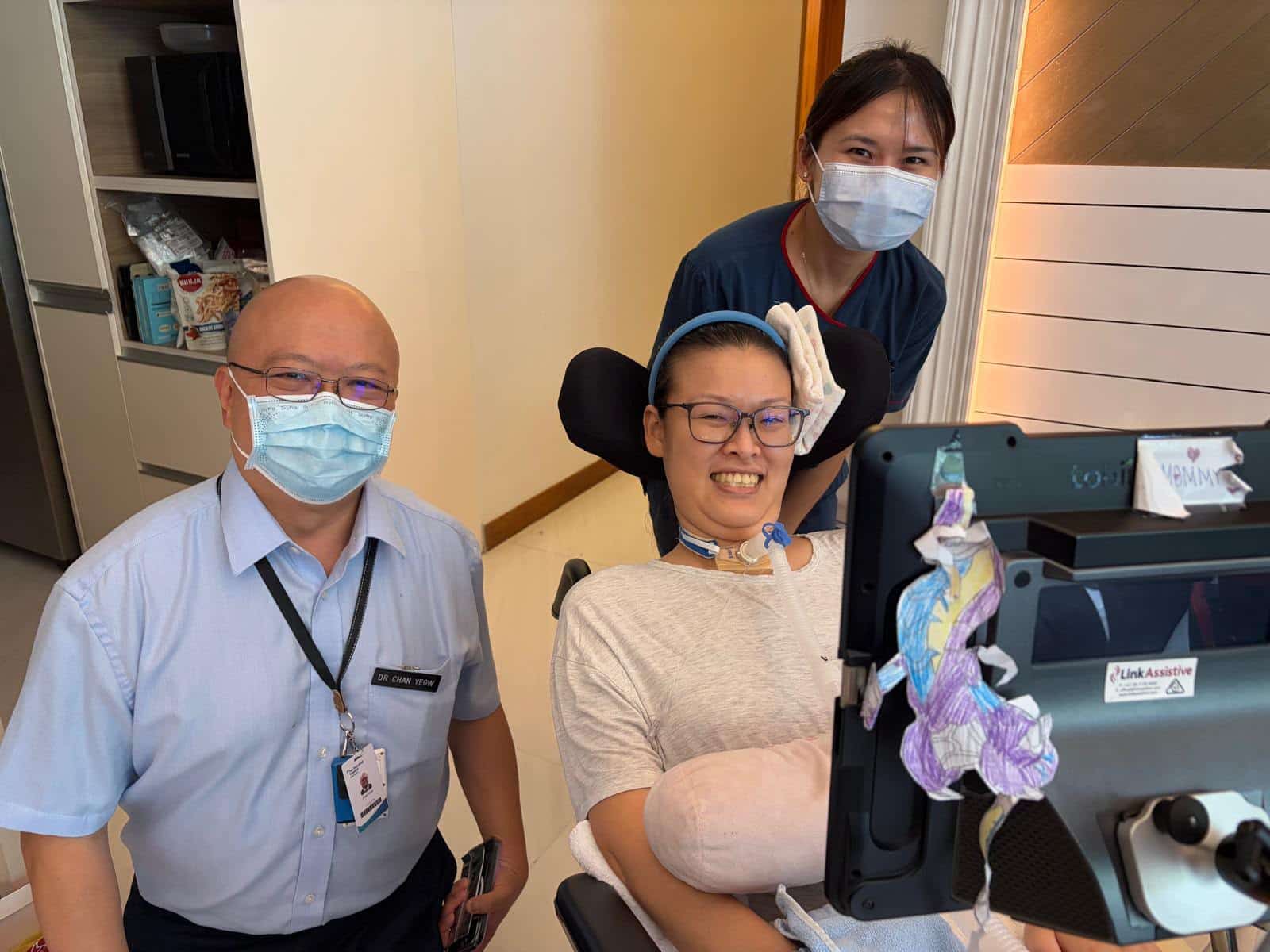
Dr Chan Yeow and nurse Lydia from Tan Tock Seng Hospital home ventilation and respiratory support service. The team ensures that chronically ventilated patients have ready and easy access to help if needed.
It has been a long journey for Dr Pang since she received the diagnosis of her condition almost seven years ago.
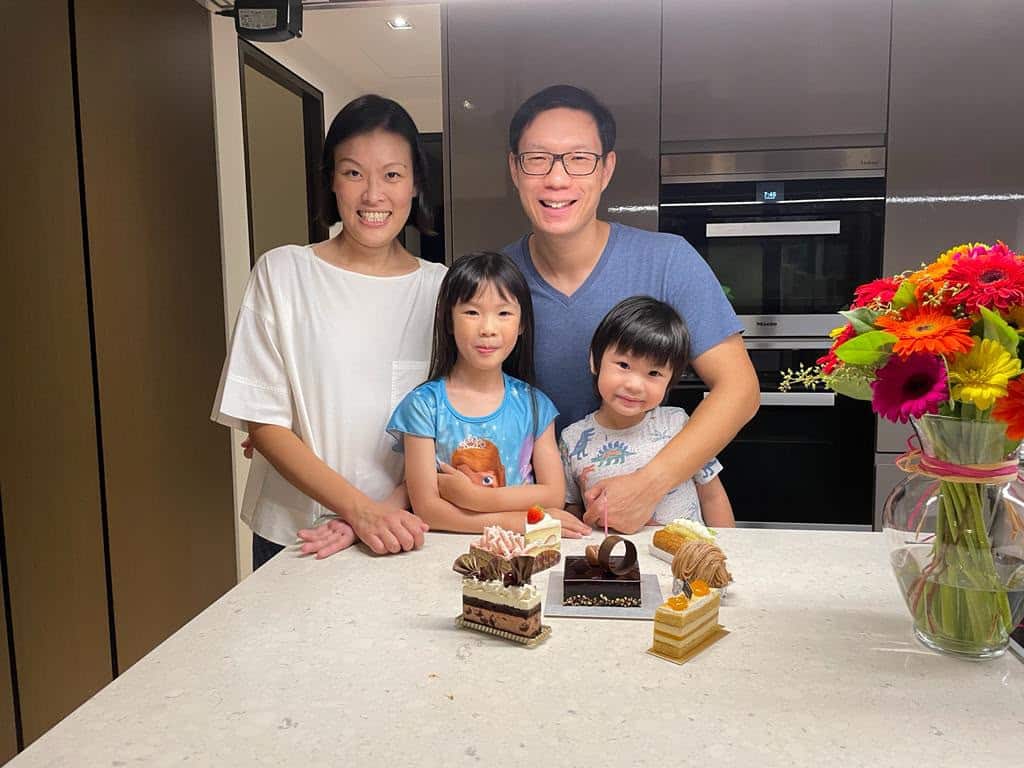
Dr Pang, with her husband and two children in 2021, when she was still able-bodied.
Over the last three years, she has experienced complete loss of body functions.
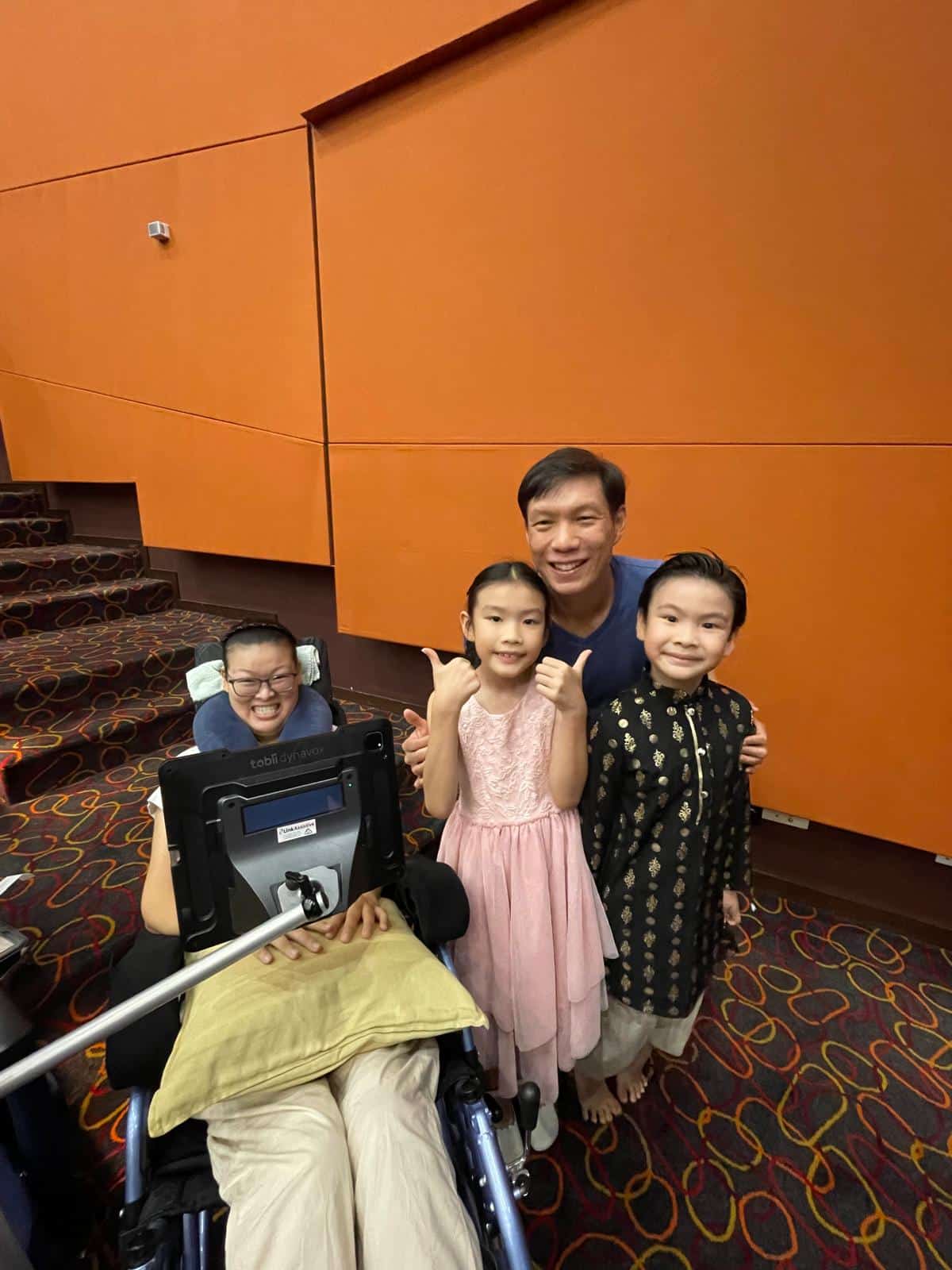
The last event that Dr Pang could attend for her children was in 2024 for her son’s kindergarten graduation party.
“But God is really by my side. As doctors, we are trained to follow guidelines. And we practice evidence-based medicine, we follow protocols. So, it’s very difficult to trust an invisible God. But He has made Himself so real and tactile to me that I have to believe there is a God,” she told Salt&Light.
What keeps her going is knowing that she has her loved ones and a community of believers journeying and praying alongside.
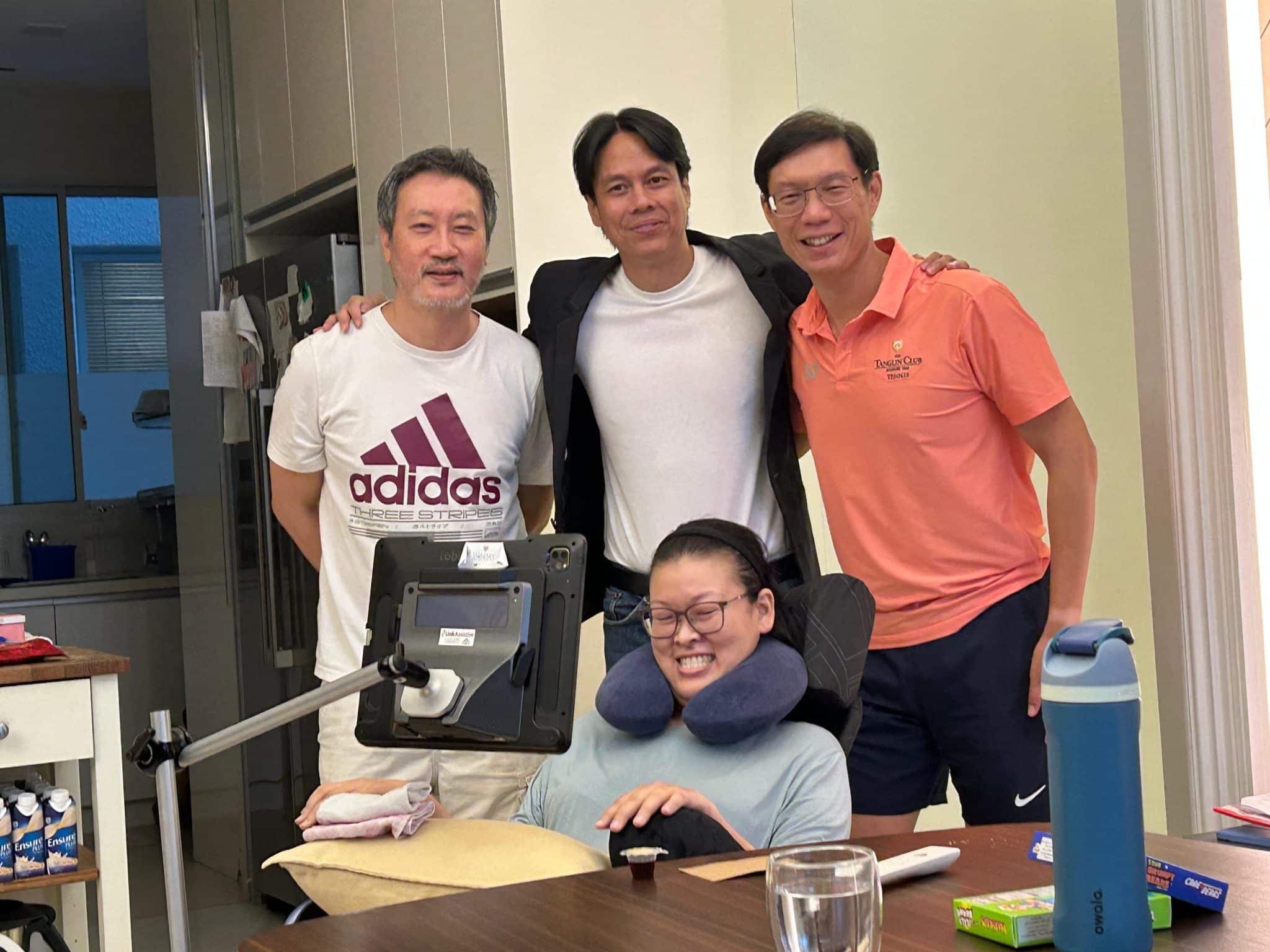
(From left) Seth Szeto, whom Dr Pang met the first time when she visited New Creation Church (NCC). He comes from a family of hereditary MND. Next to him is Ps Lawrence from NCC and her husband.
Once, she felt led to visit a particular church. A stranger at the church – who had no knowledge of her condition – came up to her and said that he felt led to pray for her. She later discovered that he came from a family with hereditary MND, a rare condition in Singapore. He has since been a strong prayer partner of hers, always ready with a verse to encourage her.
Another group of women also visit her regularly to pray and worship with her. Once, one of them had a word of knowledge that God wanted to heal pain in her right jaw.
MND patients tend to clench their teeth and have a hard bite. That day, Dr Pang was nursing a sore right jaw joint from clenching her teeth. As the women prayed over her, she experienced instant healing.
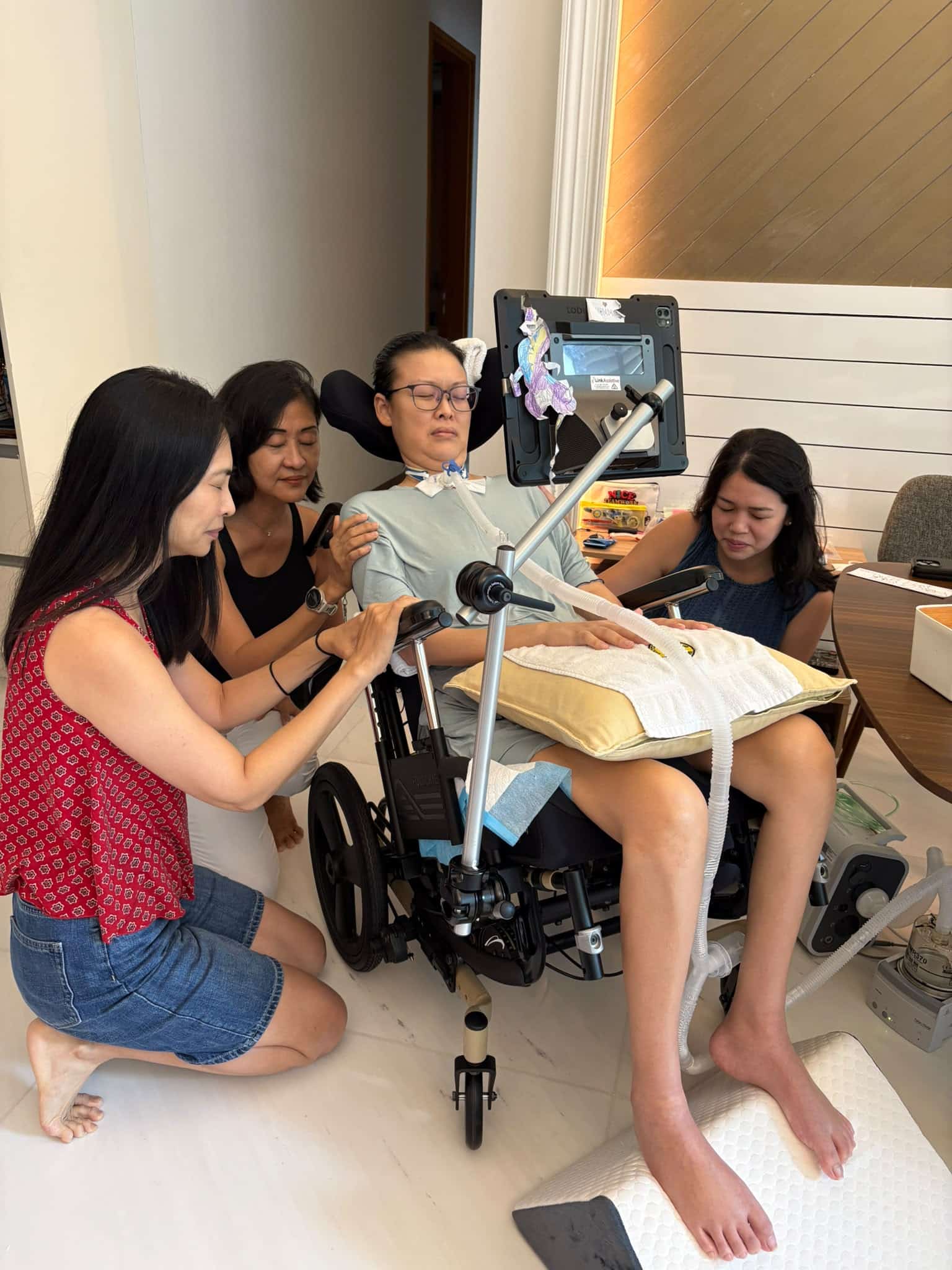
The group of women who visit Dr Pang regularly to bless her with worship and prayers.
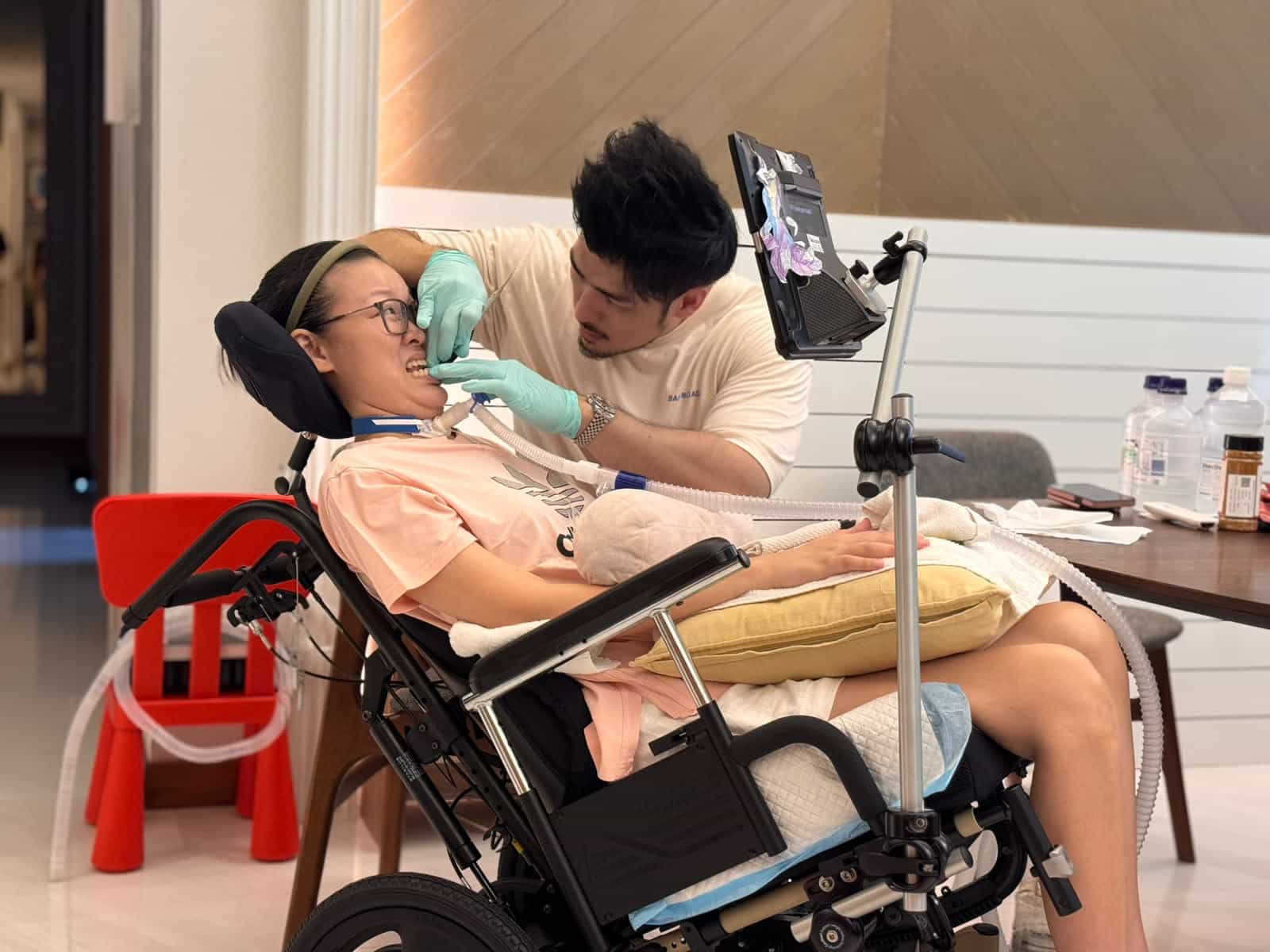
Dr Yan Loo helping to remove the “stone” buildup between Dr Pang’s teeth, brought about by excessive salivation, a common and troublesome symptom experienced by MND patients.
Her recent near-death experience has opened her eyes to how real the spiritual realm is.
“Previously I knew it by theory only, that we are made up of spirit, soul and body. But now I really believe it,” she said.
She hopes her latest encounter with God in the hospital will encourage other believers who are currently fighting their own medical and spiritual battles.
“It is so easy to lose sight of God. But don’t allow it. Don’t let the devil build a stronghold in your thoughts,” she urged.
“There is hope. The Lord will fight for you as He promised so in His word.”
RELATED ARTICLES:
My name is Amelia Ng. I cannot speak, move or breathe on my own. But I can pray.
What are the odds? A doctor specialising in voice disorders finds herself struggling to speak
This year, as we celebrate 10 years, consider sowing into our Kingdom ministry! For S$10 a month, you become part of the #10for10 community and a part of every story we tell.
Partner with us