Welcoming the little ones: The sacred call to safeguard children in our churches
Elvin Foong // March 14, 2026, 1:11 pm

When we build structures of accountability and care for the children in our church, we bear witness to a God who hears the cry of the vulnerable and defends the oppressed, says the author. Photo from Depositphotos.com.
Recently, the Singaporean community was shaken by the case of the preschool cook who molested three toddlers during their naptime.
As if this was not disturbing enough, it was revealed that the preschool’s then vice-principal and executive director knew of his actions but failed to report the perpetrator; they even conspired to delete video evidence of the acts to preserve their own interests.
This shocking case forces us to ask: If something like this could happen in an organisation where structures and policies are in place, what about in our churches?
What lessons must the Singaporean Church learn about safeguarding those whom Jesus placed at the very centre of the Kingdom?
A theological foundation: The child at the centre
Safeguarding – the actions we take to promote the welfare of children and protect them from harm – is a fundamental pastoral responsibility that allows the Church to embody the care and justice of God.
Our commitment to safeguarding begins with the Imago Dei – the truth that every child bears the image of God and possesses inherent dignity and worth.
In the Gospels, we see Jesus repeatedly elevating children. When His disciples argued about greatness, He placed a child in their midst, declaring that to welcome such a child is to welcome Him (Matthew 18:1-6). When others tried to push children away, Jesus was indignant, insisting that the Kingdom of God belongs to such as these (Mark 10:13-16).
If children exemplify the stance of the Kingdom, we cannot treat them as “future adults”, passive recipients of ministry or peripheral members of the congregation.
Safeguarding is therefore not an optional administrative task; it is a theological imperative.

Author Elvin (right), the co-founder of The Treasure Box Singapore and Kidmin Singapore, conducting a children’s camp in December 2025. All photos courtesy of Kidmin Singapore unless otherwise stated.
The current landscape: A wake-up call
While countries such as Australia have mandatory background checks and safeguarding frameworks for individuals working with children in religious institutions, many churches in Singapore have yet to formalise similar standards.
A 2024 survey of over 100 Sunday School teachers by Kidmin Singapore revealed concerning gaps: Nearly 59% of respondents reported that their churches have no policies for reporting and handling abuse, and 53% do not have a written code of conduct for workers.
More recently, the findings on safeguarding from the State of the Church in Singapore 2025 were also deeply concerning. Only 50% (nine out of 18) of children’s ministry leaders indicated that they had detailed polices and measures in place.
Many of our congregations operate on the church family assumption – the belief that spiritual intimacy automatically equates to safety. We often recruit volunteers based on their perceived spiritual maturity or willingness to serve, assuming the church is safe because the volunteers are Christians.
However, global history shows that spiritual communities are not immune to the abuse of power. Secrecy framed as confidentiality is one of the most reliable environments in which abuse flourishes, as it prioritises institutional reputation over the safety of the vulnerable.
We must move beyond “cheap repentance” towards transparency and accountability.
There is also often a misapplied theology of faith that views rigorous risk assessment as an import of secular culture or as a sign of spiritual distrust.
In the name of stepping out in faith or trusting in prayer, ministry leaders may inadvertently neglect the “stress-testing” and due diligence required for safe environments.
While prayer is the essential foundation of all we do, it was never intended to be a substitute for the hard work of stewardship or an excuse for shortcuts.
Just as we do not view fire safety drills as a lack of trust in God, we must recognise that meticulous preparation, such as knowing and planning the “evacuation routes” for a child’s safety before a crisis occurs, is a vital expression of our ministerial integrity and an ethical responsibility; it is not an outsourcing of faith to man-made structures.

The State of the Church 2025 report was presented at Kidmin Singapore’s National Children’s Ministry Dedication Service 2026 by Pastor Howard Kuay of Changi Baptist Church (left) and Pastor Ng Zhiwen of Zion Bishan Bible-Presbyterian Church (right) on January 17.
A framework for protection
Theological convictions and “virtue language” regarding love and justice are insufficient unless they are translated into institutional forms such as policy, training and enforcement.
For our theological convictions to matter, they must mature into sustained operational practice. We must move beyond “cheap repentance” towards transparency and accountability.
A robust safeguarding culture can be built around four pillars:
1. Educate: Vision over rules
When we understand that protection of the vulnerable is an expression of the Gospel, we follow the vision rather than just the rules. Every leader, volunteer and member should understand the signs of abuse and the behavioural boundaries required for safety. Safeguarding is not just administrative compliance.
2. Promulgate: Making safety visible
Policies only protect if they are known and accessible. Churches should have a clear safeguarding policy that covers codes of conduct (touch, digital communication and supervision) and clear reporting pathways. These should be published on church websites and posters so that safety becomes a normal, expected part of church culture.
Enforcement is a form of love.
3. Enforce: Integrity in action
Policy without enforcement is merely documentation. This requires non-negotiables: Thorough screening and vetting of volunteers, reference checks and a commitment to reporting harm to state authorities when thresholds are met. Enforcement is a form of love; it protects children from harm and protects volunteers from false allegations by creating a transparent environment.
4. Review: A living system
Safeguarding is not a one-time project but a living system that must evolve. Churches should conduct annual audits of their compliance and incident logs. Ideally, every few years, an external audit should be invited to ensure our integrity regarding child safety matches our fiscal responsibilities.
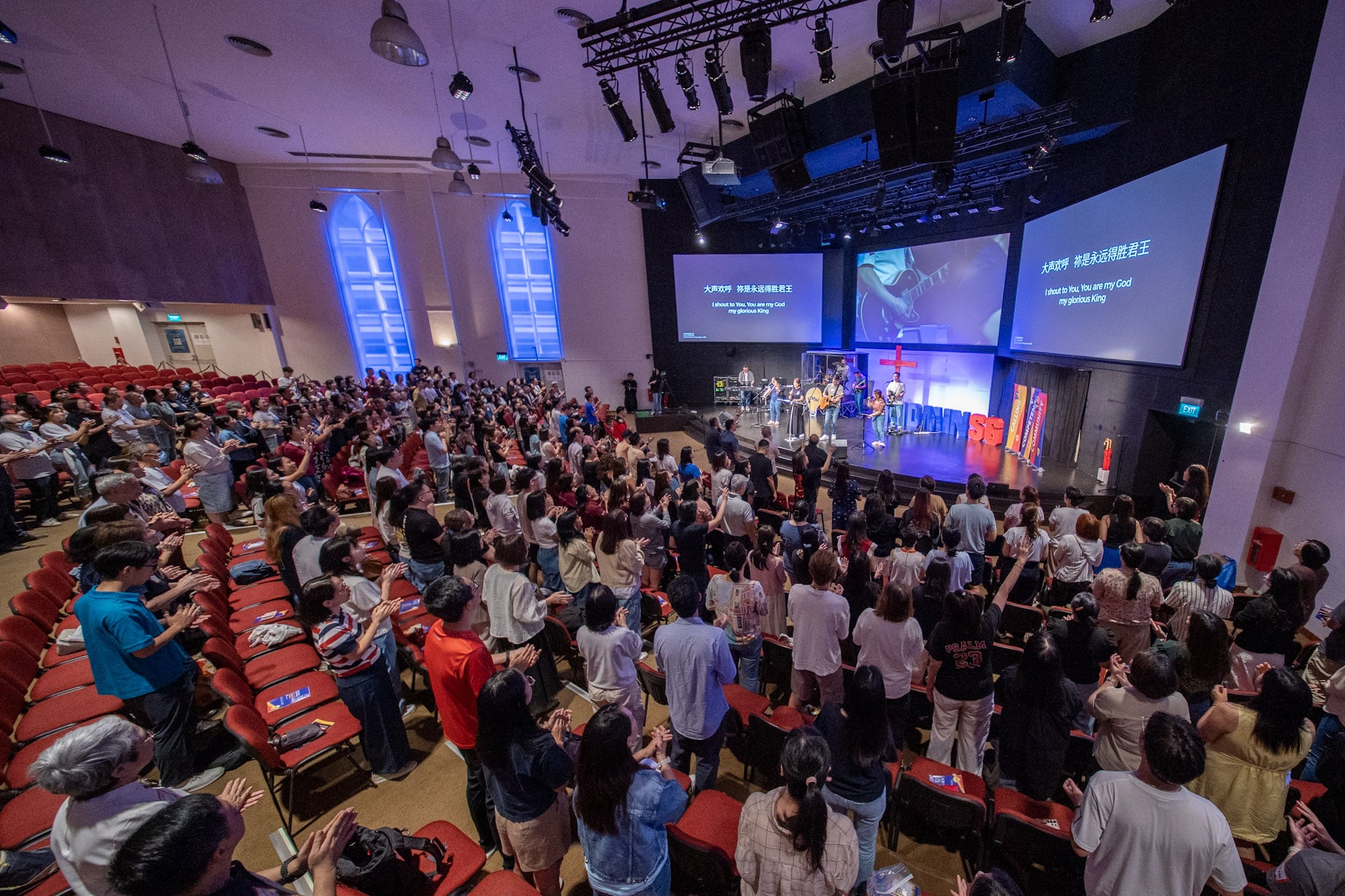
The assumption that the church is safe because the volunteers are Christians may actually lead to safety blind spots, says Elvin.
Moving forward
Here are four areas that churches can reflect on:
1. Theological vision: Who is the child in our midst?
Does our church’s current treatment of children reflect the high theological standing that they are image-bearers, or do we treat children’s ministry as a peripheral administrative task? How would placing “the child at the centre” of our church’s structures – rather than at the margins – change the way we prioritise safety and resources?
2. Addressing blind spots: The church family assumption
In what ways might the church family assumption be creating a blind spot that prevents us from implementing necessary vetting, oversight or behavioural boundaries? How can we move from recruiting based purely on availability or perceived spiritual maturity, to a system of rigorous screening and accountability?
The way we protect our children is a confession of our faith.
3. Transparency vs secrecy: Prioritising love over reputation
Does our church have a publicly accessible safeguarding policy that includes clear reporting and handling procedures for abuse? If a child or volunteer were to raise a concern today, would they know exactly who to tell and feel confident that the church would prioritise the child’s safety over shame on the church?
4. From values to systems: Taking concrete action
Looking at the Educate, Promulgate, Enforce, Review framework, what is one concrete gap in our church’s current practices? For example, do we have a two-adult rule in every classroom, or do we provide mandatory annual training on recognising the signs of abuse?
Safeguarding as a confession of faith
Ultimately, the way we protect our children is a confession of our faith. When we build structures of accountability and care, we bear witness to a God who hears the cry of the vulnerable and defends the oppressed. A church that refuses transparency or prioritises its reputation over the safety of a child denies the very character of the God it proclaims.
As we look to the future, let us be a people who do not just “get souls saved” but also faithfully protect the lives entrusted to our care. In doing so, our churches become a prophetic sign of the brightness of the Kingdom of God to a world that desperately needs to see His light.
Kidmin Singapore is organising a full-day equipping conference on April 18, 2026 (Saturday). Besides a keynote on the biblical theology of children, there will also be a panel discussion on the heart of a teacher as well as breakout sessions on child safety and processes, pastoral care for children and technology in lesson planning. More details can be found here.

RELATED STORIES:

This year, as we celebrate 10 years, consider sowing into our Kingdom ministry! For S$10 a month, you become part of the #10for10 community and a part of every story we tell.
Partner with us
Related Articles

When he was diagnosed with kidney cancer, his church mates became his “hands and feet”

Night after night, a “black figure” would strangle him. Then he called out “Jesus!”, a name he had learned as a child
“We almost lost him”: This dad pressed on in prayer when his micro-preemie was born at 26 weeks