“We are created for relationships”: 7 ways to relate to people living with dementia
by Christine Leow // July 7, 2026, 3:54 pm

Relationships is part of being made in the image of God. The need for relationships does not go away just because someone is living with dementia. Photo from Depositphotos.com.
What does it mean when the Bible tells us that we are “made in the image of God”?
This was a question Rev Prof John Swinton posed to participants of the Dementia Ministry Conference organised by Koinonia Inclusion Network (KIN) on May 30, 2026. He was speaking at the second keynote address of the conference.
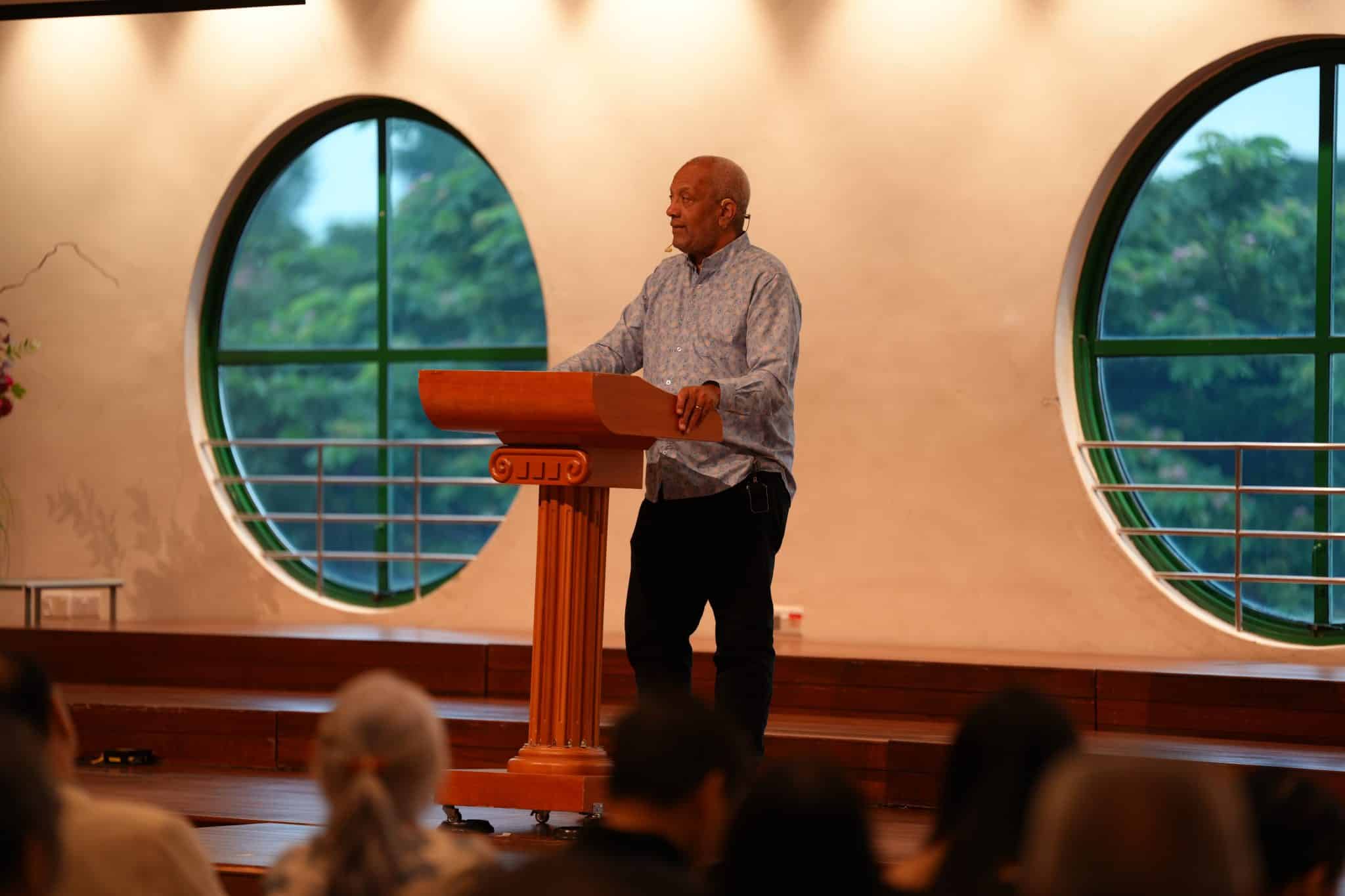
Rev Prof John Swinton speaking at the second keynote address of the Dementia Ministry Conference. Photo courtesy of KIN.
“We are creatures who require relationships, and these relationships reveal what it means to be in the image of God.”
“Some people think that being in God’s image is about your cognition, your ability to think,” said Rev Swinton, Chair in Divinity and Religious Studies at the University of Aberdeen.
“Some people think it is the shape and form of us. You can see that in the incarnation.
“But I want to suggest that one of the most fruitful ways of thinking about the image of God is in relation to relationships.”
Of all the things that God created, He speaks only to man.
“So that suggests to me and to others that the image of God is God’s relationship with human beings, the way in which we image that gift of relationship that God gives to us in the creation story, and continues to give to us.
“So we are creatures who require relationships, and these relationships reveal what it means to be in the image of God,” said Rev Swinton.
The importance of being present
Those living with dementia may forget. They may even lose their ability to communicate. But their God-given need for relationships remains.
Rev Swinton showed a video called The Still Face Experiment that underscored the importance of making eye contact and acknowledging someone.
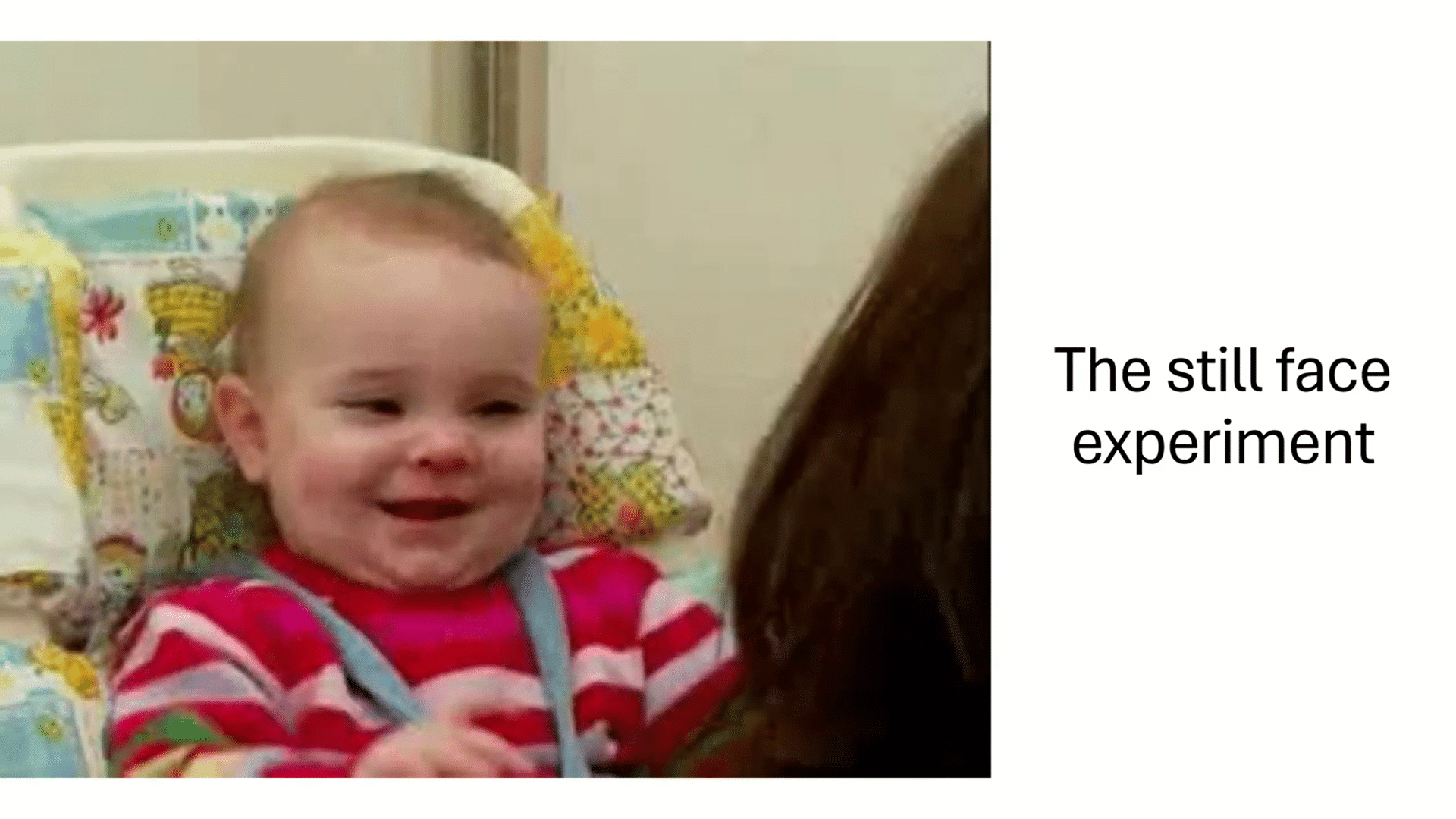
The Still Face Experiment shows how powerful the desire for relationships and connection is. Screengrab of Rev Swinton’s second keynote address.
In the video, a mother interacts with her year-old child. Her baby returns her greeting. When the child points to things around her, her mother engages her and plays with her. They work to coordinate their emotions and intentions.
Then the mother is told not to respond to her baby. Very quickly, the baby realises this and tries to get her attention. She smiles, points, puts both hands up, and eventually screeches at her mother.
“If nobody is looking at people with dementia, then it’s a social, psychological and, ultimately, a spiritual thing.”
Said Dr Edward Tronick, Director of the Child Development Unit at Harvard University, who headed the experiment: “Even in these two minutes when they don’t get the normal reaction, they react with negative emotions. They turn away, they feel the stress of it, they actually may lose control of their posture because of the stress they experience.”
This shows the power of relationship, said Rev Swinton. The problem is that with people with dementia, the people around them tend to turn away from them.
“They are the group of people who very rarely have people looking straight in their faces,” said Rev Swinton.
“And if that little experiment suggests, it’s really important that we look at one another face-to-face and begin to explore our emotions in that way. Then not looking at people is really problematic.
“So dementia might well be a neurological condition, but if nobody is looking at people with dementia, then we find it’s a social, psychological and, ultimately, a spiritual thing.”
A Royal Commission in 2019 that looked into aged care in Australia discovered that abuse of the elderly was not simply that “people were being nasty or mean … it was people not noticing bad practices”. For example, nurses would talk over the bed of someone living with dementia, or be on their handphones.
“They would be present in the room, but be completely absent to the individual. There’s something very important about that absent presence,” said Rev Swinton.
“We’re more and more becoming a culture where absence is the norm. It’s a social media thing. We are all on our phones. So we’re in the same space, but we’re not together.
“You can imagine taking that cultural absence into an aged care facility, where there’s already difficulty with communication of things. You can see the difficulties and the dangers.”
How to be present
How, then, can we forge relationships with those living with dementia and be present with them if they often cannot communicate or remember?
1. Be the picture of love
In a video by American organisation Memory Bridge, a woman with advanced dementia was talking to another woman called Karen. The elderly woman had no idea about anything but the present. Yet there was one thing she recognised.
“She told Karen who was talking to her, ‘I don’t know where you are from. I don’t know why you’re here, but your face is a picture of love.’”
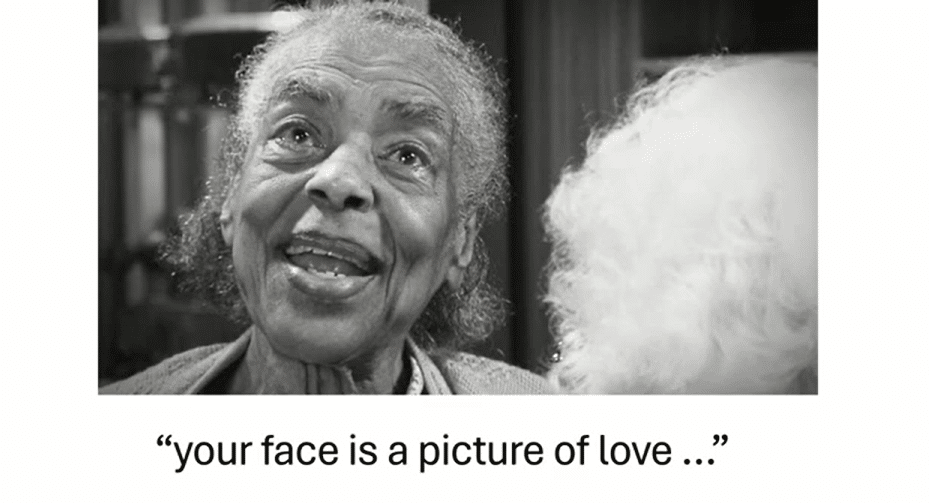
When interacting with someone living with dementia, looking them in the face is also a form of love. Screengrab of Rev Swinton’s second keynote address.
Rev Swinton challenged the participants to have “your face be a picture of love”. That requires paying attention to the person and looking them in the face, which is also “a form of love”.
“We think about love as something that we do, or something that we know. Love is actually something that we are, and our faces are that place where we reveal love to the world.”
2. Help them belong
Belonging is more than inclusivity. Inclusivity may ensure that a person living with dementia has access to a building, but it does not guarantee that the person, once in, will be loved.

Making space socially for those living with dementia is as important as making space for them physically. Photo from Depositphotos.com.
Said Rev Swinton: “The idea of belonging comes from God’s gift to us in creation. God creates human beings, places us in the world and says, ‘You belong here. This is your place. This is where you should be. Now care for and tend to the world.’
The Church should be that place of belonging where everybody matters.
“Belonging not only enables us to get people into our buildings or into our lives, it says when someone comes to our community, they’re part of that community. If they’re not in that community, then we need to look for them.”
As the Body of Christ, the Church should be that place of belonging where everybody matters, and if someone if not there, others notice, miss them and look for them. Rev Swinton likened it to the father in the parable of The Prodigal Son (Luke 15:11-32) where he scans the horizon looking out for his wayward son.
He encouraged churches to make provisions for such people first because if they waited for people with disabilities to be in their midst before making adjustments, they would miss attracting such people. Then they would remain unaware of people with disabilities because they are not looking out for them.
3. Forge friendships
Another way to be present is through friendship.
“In John’s Gospel, Jesus says, ‘I no longer call you servants, I call you friends.’ (John 15:15) So friendship is the nature of discipleship. We who are gathered here are friends of Jesus.”
But while we make friends with people like us, Jesus makes friends with those radically unlike Him – those on the margins, outsiders, forgotten, persecuted or having a tough time in society.
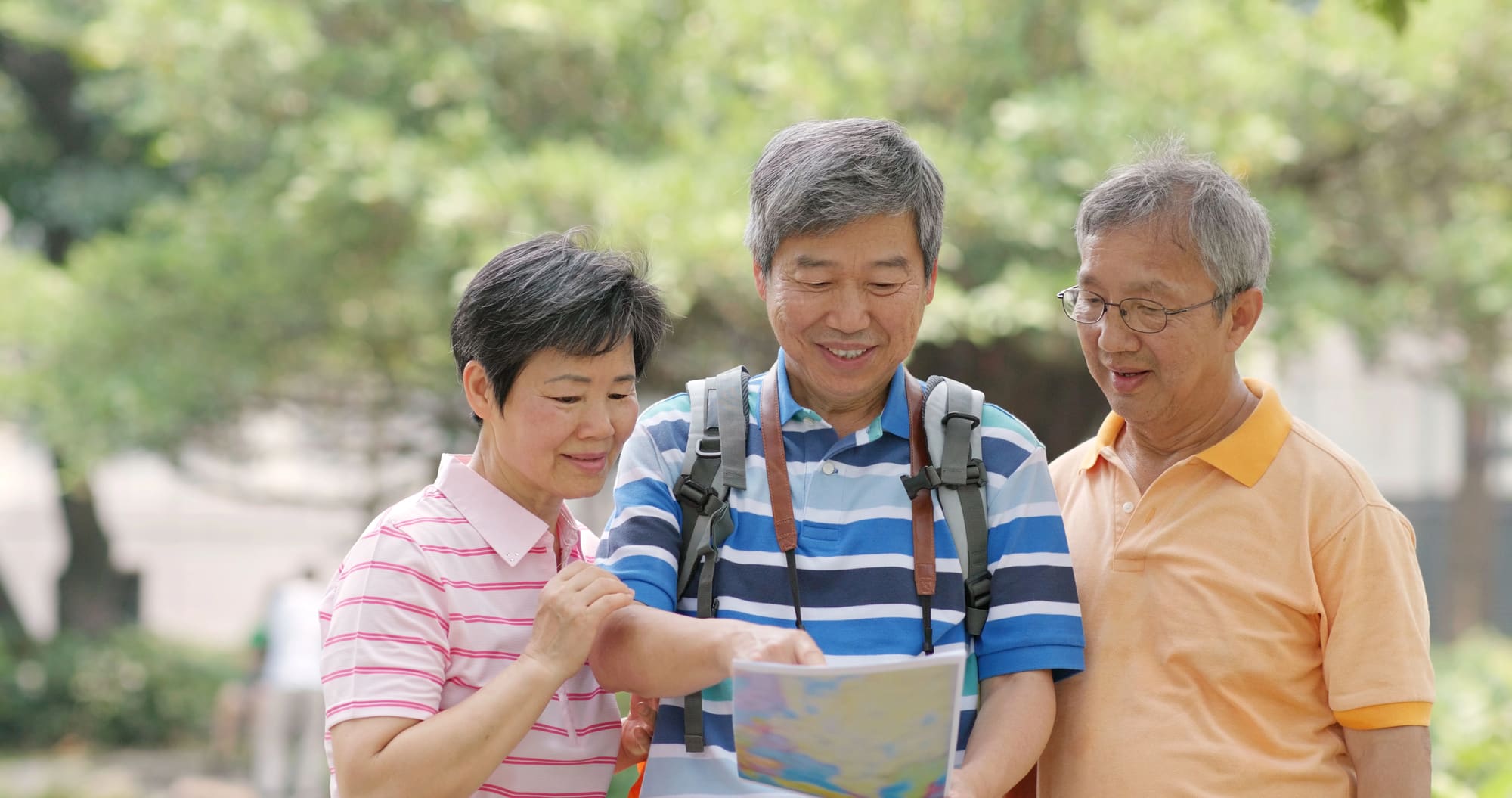
Befriend those living with dementia. Photo from Depositphotos.com.
“His spent time with them, sat with them and discovered how to love those society did not love,” said Rev Swinton.
“We need to be very careful as churches that we don’t say, ‘Well, dementia or disability, these are important things for people who like these kind of things”, not realising actually that these are the God things, these are the heart of the Gospel.
“These people are His disciples. They have a vocation and a calling. Friendship is the mode in which belonging becomes revealed to the world.”
4. Be kind and loving
“It’s good that you’re here and I’m glad that you exist.”
Kindness is a gift of the Spirit that will transform a world short on kindness (Titus 3:4-5) and is fundamental to dementia ministry.
Kindness goes hand in hand with love.
“To love someone with dementia means saying to the other person, ‘It’s good that you’re here and I’m glad that you exist.’”
This is essential because this sentiment is the exact opposite of the way many people think about people with dementia. In Europe, for example, as soon as someone is diagnosed with dementia, they can apply for euthanasia.
5. Slow down, take time
Love takes time. In a book by Japanese theologian Kosuke Koyama called Three Mile an Hour God, the author noted that three miles an hour is the average walking speed of a human. When Jesus was on earth, that was the speed at which He, who is God, walked.
“God, who is love, walks at three miles per hour. So love has a speed. It’s a spiritual speed,” said Rev Swinton quoting the book.
As busy people, our busyness can dilute our compassion, blinding us to the person before us.
“Slow down. Take time for those things society and the world consider to be trivial. I think that’s the essence of what it means to be a human being in a relationship, living to the image of God.
“And when we’re ministering with elders, particularly those with advanced dementia, that slowing down, walking at the speed of Jesus is fundamentally important.”
6. Use touch
“Every cell remembers where it was touched by the mother.”
When people are very old and degenerated, and no one enters their world, they tend to withdraw inward. Their desperate need for connections are all inside. Yet they still long for closeness.
Rev Swinton showed a video about Gladys Wilson who, because of advanced dementia, had lost her ability to speak and was reduced to repetitive motions to express her needs.
Yet when she was stroked on the cheek, she responded. This is because that is where a mother usually touches her child and “every cell remembers where it was touched by the mother”. Through that, communication happens and the person is no longer alone.
7. Make music
In the same video, the person tending to Gladys sang to her songs with which she was familiar. Gladys began to move with the music and the person moved along with her, matching the intensity of her singing with the intensity of Gladys’ movement, quietening her voice when Gladys slowed down.
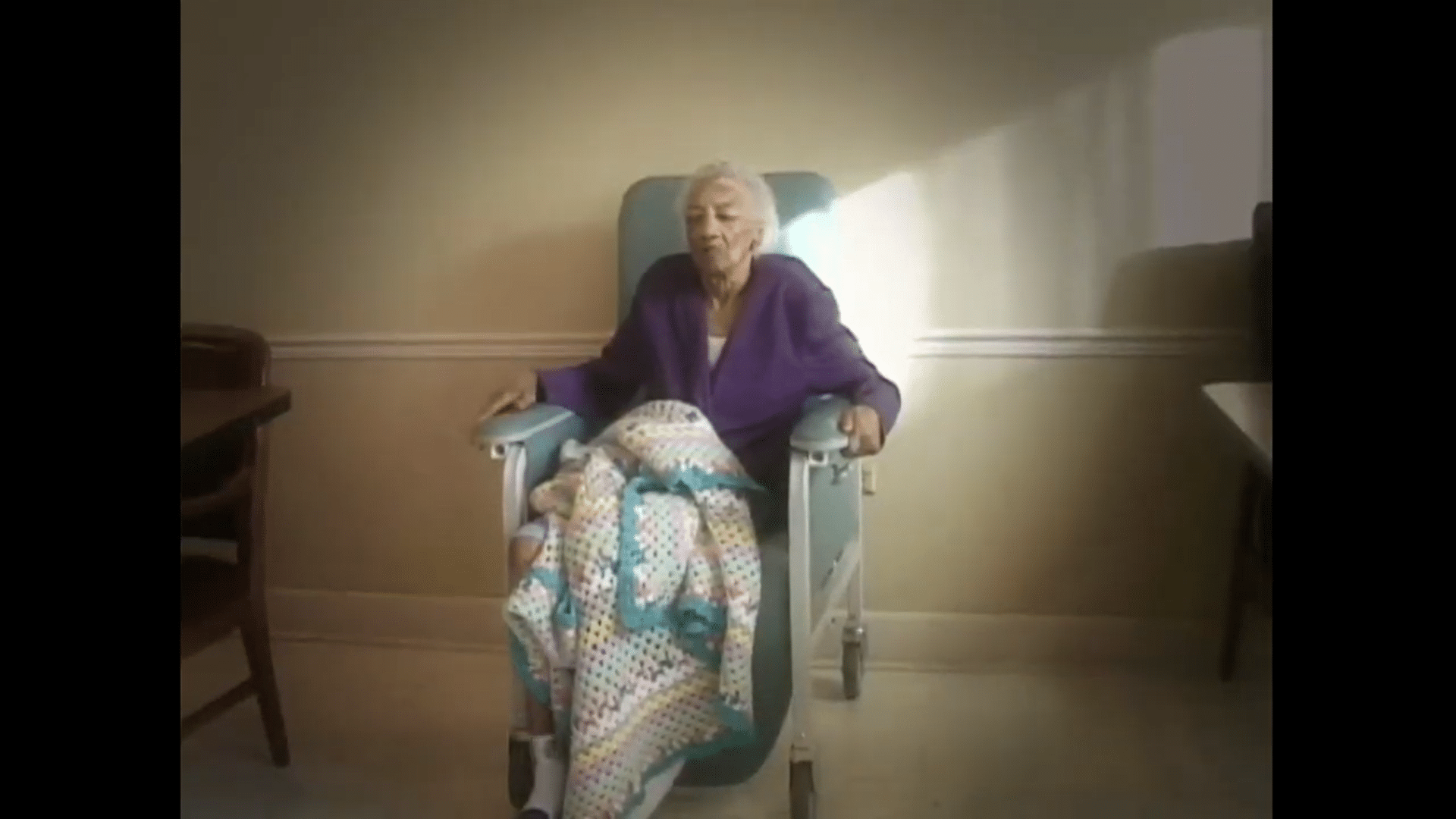
Gladys Wilson is an 87-year-old who has Alzheimer’s disease and is virtually non-verbal. Screengrab of Rev Swinton’s second keynote address.
Using music and mirroring of movement, a bridge is created, paving the way for communication.
Concluded Rev Swinton: “It is not complicated. It’s just a matter of noticing, responding, recognising people as human beings, and acting accordingly. It’s hard, it’s difficult, but it’s not complex.
“We’re not called to do extraordinary things, but to do ordinary things with extraordinary love. When we do that, we end up being what the Body of Christ was meant to be.”
RELATED STORIES:
5 tips on holding meaningful conversations with those with dementia
“Tell me your story!” Reminisce Connect guides seniors with dementia to remember their good old days
“We will forget things, but God will never forget us”: 5 ways God is present in dementia

This year, as we celebrate 10 years, consider sowing into our Kingdom ministry! For S$10 a month, you become part of the #10for10 community and a part of every story we tell.
Partner with us
Related Articles
When he was diagnosed with kidney cancer, his church mates became his “hands and feet”
“We will forget things, but God will never forget us”: 5 ways God is present in dementia

“If I forget, do I still matter?”: New guidebook launched to help churches love and include those with dementia