“We will forget things, but God will never forget us”: 5 ways God is present in dementia
by Christine Leow // June 18, 2026, 12:28 pm

When it comes to spirituality in dementia, it is less about what we can remember and more about how God remembers us, said Rev Prof John Swinton at the Dementia Ministry Conference. All photos from Depositphotos.com unless otherwise stated.
There was a nurse working in Adelaide, Australia who was caring for a woman living with dementia who was usually pleasant and placid.
But, one day, the woman suddenly became agitated and frustrated. She started walking up and down the ward repeating one word over and over again.
The nurses did not know what to do with her. They thought maybe she needed more medication or to be restrained in the ward.
“It’s not our memory that counts, it’s the memory of God.”
The nurse went alongside the woman and began listening to her. She realised the woman was muttering: “God, God, God, God.”
So she asked the woman: “Are you afraid that you’re forgetting God?”
The woman stopped, looked at her and nodded. The nurse then said: “It may be that you forget God, but God will never forget you.”
Immediately, peace came over the woman. Her erratic behaviour stopped and she settled back into her usual pattern.
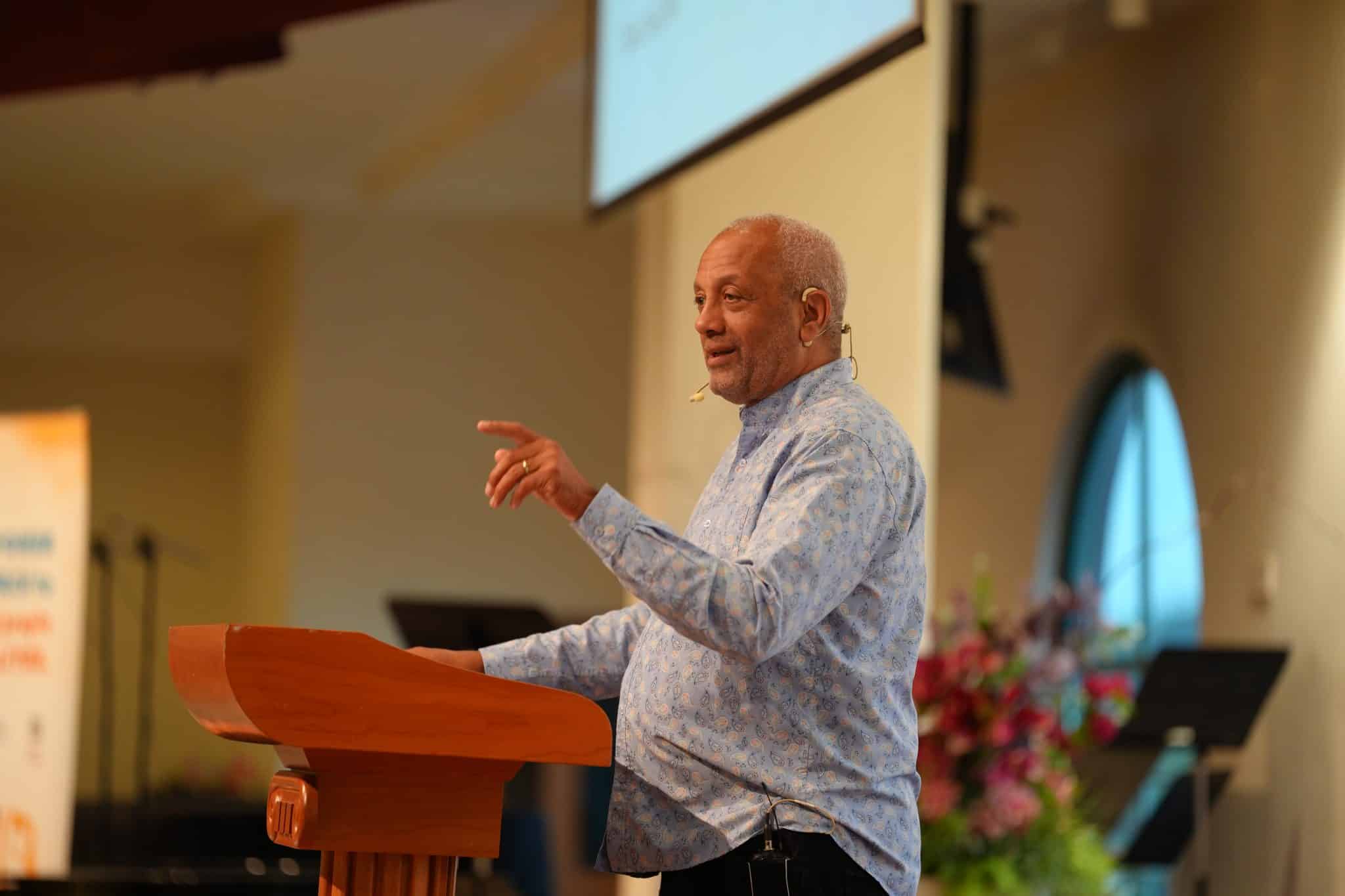
Rev Prof John Swinton was the keynote speaker at the Dementia Ministry Conference. Photo courtesy of KIN.
Rev Prof John Swinton shared this story at the Dementia Ministry Conference organised by Koinonia Inclusion Network (KIN) on May 30, 2026. The Chair in Divinity and Religious Studies at the University of Aberdeen, Rev Prof Swinton was the keynote speaker of the Conference.
Said Rev Swinton: “We have come to realise that it’s not our memory that counts – it’s the memory of God.
“Our brains will get old, our brains will wear out, that’s inevitable. We’re creatures, we’re fragile. We will forget things, but God will never forget us.
“We can trust God because He will never forget us.”
Biblical proof God never forgets
Apart from being a theologian, ordained minister and author, Rev Swinton spent 16 years as a mental health nurse before retraining in the area of intellectual disabilities.
His book Dementia: Living in the Memories of God is a foundational text for those looking to understand dementia through both theological and pastoral lenses.
The problem with dementia is not that people living with the condition forget, but that they are forgotten.
His experience working with “people who see the world differently” has helped him reframe his understanding of how God can be with people who “can never understand words in a way that very often religion assumes that we can understand words”.
Some of us may wonder: How can I get in touch with God when I have forgotten who God is?
To this, Rev Swinton said: “Do we trust God?”
He elaborated: “The experience of memory loss can happen to any of us at any time. If I walked down these stairs, tripped and fell, and banged my head, then I would be a disciple who knows lots of things at the top of the stairs, but by the time I got to the bottom of the stairs, I have forgotten them all.
“Do you think God would somehow abandon me just because I have tripped and fallen down the stairs? The answer is ‘no’. God’s love is rich and deep. Nothing can separate us from the love of God (Romans 8:38-39). Paul doesn’t say, ‘Apart from dementia, nothing can separate us from the love of God’; he says, ‘Nothing’.
“So we begin with total reassurance that God is with us in the midst of our forgetfulness, in the midst of the losses we go through, in the midst of dementia.
“God will never abandon us.”
The problem of forgetfulness
The problem with dementia is not that people living with the condition forget, but that they are forgotten. Dementia is not just a neurological condition, it is a cultural one as well, noted Rev Swinton.
“It is a culturally devalued condition. Within many cultures, the experience of dementia is considered to be deeply negative. It contains a stigma,” he said.

Dementia can be very isolating for the person living with it.
That is why research shows that when someone is diagnosed with dementia, those around them withdraw.
Said Rev Swinton: “People don’t offer the gift of friendship and the gift of value to those with dementia.
“So one of the things that many people with dementia experience is loneliness, a sense that their life is empty and meaningless, and they become devalued. They find themselves alone, isolated and sad. Depression and dementia are very often connected.”
Where is God in dementia?
1. In the Body of Christ
That is why the Church is so important to those in dementia. The friendships that emerge from the Body of Christ is one of the first places God is present in dementia.
“The Body of Christ is a beautiful space where the weak are considered to be strong, the broken find healing, and where we come together in all of our differences to represent Jesus. God is in the midst of that,” said Rev Swinton.
2. In prayer
Prayer is a wonderful gift for us to speak to the Maker of the universe and Him to respond to us. Because prayer need not be in words, those with dementia can also experience God in prayer.

The spirit within can still continue to pray despite dementia.
Rev Swinton has a good friend who is a chaplain that works with people who live with dementia. Among those under her care was an elderly woman named Beatrice who was in the advanced stages of dementia. Most of the time, Beatrice would sit at the daycare facility and not speak at all.
One day, the chaplain felt “real calling” to pray for Beatrice. As she said the Lord’s Prayer, Beatrice began to pray non-stop.
“When we pray, God listens.”
Said the chaplain: “I leaned in to try to hear what she was saying, but I couldn’t understand it. But she was intense in her prayer.”
It was like what the Bible described how “the spirit groans with words that we cannot understand” (Romans 8:26).
The moment the chaplain said: “In the name of the Father, the Son and the Holy Spirit, Amen”, Beatrice stopped praying.
Said Rev Swinton: “Scripture tells us very clearly that when we pray, God listens. When Beatrice prayed, God listened.
“We don’t often think of people with dementia as prayer warriors. But somehow within our bodies, our spirit lives and moves. And it is the spirit that groans in words we cannot understand.”
3. In our presence
Sit down with someone with dementia, take time and you will likely find connections, encouraged Rev Swinton.

Being present with those living with dementia can be very helpful.
“To be present with somebody with advanced dementia is to give them the gift of time.”
“Just settle in with somebody, follow their rhythm, move with their bodies, and you will discover even for a few seconds a sense of connection, a deep sense that really you’re there in a way that you haven’t been before.”
This is the Christian spiritual practice called the sacrament of the present moment, which has to do with slowing down, listening to our breathing and recognising that every breath is a gift from God without which we would not exist.
This sacrament of the present moment helps us see those living with dementia and be with them in powerful ways.
“To be present with somebody with advanced dementia is to give them the gift of time, the gift of value, the gift of friendship, and the gift of noticing things others don’t notice.”
4. In music
Rev Swinton quoted data from a book called Musicophilia: Tales of Music and the Brain by Oliver Sacks.
“When you see somebody move to music, very often they are accessing memories.”
One chapter in the book talks about how music can transform the lives of those living with dementia. For these people, their memories are not actually lost. They merely cannot be accessed because the neurons and the synapses of the brain are broken.
However, because of the brain’s neuroplasticity, it is able to bypass the broken connections and create new pathways to retrieve those memories. One of the ways it can do this is through music.
Said Rev Swinton: “When you’re listening to the music, you can get to that memory. Of course, when you get to that memory, it brings back experiences of who you used to be, of what you used to do, of the people that you used to see.
“So when you see somebody move to music, it’s not just that they’re dancing or just that they’re moving. Very often they are accessing memories they couldn’t access over periods of time.”
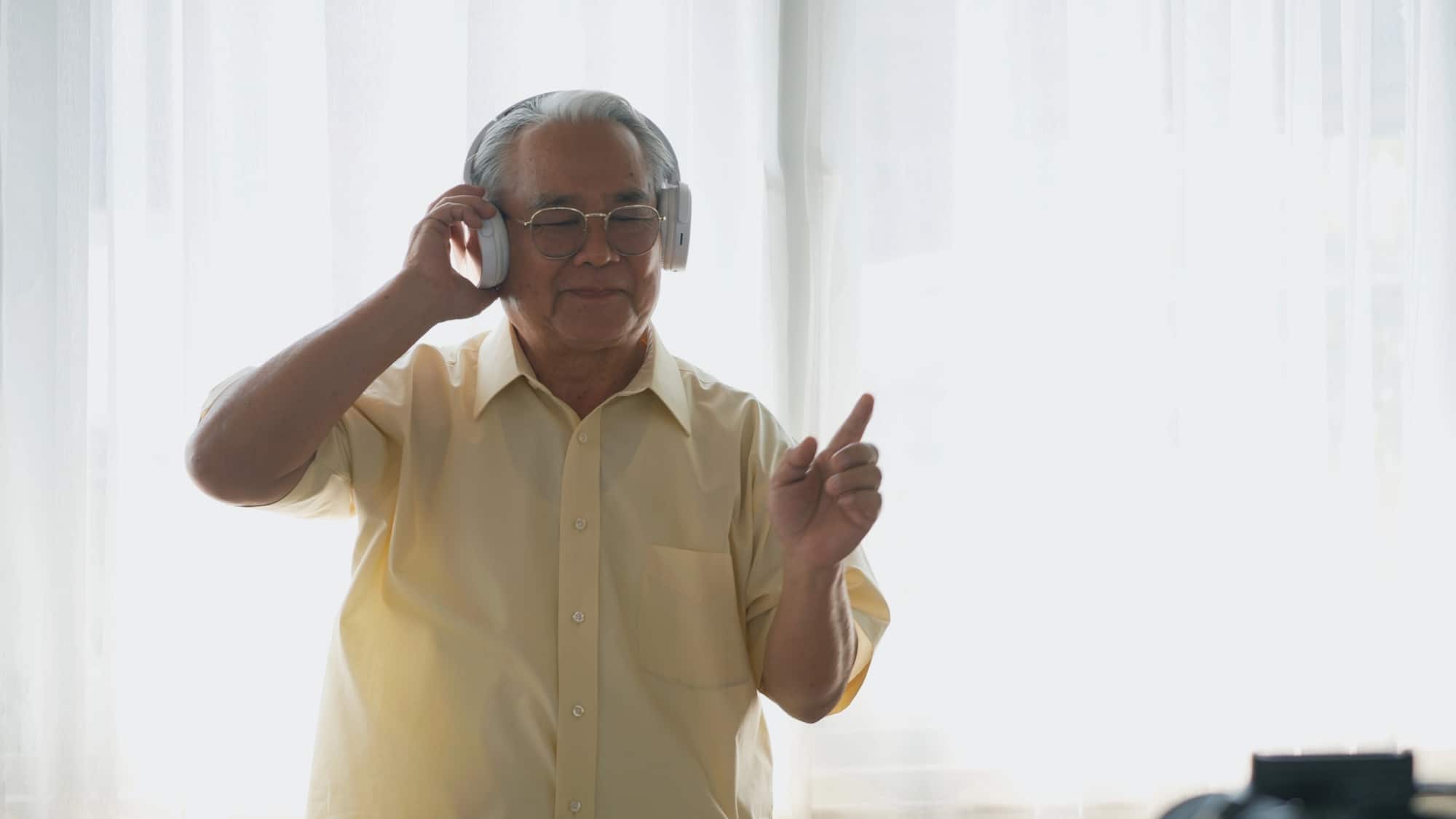
Music can help the mind affected by dementia access memories locked away.
When the music stops, so do the memories. But the lingering effects of those re-surfaced memories will remain.
Rev Swinton added: “So when somebody is worshiping, they really are worshiping in a real and meaningful way, though it will pass.
“The key thing for those of us who are with people with dementia is always to be in that moment to enjoy that moment.”
5. In the body
This brought Rev Swinton to the last way God is present in dementia – in the body.
“When we see elders worshiping in that way, their bodies are letters from Jesus. God is in our bodies.”
When people living with dementia worship, they may sometimes raise their hands and even pray. This is an example of how “our bodies remember things”.
“You’re really watching memory being acted out in the present. You’re seeing the faithfulness of these elders come into fruition in their bodies.
“Even though they can’t remember things, their bodies continue to remember. Of course, the body is the temple of the Holy Spirit (1 Corinthians 6:19). So, therefore, body memory is very important.
“In 2 Corinthians 3:2-4, Paul says the only letter of recommendation we need is ourselves. It’s a very beautiful passage.
“Our bodies are letters from Jesus, and when we see elders worshiping in that way, their bodies are letters from Jesus. God is in their bodies.”
RELATED STORIES:
Where is God when we forget Him? Understanding spirituality in dementia care
God never forgets: Four ways to remind a person with dementia of their Creator

This year, as we celebrate 10 years, consider sowing into our Kingdom ministry! For S$10 a month, you become part of the #10for10 community and a part of every story we tell.
Partner with us
Related Articles

“We are created for relationships”: 7 ways to relate to people living with dementia

“If I forget, do I still matter?”: New guidebook launched to help churches love and include those with dementia

“Tell me your story!” Reminisce Connect guides seniors with dementia to remember their good old days