“Your church or mine?” How to decide which church to settle in after the wedding
by Christine Leow // May 5, 2026, 10:36 am
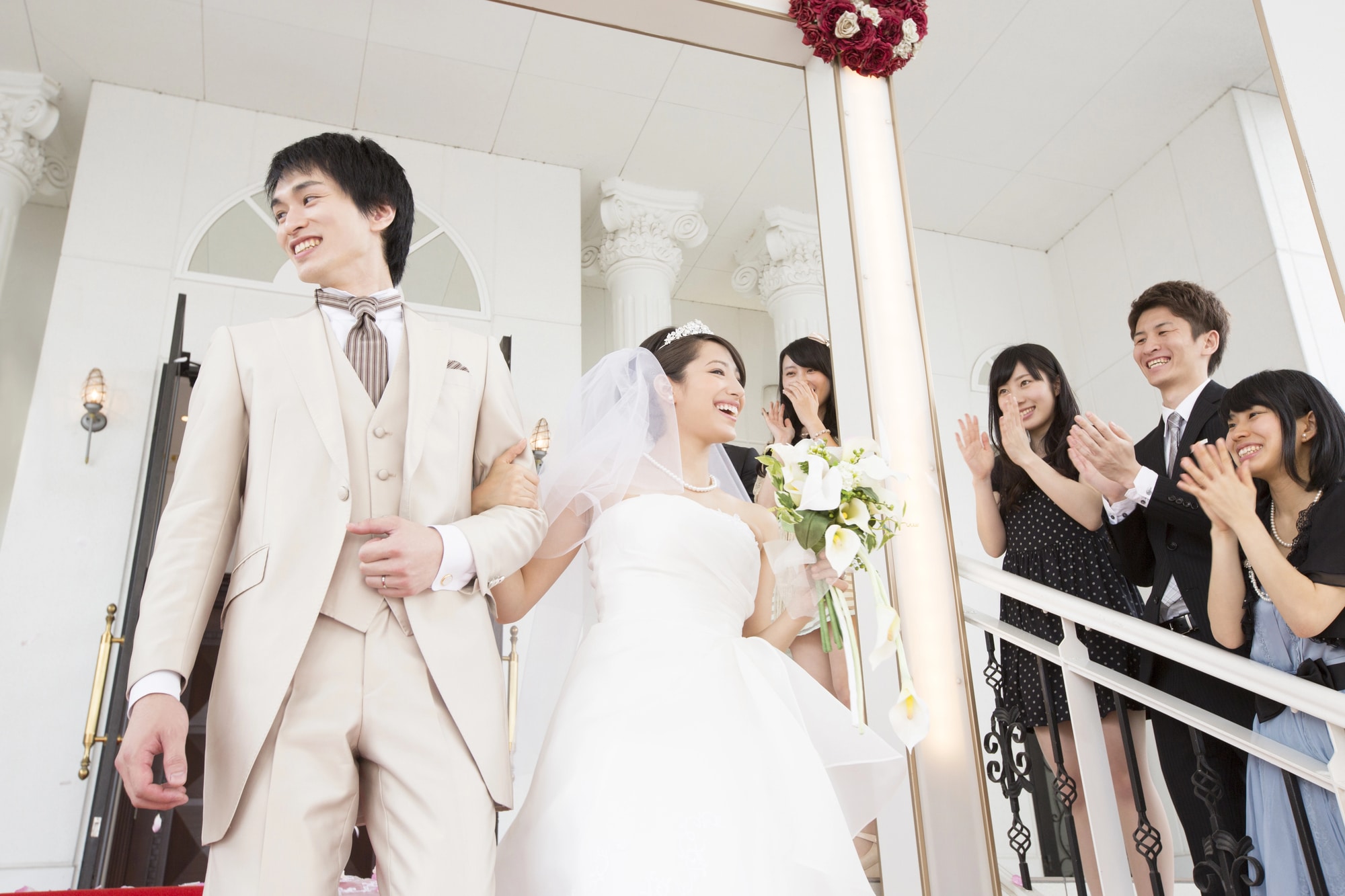
Which church to settle in after the wedding can be a hotly debated topic for couples tying the knot. All photos from Depositphotos.com.
Some couples heading towards the altar quarrel over wedding plans. Others bicker over the division of future household chores. Yet others fight about the time to be spent with in-laws.
There is one thing that has become a real point of contention for many Christian couples: Which church to go to once they are married.

Which church to go to is one quarrel unique to Christian couples.
Some agree to go to the husband’s church. Others decide on the wife’s church. A few remain in their respective churches, choosing to worship in separate places. Then there are those who leave their own churches for a “neutral” one so both parties can start afresh.
So how should couples decide? Is there a right answer? Salt&Light asked Pastors for some principles to heed when deciding on a church.
“Must we be in the same church?”
Why must there even be a decision to begin with? Can’t couples just stay in their current churches? After all, if you marry a partner who enjoys golfing, no one really expects you to pick up golf.
As couples wrestle with this question, they may want to consider the following.
1. What is marriage?
“Spiritual unity of the couple is often built through shared spiritual experiences.”
Marriage is the cleaving together of two separate lives into one (Genesis 2:24) which reflects the deep bond between Christ and the Church (Ephesians 5:25; Ephesians 5:31-32). This means shared lives that go beyond a shared address or shared bed to intimacy emotionally and spiritually.
Said Rev Raymond Fong, Pastor-in-Charge of Wesley Methodist Church: “Spiritual unity of the couple is often built through shared spiritual experiences.
“The weekly worship in the same church is one key shared spiritual experience that will help foster spiritual alignment and unity as a couple.”
The question couples should ask themselves then is: Can we still do this if we are in separate churches?

2. What is church?
Can couples who belong to separate churches truly live as one?
The church is not merely a place to attend a worship service. It is an assembly of believers, a community, our system of spiritual support (1 Thessalonians 5:11).
We are called to love the church (John 13:34-35), encourage the church to do good (Hebrews 10:24-25), be devoted to the church (Romans 12:10). In essence, our presence and presents are expected when we call ourselves members of a local church.
Can couples who belong to separate churches truly live as one but have different loves and loyalties when it comes to church?
3. The practical considerations
If husbands and wives worship and serve in separate places, there may be practical challenges.
Said Senior Pastor Lee Kien Seng of True Way Presbyterian Church (English Congregation): “When children come along. will the children follow the mother or the father to church?
“How will parents explain to their children why they attend separate churches? These situations can create confusion and potentially undermine a sense of spiritual unity within the family.”
Who gets a vote?
There was a couple whose parents were long-time, active members of their church. The extended family of grandparents, uncles and aunts, and cousins were all in the same church as well.

The decision is made more complex if both sides have family in their home church.
Each set of parents firmly believed that the other party should leave their church and come over because “families should worship together”. The weight of expectations sat so heavily on the couple’s shoulders that they were paralysed, unable to come to a decision.
“God can speak through the counsel of His people.”
In another instance, church leaders weighed in on the decision, each vying for the other side to “come over” because they did not want to lose a valuable partner in labour.
Said Rev Lee: “It is wise to listen to these perspectives, assuming they come from a place of care and concern. God can speak through the counsel of His people, so couples should remain open-hearted.
“However, it is also important to be aware of potential biases.”
1. Listen selectively
Not everyone who has an opinion on the matter should get a say in your decision.
“The couple must ultimately make their own decision as a new family unit.”
Rev Lee mapped out some warning signs for which to watch:
- Pressure or manipulation
“If individuals become overly pressuring or manipulative, for example disapproving of the relationship because one partner is unwilling to join their church – this is a red flag.”
- Negative comparisons
Statements that belittle other churches can reflect unhealthy attitudes and should be approached with caution.
- Parental expectations
Said Rev Lee: “Parents may prefer that their children and their families worship together under one roof. While this can be a meaningful arrangement, it should not be imposed.
“The biblical principle of ‘leaving and cleaving’ suggests that the couple must ultimately make their own decision as a new family unit.”
2. Invite godly counsel
Carefully choose some trusted people to journey alongside you in the decision-making process. Seek their advice, get them to pray for you and consider their input as one the points to help you make your decision.
3. Make sure they are godly
Ensure that those you ask are godly men and women who do not bring their own agendas and biases.
How do we decide?
Then comes the process of decision-making itself.
The steps encourage open communication while incorporating the use of wisdom, scriptural evidence and reliance on God’s will. If it helps, assign weights to each. Together, they can help couples make a decision.
1. Collect data
Begin by talking things out neutrally. Find a time and space where both of you are calm and able to objectively share your points of view.
Individually, ask yourself:
- Why is it better for my partner to be in his or her own church?
- Why is it better for me to be in my own church?
- Why should he/she come to my church?
- Why shouldn’t he/she come to my church?
Rank your reasons.
Next, decide:
- What are the deal-breakers?
- What would you rather not negotiate?
- What are you willing to negotiate?
Then compare your answers. This helps couples concretise their thoughts and desires, and articulate them. It also gives them an opportunity to see if they have properly understood each other’s viewpoints or desires.
This is just the stage where data is collected, laid out and sorted. No decision should be made yet.
2. What does the Bible say?
Are there any other verses that the Holy Spirit has impressed upon you that are relevant to the situation?
Now think of Bible verses that can help your decision-making. Evidently, there are no verses that directly tell you which church to choose.
But there are many verses that talk about how husbands and wives are to treat one another. The most common would be Ephesians 5:22-33 – husbands are to love their wives as Christ loves the Church; wives are to submit to their husbands.
Think about how this would look like in this context. If you love your wife as Christ loves the church, what decision would you make? If you submit to your husband, what decision would you make?
Are there any other verses that the Holy Spirit has impressed upon you that are relevant to the situation?
3. Listen up
Then take time to hear God for the decision.

Listening in prayer is one way of discerning a godly answer to the issue.
- Carve out time
Create a stretch of time when you are not hurried or tired. If listening to God is something new to you, you might start with a short stretch of 15 minutes. If not, devote longer periods. Some do this for up to even an hour at a time.
- Quieten your soul
Different people have different ways of quietening themselves. Here are some suggestions:
– Worship
– Play instrumental music in the background
– Close your eyes and visualise something that will help you focus on God such as a cross, sunshine
– Do deep breathing
– If a thought that distracts comes in, either write it down or mentally place it in a box
- Clear your desires
When you feel a quiet in your soul – your thoughts and emotions – tell God that you have your desires but you want to surrender them to Him so you can hear what His desires are.
- Open yourself to hear
Then listen. God’s voice may come in a quiet thought, a sensing or a knowing. Sometimes, He may speak through a verse.
- Test your hearing
– Does the thought or what you hear give you a sense of peace?
– Is it an unhurried Voice that does not make you feel forced or rushed?
James 3:17 tells us that God’s wisdom is peaceable and Paul talks about Christ as being both humble and gentle (2 Corinthians 10:1). - Rinse and repeat
This will take more than one session. You might set aside a few consecutive days or a few days over weeks and even months. Over time, there may be one answer that deepens into a conviction. - Compare answers
As a couple, come together and compare what you have heard.
4. Think hard
Here is where wisdom comes into play. Ask:
- What is best for both of us?
- Where can we serve together?
- Where can we have a community of faith who will support our spiritual growth?
- Where is the home church?
Said Rev Lee: “As the family grows and responsibilities increase, attending a church closer to home can ease logistical challenges, especially if transportation is an issue.
“It can be helpful for couples to visit each other’s churches during their dating period – attending services, joining small groups, and building relationships within each other’s communities – to better understand where they might grow best together.”
What is best for both of us?
This should accompany, not over-ride your hearing because while God gives us wisdom and expects us to use it (James 1:5), human wisdom is ultimately limited. We only know so much; we can only see so far.
But wisdom helps to confirm our hearing on many occasions. In Acts 15, when the Apostles and elders, with the whole church, decided to “choose some of their own men and send them to Antioch with Paul and Barnabas”, they said it “seemed good to the Holy Spirit and to us”. The decision was made using both the Holy Spirit and human wisdom.
5. Circumstantial evidence
Circumstances such as opportunities opening up or providence is another thing to consider. They should not be the sole indicators in your decision-making because not every open door is one that has been opened by God.
Nor does every closed mean a “no” from God, otherwise when Peter was imprisoned in Acts 12, the church would not have bothered to pray and God would not have broken him out of jail.
Let’s pray:
Father God, we commit every Christian couple to You who are about to be wed. As they embark on their journey of marriage, may Your Voice be the one they both hear clearly. As they make decisions about where to worship You, guide them as only You can, and grant them peace and joy in their decision. We pray for unity between them, and Your presence in their union every single day. In Jesus’ name we pray, Amen.
RELATED STORIES:
This year, as we celebrate 10 years, consider sowing into our Kingdom ministry! For S$10 a month, you become part of the #10for10 community and a part of every story we tell.
Partner with us
Related Articles

“We almost lost him”: This dad pressed on in prayer when his micro-preemie was born at 26 weeks

“If I forget, do I still matter?”: New guidebook launched to help churches love and include those with dementia

“It takes a spider to repair its own web”: How this outsider is empowering insiders to love the poor
