Her son’s brain tumour brought her to the depths of despair. There, God gave her a song to lift her up
This Mother's Day, Salt&Light celebrates all mothers, grandmothers and spiritual mothers.
by Christine Leow // May 6, 2026, 10:52 am
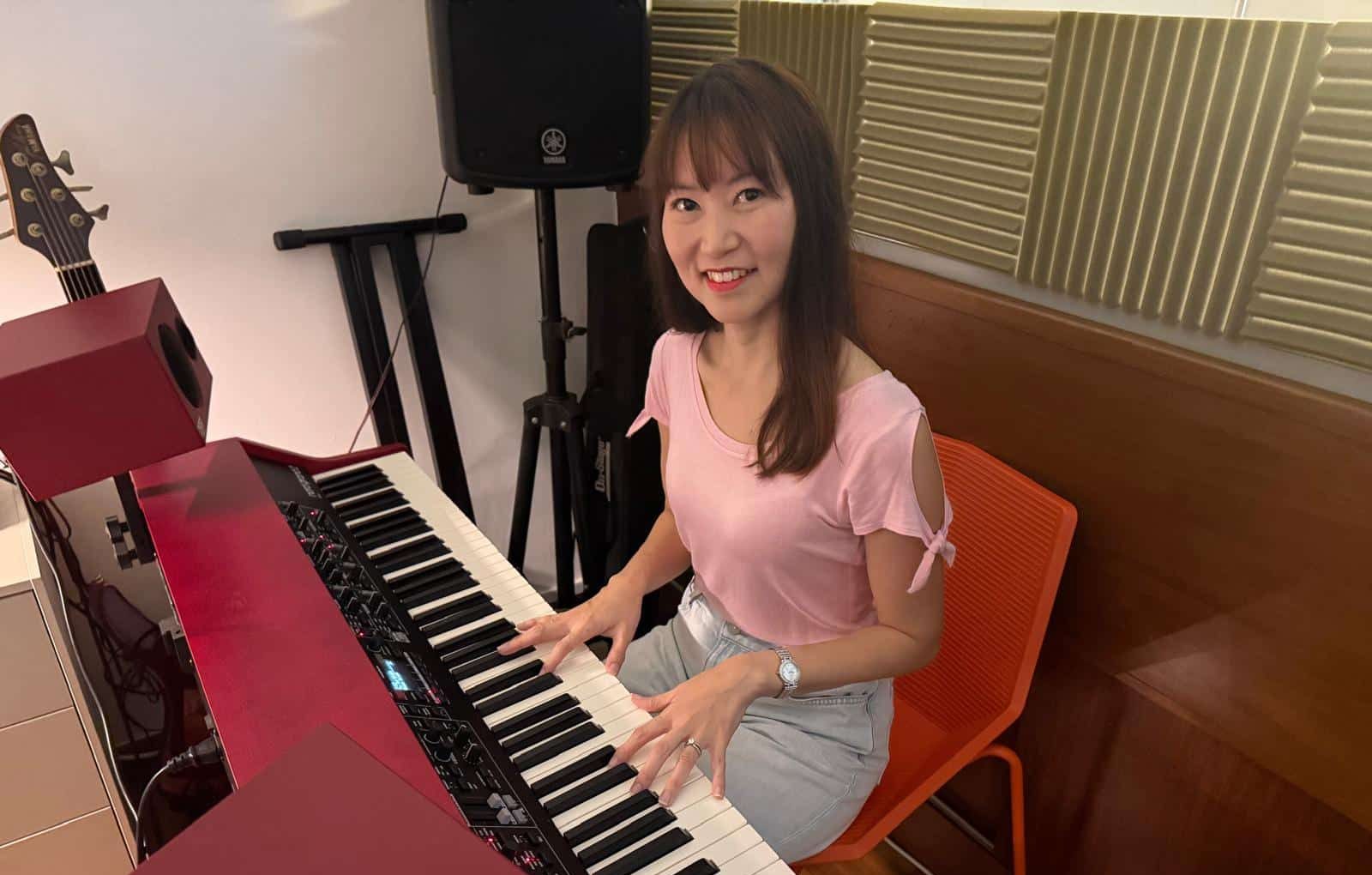
Joan Yong turned to songwriting to process the trauma of caregiving. All photos courtesy of Joan Yong.
It began with a headache that would not go away. Regular medication did nothing to alleviate the pain. Neither did antibiotics for a suspected sinus infection. Then came the vomiting.
Mike (not his real name) was only nine.
“I knew it was going to be bad.”
The pain became so bad that whenever he looked straight ahead, Mike felt “like I am going to die”. He was brought to hospital. Still, no alarm bells rang and Mike was discharged with stronger antibiotics.
But when nearly two weeks passed and the dull pain became blinding once again, Mike was rushed to the A&E. This time, an MRI was ordered.
When doctors told his mother, Joan Yong to step away with them so they could discuss Mike’s condition, “I knew it was going to be bad,” Joan told Salt&Light.
“It was triggering for me because that was how it was with my mother when they told us she had cancer. I told the doctor I just had to cry first.”
The tumour
The MRI revealed a 1.5cm tumour blocking cerebrospinal fluid from being drained out of Mike’s brain. The doctor had no idea when the tumour appeared or if it was cancerous.
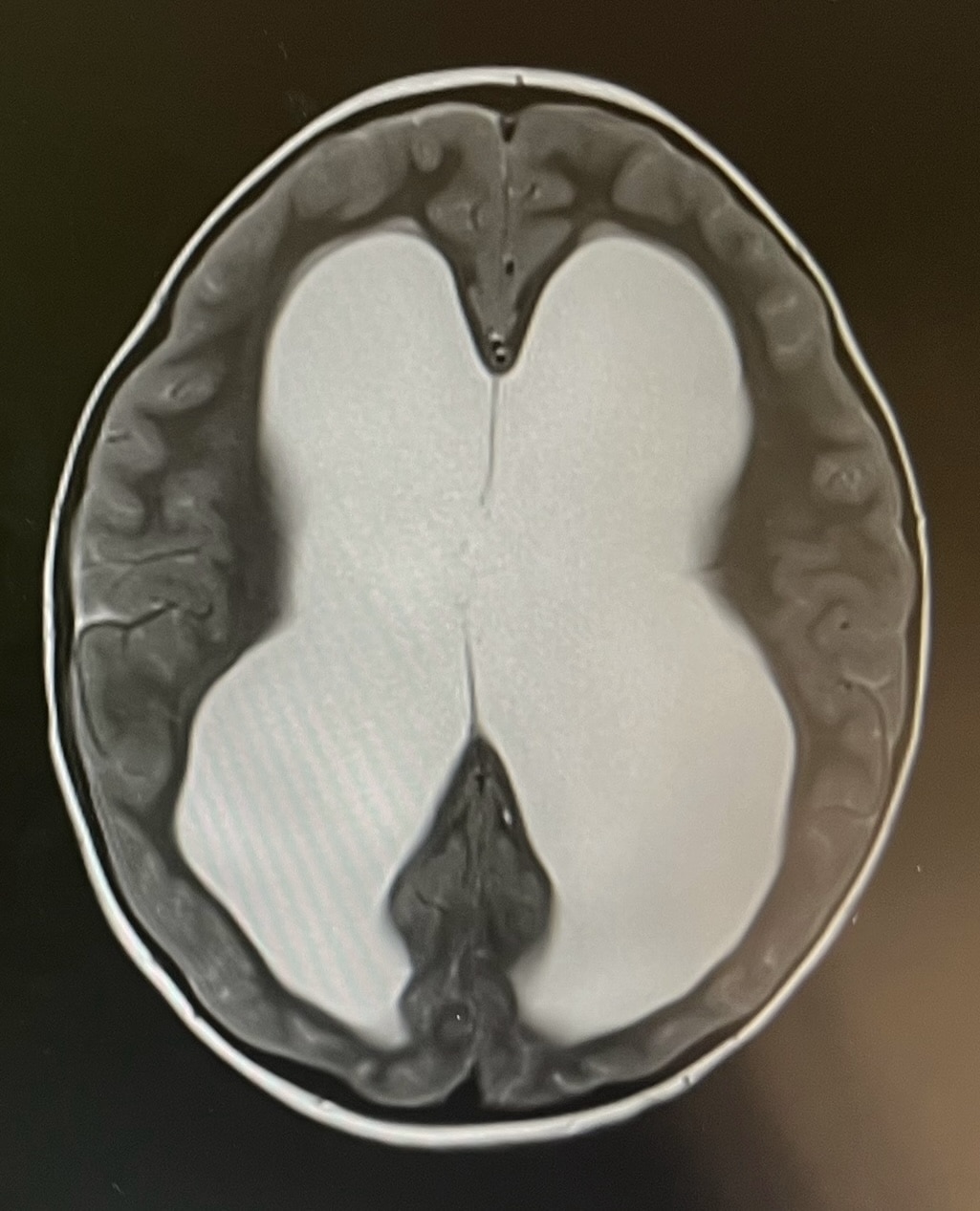
A normal brain should not have this much white in the centre.
Every day, about 500ml of cerebrospinal fluid is produced by the choroid plexus in the ventricles of the brain. This fluid flows through and around the brain, and around the spinal cord. If the fluid cannot circulate properly because something is blocking it, pressure builds up in the skull.
Up to this point, the tumour had posed no problems because Mike’s growing skull had been expanding to accommodate the accumulating fluid. The skull usually stops growing around the age of nine, which Mike now was. With no more room to give, the fluid buildup or hydrocephalus started causing him pain.
“Next to losing my mum, I cried the most over this.”
“The doctor said he could collapse at any time. To this day, the thought still haunts me,” said Joan.

Looking back, there had been signs – Mike always had trouble climbing stairs – which Joan had not understood.
“I used to think I was a bad mother that he was like that, that it was because I never let him out much,” she told Salt&Light.
Emergency surgery was required to save Mike’s life. A shunt had to be inserted into his brain to drain the fluid into his abdomen so it could be reabsorbed into his body.
“It was very traumatising. I definitely cried a lot. Next to losing my mum, I cried the most over this.”
The support
Joan’s husband Mark Khor was out of the country for work at the time, but she was not alone.
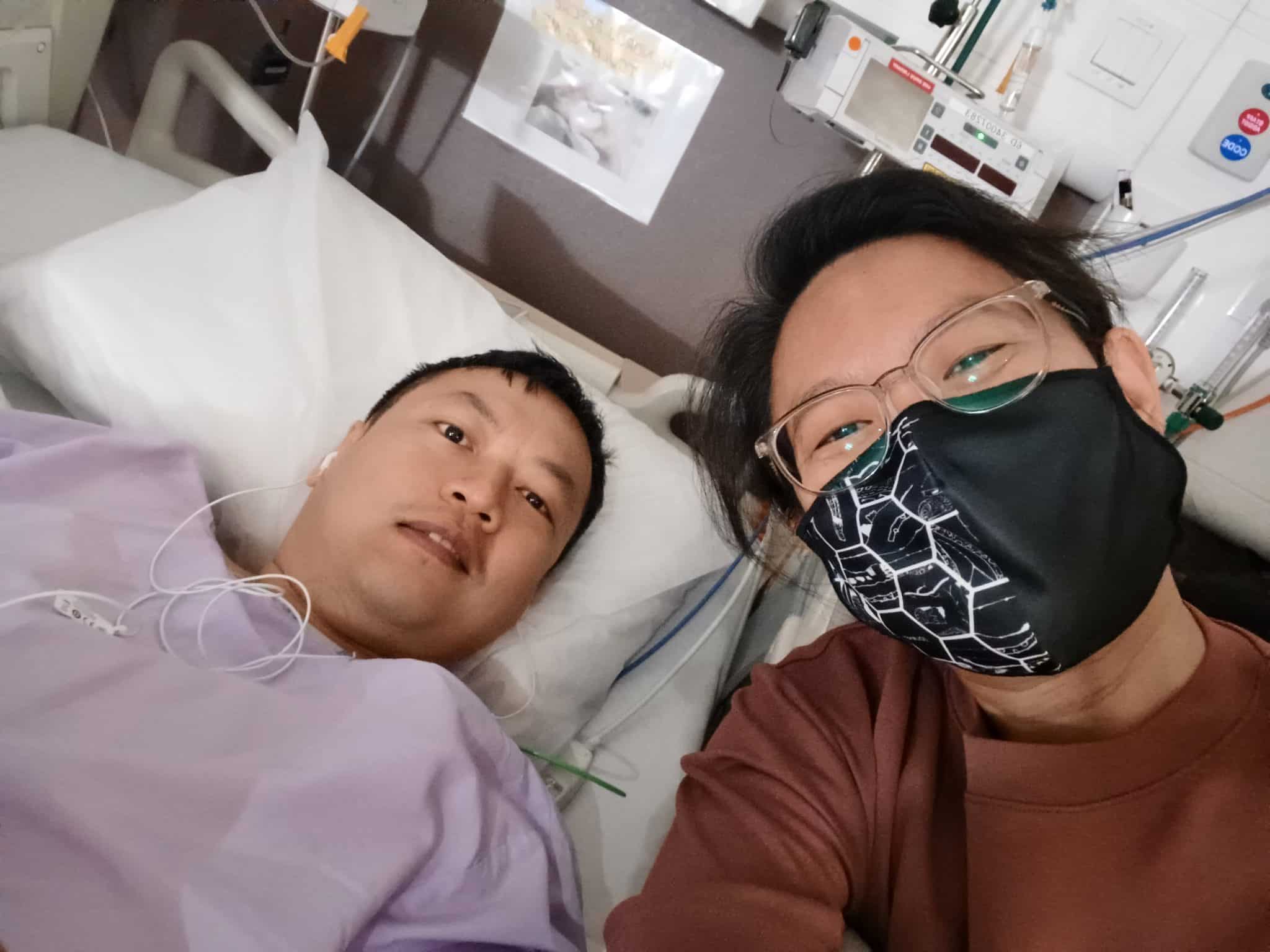
Her sister-in-law – a doctor – kept her company at the hospital. Church leaders and her Pastor took turns to sit with her at the ward since, during that period, COVID measures limited visitors to just two. They even arranged for Mike to have a video call with a teen who had undergone a major operation, so that he would be encouraged.
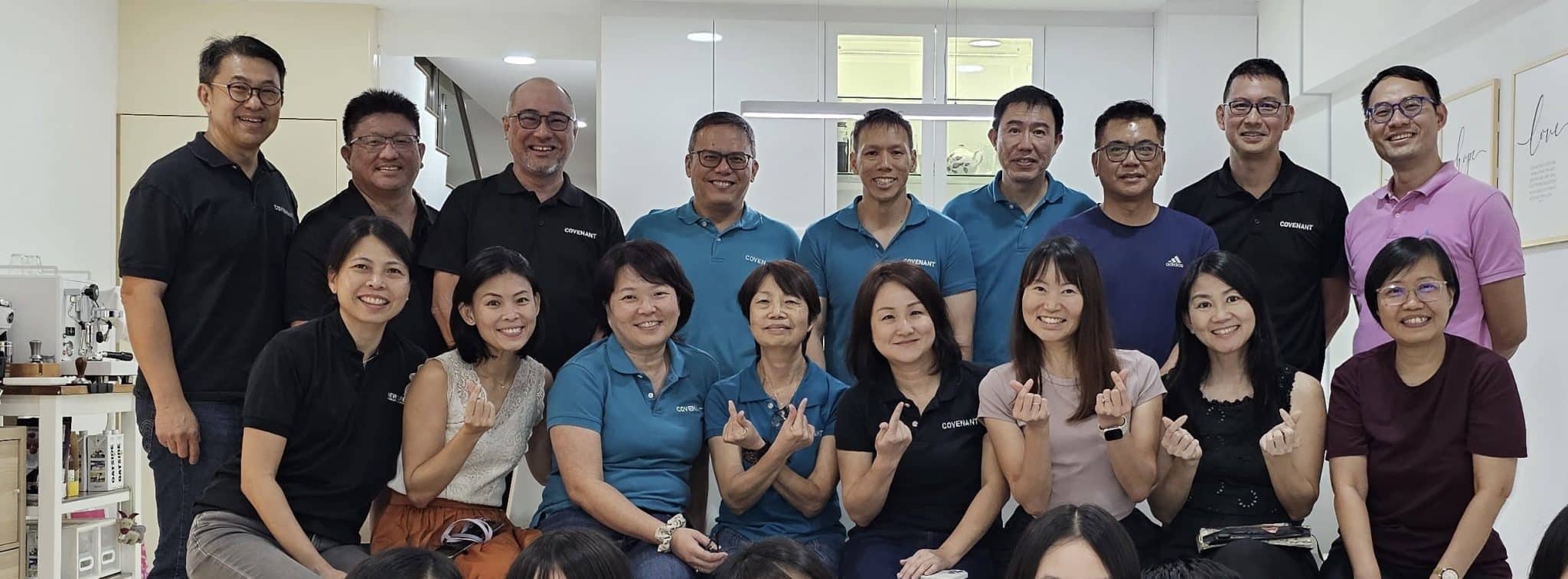
(Third from right, seated) Joan with the community of faith that supported her throughout her caregiving journey.
Church leaders and her Pastor took turns to sit with her at the ward.
“I was so moved by that boy that I was in tears. I really felt the presence of God, how He used someone who had gone through it to comfort us,” Joan told Salt&Light.
“My son asked, ‘Is it scary?’ And he told my son, ‘If you are scared, you can talk to Jesus.’”
When her husband rushed back to be with the family, their cell group members picked him up and brought him straight to the hospital. At her request, Joan’s best friend was present with Joan’s daughter, who was 11 at the time.
“I didn’t want her to feel left out. I wanted to make sure she still felt loved,” Joan explained.
The aftermath
The surgery was just the beginning of the journey.
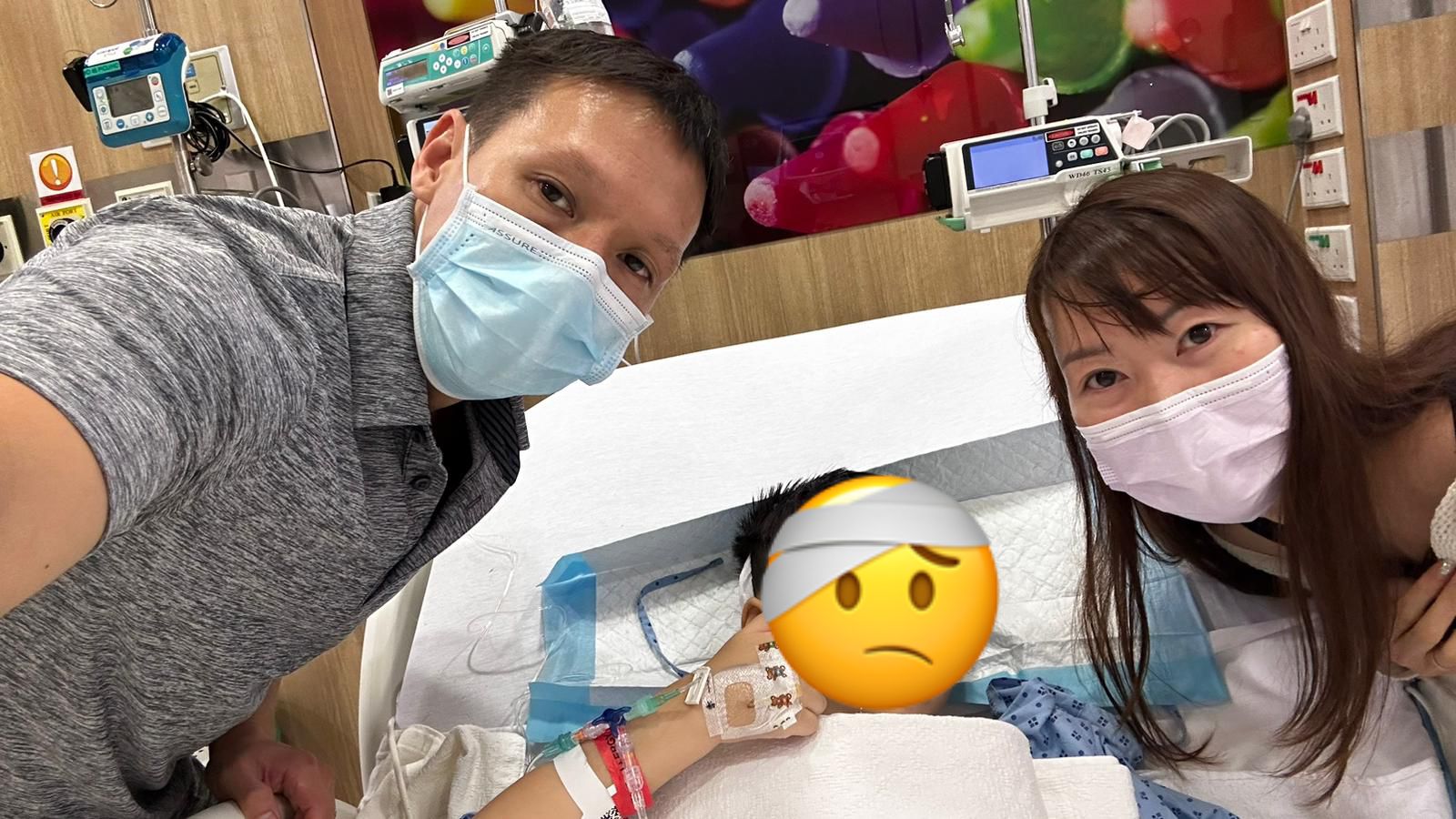
Mike (centre) with father Mark and mother Joan after his surgery.
The shunt that the doctor inserted allowed fluid to be drained from Mike’s brain. The rate at which the fluid flowed could be adjusted. At first, Mike did not react well to the pressure setting of the drainage and threw up. The doctor adjusted the pressure but Mike had to remain hospitalised longer than expected.
Nerve swelling because of hydrocephalus caused his vision to blur. So Mike had to undergo eye checks. The pressure in his head affected his gait and balance. Physiotherapy was required.
“He should have been okay after the surgery but he didn’t seem okay.”
“He was just in pain – his stomach, his head hurt. Plus he suffered dizziness because of the pressure change.”
Then there was the tumour that remained. Removing it was not possible because of its position in the brain. The only option was full MRIs every six months or so to see if the tumour was growing.
But even after Mike was discharged, life did not return to normal. He still went in and out of the hospital.
There were stomach pains that doctors suspected was a complication from the surgery that turned out to be nothing serious. A routine MRI that revealed a brain bleed that led to the possibility of more surgery. Continual headaches, nausea and dizziness that required the pressure exerted by the shunt to be adjusted repeatedly. More hospitals stays, more MRIs that created more anxiety for Joan.
“He should have been okay after the surgery but he didn’t seem okay. In the hospital, we had to push him around on the wheelchair because he couldn’t walk, couldn’t climb up stairs.”
The song that carried her
While Mike struggled with the physical trauma of doctor visits, injections and MRIs, Joan struggled as well, swallowed up by the hypervigilance needed to watch over a sick child. Every symptom, every return to the hospital only served to distress her further.
“If the songs comforted me, maybe it would comfort others, too.”
“There was a point when I lost the fighting power. I was overwhelmed, crying so helplessly, so scared to go to sleep because that was when all my thoughts got to me.”
In her desperation, she “cried out before God like David” and, like David, Joan turned her worry into worship.
“I have been serving in worship since I was 12,” Joan told Salt&Light. I get a lot of comfort in worship. So I sat at my piano and played. Songwriting came out of that season and I started to record my playing.”
It was during this time that Joan remembered a Rick Warren sermon that said: “God gives to you what He wants to give through you”.
Joan said: “I thought, if the songs comforted me, maybe it would comfort others, too.”
So she started a public Instagram account posting her songs and reflections.
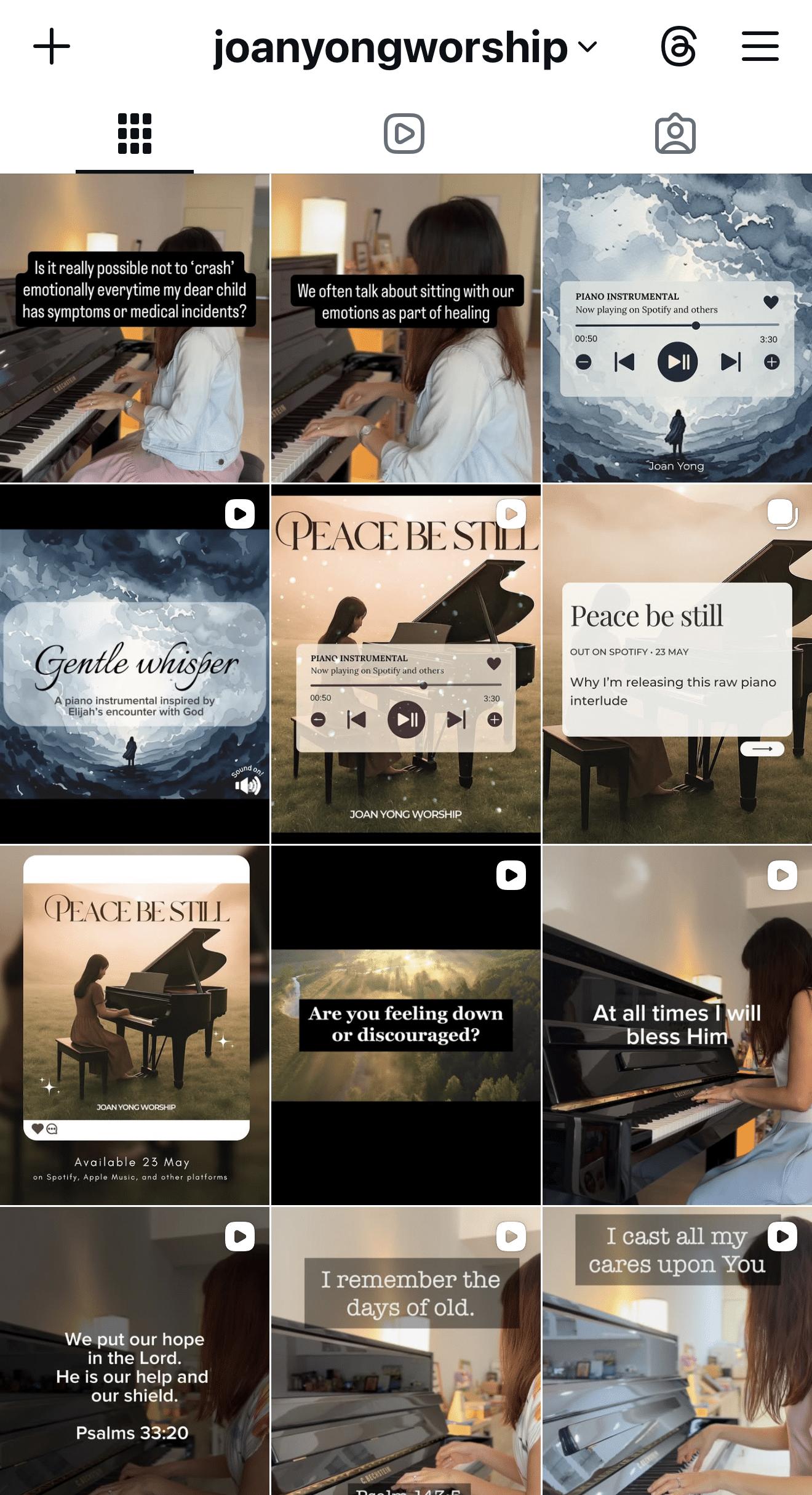
The Instagram account Joan created.
In June 2025, Joan’s sister-in-law Dr Dominque Phang, who pioneered the special needs ministry Ohana Ministry in Sengkang Methodist Church, encouraged her to pen a song to capture the challenges caregivers face.
“She shared the heartbeat of Luke 5:17-25 with me.
“This is a big example of how the Lord is my Shepherd.”
“As I sat at the piano, this song flowed forth. I broke down several times to cry, realising it was about my journey with my son, feeling the deep comfort and empathy from God, that He saw all these struggles and pains that were yet unspoken.”
Jesus Carries Us imagines the tension of the four friends who also longed to run to Jesus for their own miracle but, as caregivers, chose instead to carry their crippled friend to Him.
“With this song, I wanted to encourage caregivers. When I am sad, I play this song and it encourages me again. The line that moves me most comes from the chorus: ‘We carried him, and Jesus carried us, too.’
“I came to the realisation that Jesus is carrying me through this all, and that He sees all my pains and struggles in this journey,” Joan told Salt&Light.
Joan planned to launch the song on Spotify in the first quarter of 2026. But in February, she was slated to play the keyboard for worship at her church service that was dedicated to creating awareness for the needs of families with those with special needs.
“I was stunned. I thought: Could this song have been written for a time like this?”
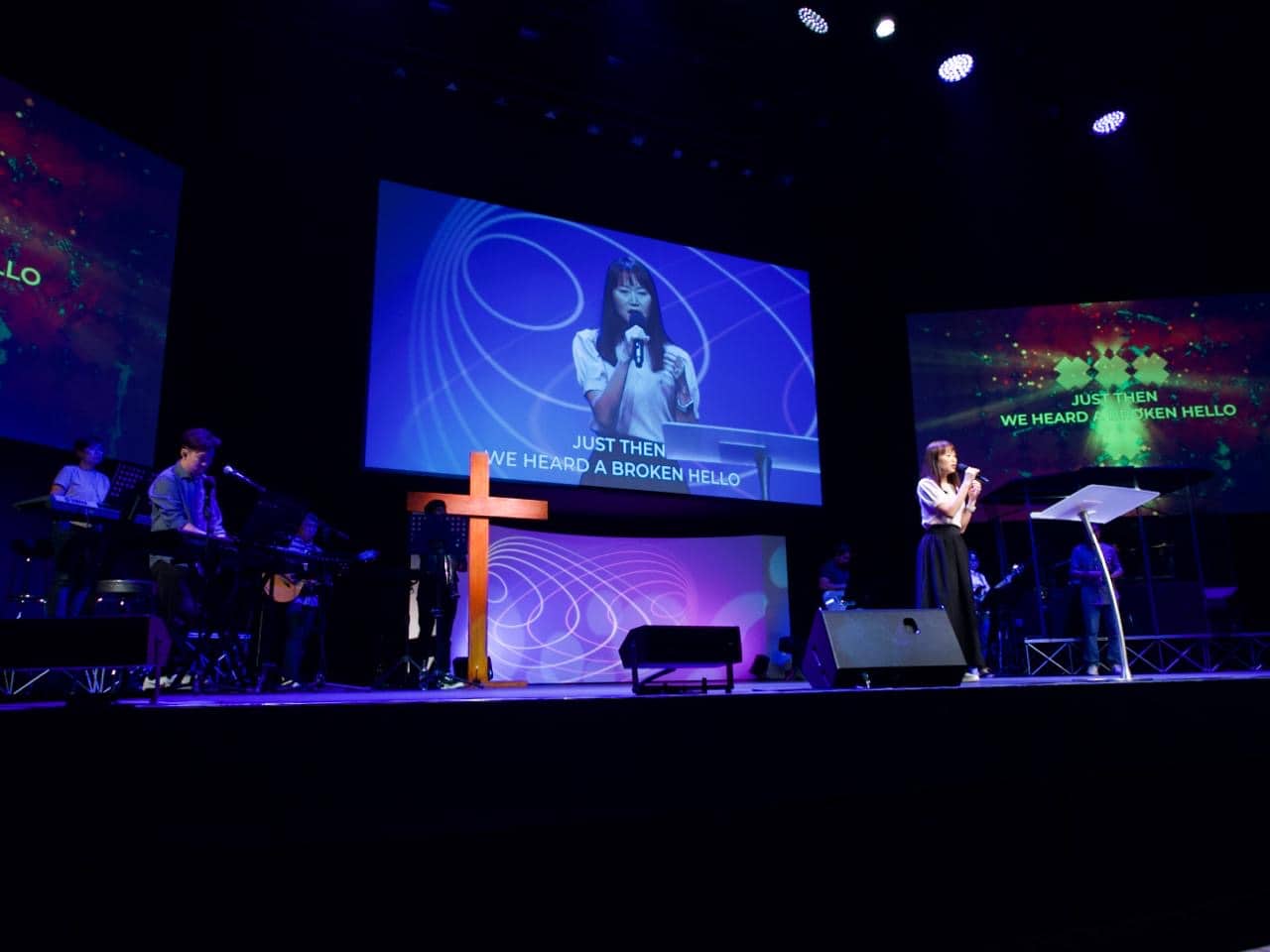
Joan singing the song she penned.
The stirring in her heart grew till she could no longer ignore it. Joan asked for permission to share the song at the service. Representatives from Koinonia Inclusion Network (KIN), a non-profit organisation focused on disability inclusion in churches, were present that day.
Hearing it, the team from KIN felt the song would encourage other caregivers. Now there are plans to give the song a bigger arena to minister to more special needs families.
“This is a big example of how the Lord is my Shepherd. He knows how to open the right door at the right time,” said Joan.
Going deeper with God
Last year, Mike experienced fewer headaches. But the impact of his medical condition on Joan continued.
“I still believe You are my good God.”
“I was very career-driven. I really loved my job. But every time I experienced a curveball, I realised my heart was with my children. I really wanted to be with them and I couldn’t perform 100% at work.
“Going to the hospital so much also made me really think about the purpose of life. What am I doing with this one life I have?”
A chance meeting with her Pastor made her think about working in church. For 40 days, her Pastor journeyed with her, doing devotions with her over Zoom as she wrestled with her decision. At the end of 2025, Joan quit her job and enrolled in the School of Ministry under Tung Ling Bible School.
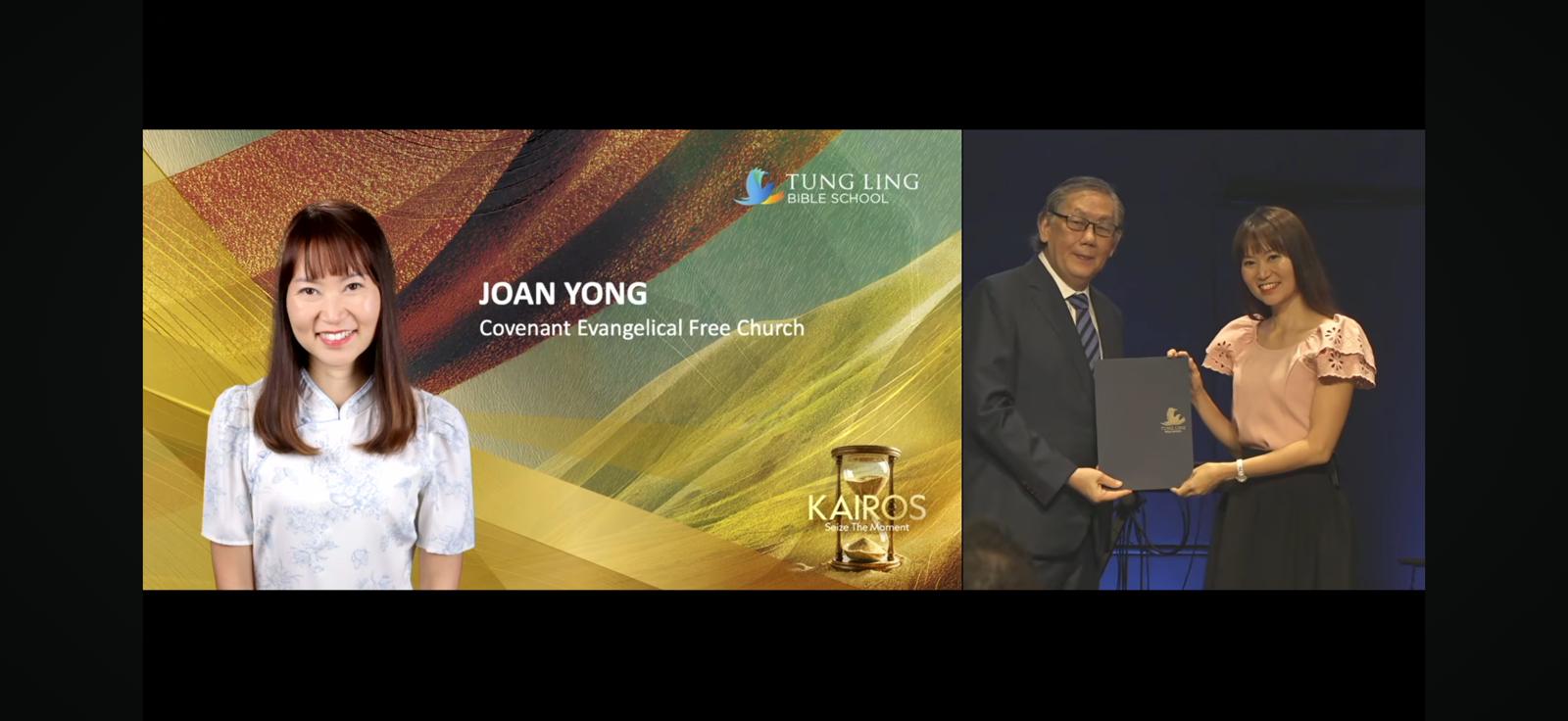
Joan graduating from Tung Ling Bible School.
While there, she attended a Silence and Solitude retreat where participants were encouraged to ask God anything they wanted. For a long time, Joan had wanted to ask God why Mike had a medical emergency, but up to that point, she had not allowed herself to do so.
She recalled: “I was shaking. I said, ‘God, do You really want me to ask You this question?’”
“He really knows how it feels. That was very healing for me.”
As she wrote the question down in her journal, Joan told God: “It is fine. I don’t need to have the answer. You are the God who helped me through the valley.
“I still believe You are my good God. I still trust in You even if it still hurts and I am very sad by what happened.”
Joan did not get the answer she wanted. Instead, God revealed to her things she needed to know.
“I felt God show me a lot of reframing of this whole situation. He showed me a branch under a baby branch.
“I realised that the baby branch was my daughter who had been holding me up throughout the situation.”
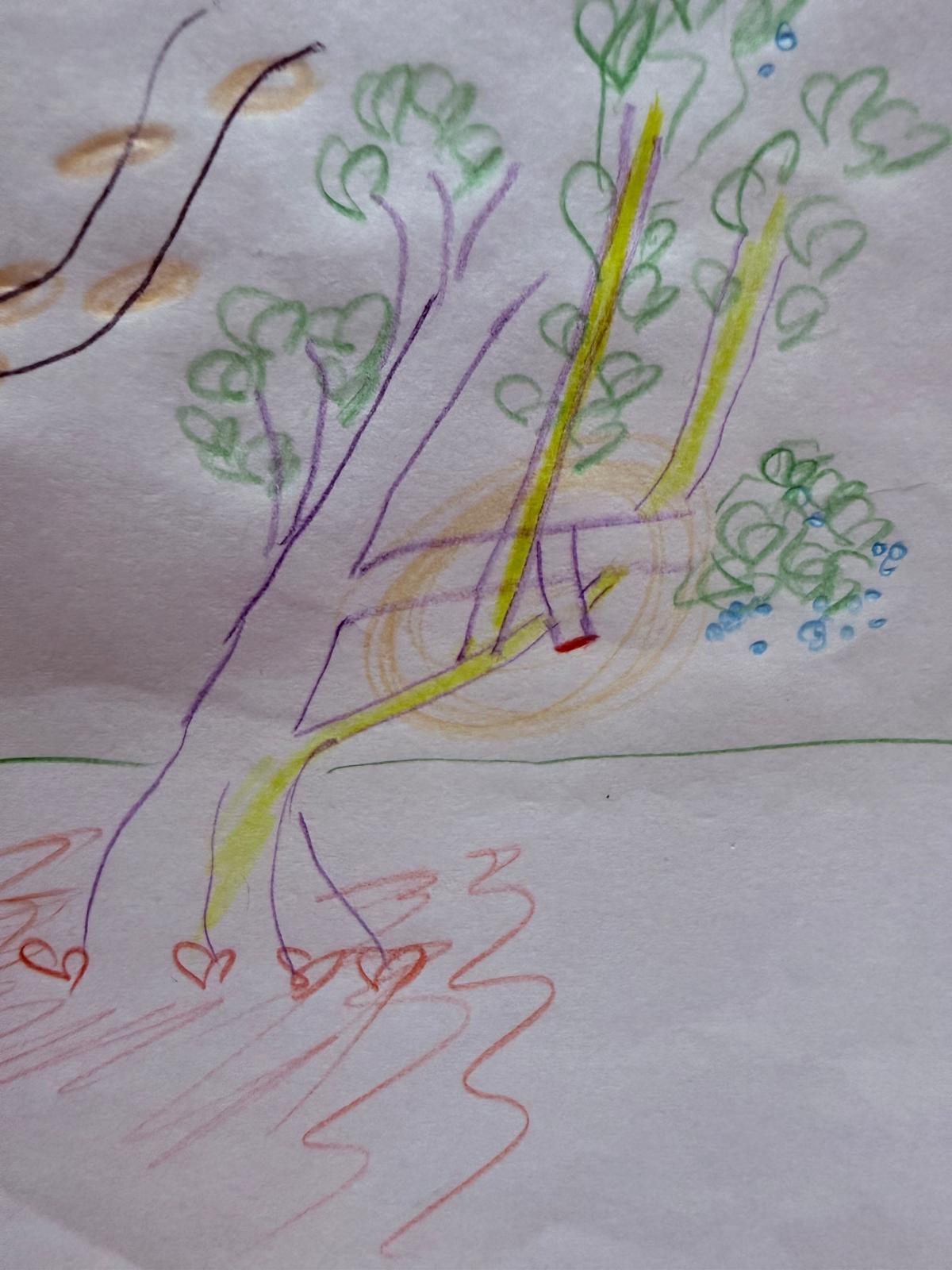
A drawing Joan made of the branches she saw.
One evening, as Joan was walking and talking to God about how sad she was to see Mike going through so much, she felt Him say simply: “I know.”
“I have experienced God in such a deep way.”
Joan told Salt&Light: “What a heavy ‘I know’. I realised that God the Father has seen His only Son suffer on the cross. He really knows how it feels. That was very healing for me, to see that God was really with me all the way and knew me.”
Joan’s faith has also been transformed through all this.
“It’s at a deeper level. Now when I say, ‘God, You are my rock’, it means a very different thing from before when I never experienced that level of anxiety.
“When I say, ‘You are my comforter”, it is through the depth of my tears which has become an ocean when it used to be a cup. I have experienced God in such a deep way.”
RELATED STORIES:
Mum of special needs kid has Stage 4 cancer, but: “Cancer must tremble at the name of Jesus”
This year, as we celebrate 10 years, consider sowing into our Kingdom ministry! For S$10 a month, you become part of the #10for10 community and a part of every story we tell.
Partner with us